
I'm preparing for
Topic
system design
153 shorts across 1 course, in learning order
🎛️ Narrow downsubject · level · topic1▾
Results · 17 for “Event Time vs Processing Time”
← Front page✨ Smart search: matched by meaning, not just words
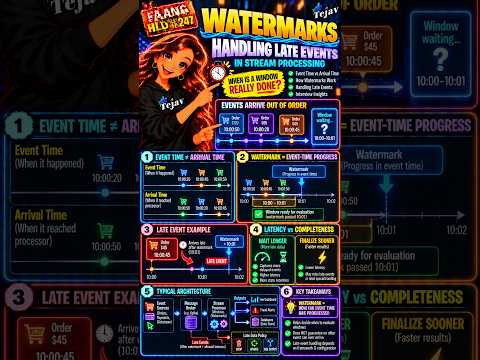
⚡ One HLD concept. 60 seconds. Interview ready
Understanding Watermarks in Stream Processing
Watermarks help stream processing systems manage event time and late events.

⚡ One HLD concept. 60 seconds. Interview ready
Stream Processing Architecture: From Events to Real-Time Insights
Stream Processing Architecture helps turn incoming events into real-time insights efficiently.

⚡ One HLD concept. 60 seconds. Interview ready
HLD: Batch vs Stream Processing in System Design
Batch processing collects data to process later, while stream processing handles data in real-time.

⚡ One HLD concept. 60 seconds. Interview ready
HLD: Late-Arriving Events - Drop, Update, or Replay?
Late-arriving events can be dropped, updated, or routed based on system needs.

⚡ One HLD concept. 60 seconds. Interview ready
Understanding Latency, Throughput, and Response Time
Latency, throughput, and response time are key metrics in system performance.
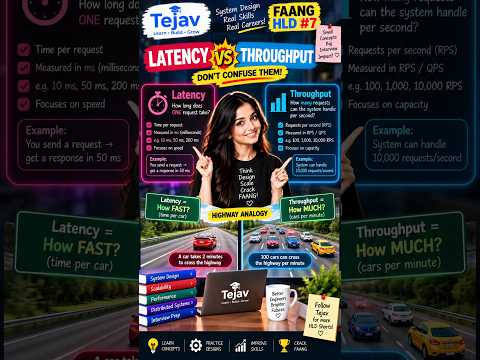
⚡ One HLD concept. 60 seconds. Interview ready
Understanding Latency and Throughput in System Design
Latency is the time for one request, while throughput is how many requests are processed.

⚡ One HLD concept. 60 seconds. Interview ready
Understanding Vector Clocks in Distributed Systems
Vector clocks help track the order and concurrency of events in distributed systems.

⚡ One HLD concept. 60 seconds. Interview ready
Time-Based Partitioning: Scaling Time-Series Databases
Time-based partitioning organizes time-series data into smaller, efficient segments for better querying.

⚡ One HLD concept. 60 seconds. Interview ready
Tumbling vs Hopping Windows in Stream Processing
Tumbling windows are non-overlapping time segments, while hopping windows can overlap.

⚡ One HLD concept. 60 seconds. Interview ready
HLD: Understanding Request-Response vs Events in System Design
Request-Response asks for a result, while Events notify that something has happened.
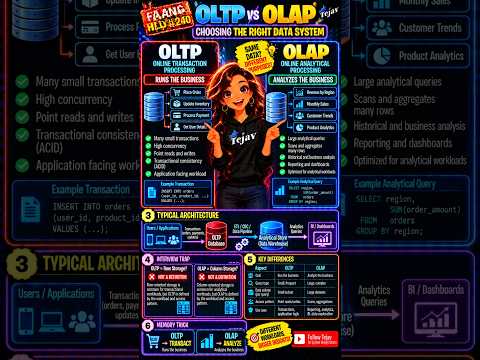
⚡ One HLD concept. 60 seconds. Interview ready
Understanding OLTP and OLAP in Database Design
OLTP handles transactions while OLAP is for data analysis and reporting.

⚡ One HLD concept. 60 seconds. Interview ready
Time-Series Database Architecture: Storing Millions of Metrics
Time-series databases are designed to store and query time-stamped metrics efficiently.

⚡ One HLD concept. 60 seconds. Interview ready
Kafka Async Commit Ordering: Can Older Offsets Overwrite Newer Ones?
Older offsets can overwrite newer ones in Kafka if not handled properly.

⚡ One HLD concept. 60 seconds. Interview ready
Transactional Outbox Pattern: Never Lose Events!
The Transactional Outbox Pattern ensures database updates and event publishing are synchronized to avoid losing events.

⚡ One HLD concept. 60 seconds. Interview ready
Elasticsearch Data Streams vs. Time-Based Indices: Which to Choose?
Elasticsearch offers Data Streams for simplicity and Time-Based Indices for control in managing time-series data.

⚡ One HLD concept. 60 seconds. Interview ready
Understanding RPO and RTO in Disaster Recovery
RPO and RTO are key metrics for planning disaster recovery strategies.

⚡ One HLD concept. 60 seconds. Interview ready
HLD Timeout Pattern: Understanding Timeouts in Distributed Systems
A timeout indicates a deadline was exceeded, not necessarily a failure.
🧠Related by meaning
Not tagged “system design”, but closely connected

