
I'm preparing for
🎛️ Narrow downsubject · level · topic▾
Results · 10 for “Single-Column Indexes”
← Front page✨ Smart search: matched by meaning, not just words

⚡ One HLD concept. 60 seconds. Interview ready
Composite Indexes: Speed Up Multi-Column Queries in Databases
Composite indexes speed up database queries that filter or sort by multiple columns.

⚡ One HLD concept. 60 seconds. Interview ready
Database Indexing: How to Make Queries Fast
Database indexing speeds up data retrieval by allowing quick lookups.

⚡ One HLD concept. 60 seconds. Interview ready
B-Tree Index: Efficient Database Navigation
B-Trees help databases find data quickly without scanning every row.

⚡ One HLD concept. 60 seconds. Interview ready
HLD: Full-Text Search vs Database Search with Elasticsearch
Choose Elasticsearch for complex text searches, but use databases for structured queries.
⚡ One HLD concept. 60 seconds. Interview ready
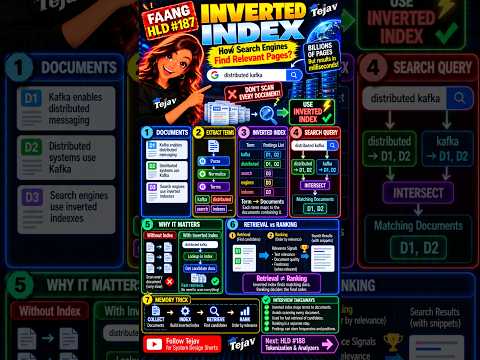
Inverted Index: How Search Engines Find Pages Efficiently
An inverted index helps search engines quickly find documents containing specific terms.

⚡ One HLD concept. 60 seconds. Interview ready
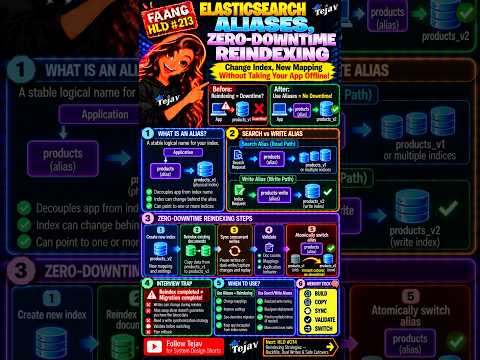
Elasticsearch Aliases and Rollover: Zero-Downtime Index Switching
Elasticsearch aliases allow zero-downtime switching between indices for applications.
⚡ One HLD concept. 60 seconds. Interview ready
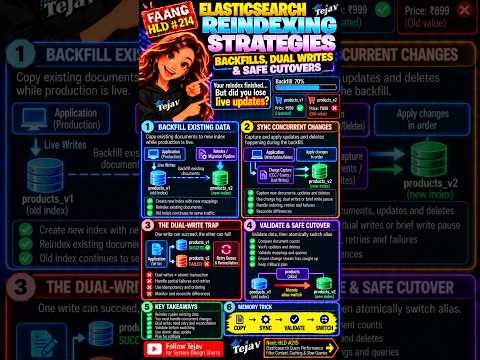
Elasticsearch Zero-Downtime Reindexing: The Alias Switch Trick
You can update Elasticsearch indices without downtime using alias switching.
⚡ One HLD concept. 60 seconds. Interview ready
Elasticsearch Reindexing: Understanding the Dual-Write Trap
The dual-write trap in Elasticsearch can cause data inconsistency during reindexing.

⚡ One HLD concept. 60 seconds. Interview ready
FAANG HLD 🔥 | Partition Pruning Explained — Scan Less, Query Faster! ⚡
Partition pruning helps databases skip unnecessary data scans, speeding up queries.

⚡ One HLD concept. 60 seconds. Interview ready
Elasticsearch Data Streams vs. Time-Based Indices: Which to Choose?
Elasticsearch offers Data Streams for simplicity and Time-Based Indices for control in managing time-series data.