
I'm preparing for
🎛️ Narrow down IT & Codingsubject · level · topic1▾
Results · 14 for “Data Redundancy Concepts”
← Front page✨ Smart search: matched by meaning, not just words

⚡ One HLD concept. 60 seconds. Interview ready
Kafka Rebalance: Avoiding Work Loss or Duplication
Kafka rebalance can lead to lost or duplicated work if not handled carefully.

⚡ One HLD concept. 60 seconds. Interview ready
Consistent Hashing: Key to Distributed Systems Scalability
Consistent hashing helps distribute data across servers with minimal movement.

⚡ One HLD concept. 60 seconds. Interview ready
Message Delivery Semantics: At-Most-Once vs At-Least-Once vs Exactly-Once
Message delivery semantics define how messages are sent in distributed systems and handle failures.

⚡ One HLD concept. 60 seconds. Interview ready
Log Replication and Majority Commit in Distributed Systems
Log replication ensures data consistency by requiring majority acknowledgment before committing changes.

⚡ One HLD concept. 60 seconds. Interview ready
HLD: Fail-Stop vs Fail-Recover Explained
Fail-stop means a system stops and stays down, while fail-recover means it can come back but needs to be ready.

⚡ One HLD concept. 60 seconds. Interview ready
HLD: Crash Failures vs Network Failures in Distributed Systems
Crash failures stop a service, while network failures disrupt communication.

⚡ One HLD concept. 60 seconds. Interview ready
Kafka Static Membership: Reducing Unnecessary Rebalancing
Kafka's static membership allows consumers to maintain stable identities, reducing unnecessary rebalances.

⚡ One HLD concept. 60 seconds. Interview ready
Understanding 2-Phase Commit in Distributed Transactions
2-Phase Commit helps maintain data consistency in transactions across multiple databases.

⚡ One HLD concept. 60 seconds. Interview ready
Understanding Network Partitions in Distributed Systems
Network partitions occur when servers are operational but can't communicate, affecting system performance.

⚡ One HLD concept. 60 seconds. Interview ready
FAANG HLD 🔥 | Raft Safety — Why Committed Entries Survive Leader Failure! 🛡️
Raft's safety rules guarantee that committed entries are preserved even after leader failures.

⚡ One HLD concept. 60 seconds. Interview ready
Kafka Retention vs Compaction: History or Latest State?
Kafka uses retention to keep historical data and compaction to keep the latest state.
⚡ One HLD concept. 60 seconds. Interview ready
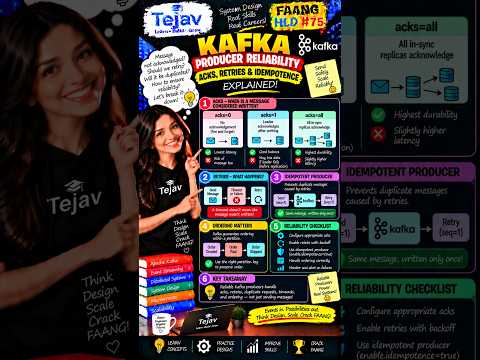
Kafka Producer Reliability: ACKs, Retries & Idempotence
Kafka producers use ACKs, retries, and idempotence to ensure reliable message delivery.
⚡ One HLD concept. 60 seconds. Interview ready
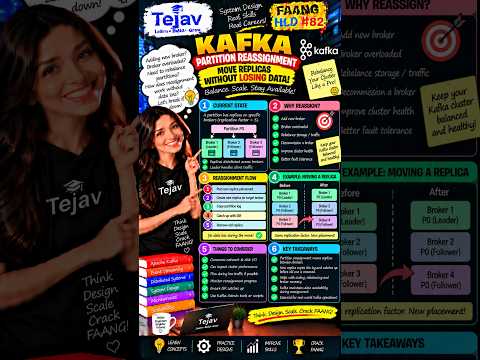
Kafka Partition Reassignment: Move Replicas Without Data Loss
Kafka Partition Reassignment moves replicas between brokers while keeping data safe.

⚡ One HLD concept. 60 seconds. Interview ready
Elasticsearch Split Brain: Master Election and Quorum Explained
Elasticsearch uses master election and quorum to prevent split brain scenarios.