
I'm preparing for
Topic · IT & Coding
system design
116 shorts across 1 course, in learning order
🎛️ Narrow down IT & Codingsubject · level · topic1▾
Results · 25 for “Basic understanding of web technologies”
← Front page✨ Smart search: matched by meaning, not just words

⚡ One HLD concept. 60 seconds. Interview ready
Understanding DNS Resolution: How URLs Load in Browsers
DNS resolution translates a URL into an IP address for web access.

⚡ One HLD concept. 60 seconds. Interview ready
HLD: Search Engine Architecture and Its Components
Search engines collect, index, retrieve, and rank documents to provide relevant results.
⚡ One HLD concept. 60 seconds. Interview ready
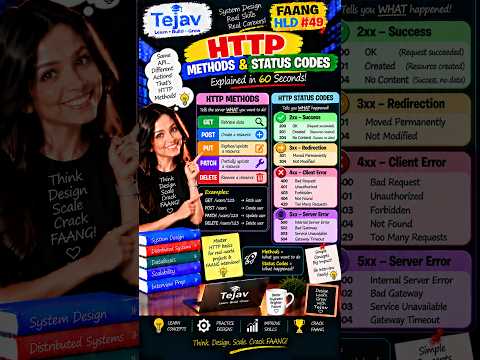
Understanding HTTP Methods and Status Codes
HTTP methods tell the server what to do, and status codes tell us the result.

⚡ One HLD concept. 60 seconds. Interview ready
Understanding CDN: How Cache Hits Improve Performance
A CDN speeds up web applications by caching content closer to users.

⚡ One HLD concept. 60 seconds. Interview ready
REST API Design: Building Scalable APIs for Real-World Use
REST API design focuses on creating clean, efficient, and scalable web services.
⚡ One HLD concept. 60 seconds. Interview ready
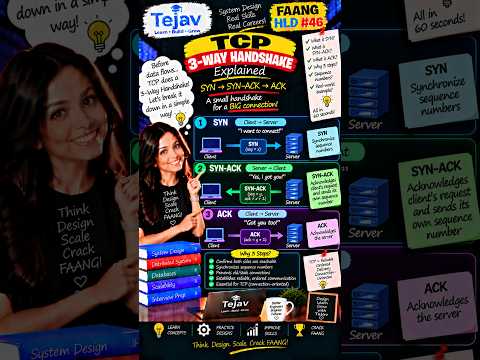
Understanding TCP 3-Way Handshake: SYN, SYN-ACK, ACK
The TCP 3-way handshake ensures reliable connection establishment between a client and server.

⚡ One HLD concept. 60 seconds. Interview ready
Understanding the TLS Handshake in HTTPS Connections
The TLS handshake establishes a secure connection for HTTPS, ensuring data safety.

⚡ One HLD concept. 60 seconds. Interview ready
HLD: Understanding REST, RPC, and gRPC Differences
REST, RPC, and gRPC are different methods for communication in software systems.

⚡ One HLD concept. 60 seconds. Interview ready
Understanding Load Balancers in System Design
Load balancers distribute traffic across multiple servers to enhance performance and reliability.

⚡ One HLD concept. 60 seconds. Interview ready
What FAANG Interviewers Evaluate in System Design Interviews
FAANG interviewers evaluate problem understanding, architecture, scalability, and communication skills.

⚡ One HLD concept. 60 seconds. Interview ready
Understanding Transactions and ACID Properties in Databases
Transactions ensure database operations are reliable using ACID properties.

⚡ One HLD concept. 60 seconds. Interview ready
HLD: 5 Microservices Communication Patterns Explained
Microservices can communicate using five key patterns based on their needs.

⚡ One HLD concept. 60 seconds. Interview ready
API Gateway vs Proxy vs Load Balancer: Key Differences
API Gateway, Proxy, and Load Balancer serve different roles in managing requests and traffic in systems.

⚡ One HLD concept. 60 seconds. Interview ready
Understanding Availability vs Reliability in System Design
Availability is about access; reliability is about correct performance.

⚡ One HLD concept. 60 seconds. Interview ready
Understanding Latency and Throughput in System Design
Latency is the time for one request, while throughput is how many requests are processed.

⚡ One HLD concept. 60 seconds. Interview ready
Keep-Alive in Networking: Efficient HTTP Connections
Keep-Alive allows reusing HTTP connections to improve efficiency and reduce overhead.

⚡ One HLD concept. 60 seconds. Interview ready
Understanding Cache Hits: Reducing Database Load
Caching helps applications respond faster by serving data from memory instead of hitting the database.
⚡ One HLD concept. 60 seconds. Interview ready
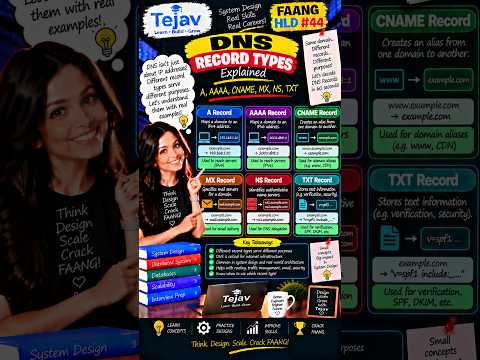
Understanding DNS Record Types: A, CNAME, MX, and More
DNS records like A, CNAME, and MX help route internet traffic and manage services.

⚡ One HLD concept. 60 seconds. Interview ready
Understanding Functional and Non-Functional Requirements
Functional requirements define what a system does, while non-functional requirements define how it performs.
⚡ One HLD concept. 60 seconds. Interview ready
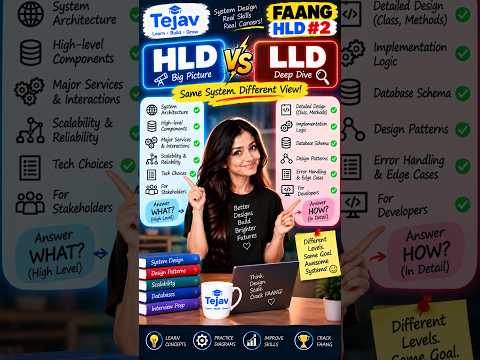
Understanding High-Level Design (HLD) and Low-Level Design (LLD)
HLD provides an overview of system architecture, while LLD details implementation specifics.

⚡ One HLD concept. 60 seconds. Interview ready
Choosing Service Boundaries in Microservices Architecture
Choosing the right boundaries for microservices is crucial for effective architecture.

⚡ One HLD concept. 60 seconds. Interview ready
Protobuf and Schema Evolution: Avoid Breaking Changes
Protobuf schema evolution requires careful changes to avoid breaking existing clients.
⚡ One HLD concept. 60 seconds. Interview ready
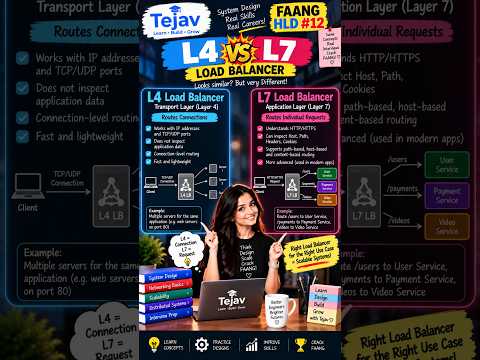
L4 vs L7 Load Balancers: Key Differences Explained
L4 and L7 load balancers differ in how they route network traffic based on layers of the OSI model.
⚡ One HLD concept. 60 seconds. Interview ready
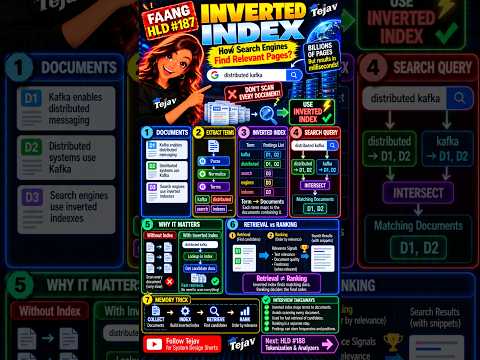
Inverted Index: How Search Engines Find Pages Efficiently
An inverted index helps search engines quickly find documents containing specific terms.

⚡ One HLD concept. 60 seconds. Interview ready
Understanding Latency, Throughput, and Response Time
Latency, throughput, and response time are key metrics in system performance.
🧠Related by meaning
Not tagged “system design”, but closely connected

