I'm preparing for
Topic · IT & Coding
high availability
19 shorts across 1 course, in learning order
🎛️ Narrow down IT & Codingsubject · level · topic1▾
Results · 12 for “Disaster Recovery”
← Front page✨ Smart search: matched by meaning, not just words

⚡ One HLD concept. 60 seconds. Interview ready
Active-Passive Architecture: Handling Production Downtime
Active-passive architecture ensures a standby system takes over if the main system fails.

⚡ One HLD concept. 60 seconds. Interview ready
HLD: Fail-Stop vs Fail-Recover Explained
Fail-stop means a system stops and stays down, while fail-recover means it can come back but needs to be ready.

⚡ One HLD concept. 60 seconds. Interview ready
Understanding High Availability in System Design
High Availability ensures your application remains operational even during server failures.

⚡ One HLD concept. 60 seconds. Interview ready
Dynamo-Style Databases: High-Level Design Overview
Dynamo-style databases are designed for high availability and fault tolerance in distributed systems.

⚡ One HLD concept. 60 seconds. Interview ready
Database Replication: Scale and Survive Failures
Database replication helps keep data available and allows systems to handle more read requests.

⚡ One HLD concept. 60 seconds. Interview ready
Understanding Fault Domains in High-Level Design
Fault domains help prevent multiple servers from failing together in an architecture.

⚡ One HLD concept. 60 seconds. Interview ready
Understanding Availability Zones in High-Level Design
Availability Zones help prevent downtime by isolating failures across multiple locations.
⚡ One HLD concept. 60 seconds. Interview ready
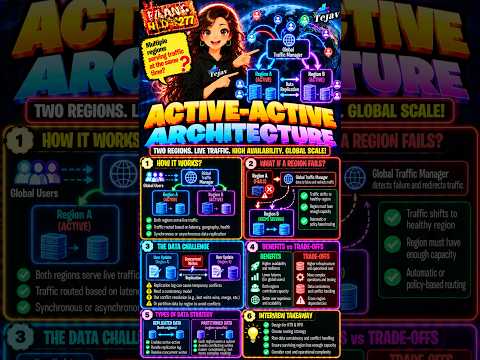
Understanding Active-Active Architecture in Distributed Systems
Active-Active Architecture uses multiple regions to serve traffic simultaneously for better resilience.

⚡ One HLD concept. 60 seconds. Interview ready
Understanding N+1 Redundancy in High-Level Design
N+1 redundancy means having one extra server to maintain capacity during a failure.

⚡ One HLD concept. 60 seconds. Interview ready
Understanding Database Replication in High-Level Design
Database replication enhances data availability and read performance but has challenges like replication lag.

⚡ One HLD concept. 60 seconds. Interview ready
Failover and Split-Brain in High-Level Design
Failover ensures systems remain operational by managing leader changes during failures.

⚡ One HLD concept. 60 seconds. Interview ready
Understanding Read Replicas in Database Scaling
Read replicas allow databases to handle more read requests by distributing them across multiple copies.
🧠Related by meaning
Not tagged “high availability”, but closely connected