
I'm preparing for
Topic · IT & Coding
distributed systems
60 shorts across 1 course, in learning order
🎛️ Narrow down IT & Codingsubject · level · topic1▾
Results · 8 for “Disaster Recovery Planning”
← Front page✨ Smart search: matched by meaning, not just words

⚡ One HLD concept. 60 seconds. Interview ready
HLD: Fail-Stop vs Fail-Recover Explained
Fail-stop means a system stops and stays down, while fail-recover means it can come back but needs to be ready.

⚡ One HLD concept. 60 seconds. Interview ready
HLD: Managing Dependency Failures in Distributed Systems
Dependency failures can disrupt applications, but resilience patterns can help manage them.

⚡ One HLD concept. 60 seconds. Interview ready
Cascading Failures in Distributed Systems Explained
Cascading failures occur when one service's failure impacts others, causing widespread issues.
⚡ One HLD concept. 60 seconds. Interview ready
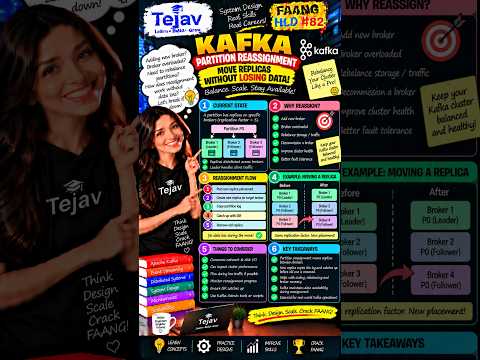
Kafka Partition Reassignment: Move Replicas Without Data Loss
Kafka Partition Reassignment moves replicas between brokers while keeping data safe.

⚡ One HLD concept. 60 seconds. Interview ready
HLD: Fallbacks Explained for System Design
Fallbacks allow systems to handle failures safely and maintain user experience.

⚡ One HLD concept. 60 seconds. Interview ready
Understanding Partial Failure in Distributed Systems
Partial failure means some services fail while others keep running, impacting system reliability.

⚡ One HLD concept. 60 seconds. Interview ready
Graceful Degradation in System Design
Graceful degradation allows apps to function partially during service failures.

⚡ One HLD concept. 60 seconds. Interview ready
Understanding CAP Theorem: Trade-offs in Distributed Systems
The CAP Theorem explains the trade-offs in distributed systems during network failures.
🧠Related by meaning
Not tagged “distributed systems”, but closely connected


