
I'm preparing for
🎛️ Narrow down IT & Codingsubject · level · topic▾
Results · 30 for “Real-time Analytics Techniques”
← Front page✨ Smart search: matched by meaning, not just words

⚡ One HLD concept. 60 seconds. Interview ready
Understanding the RED Method for Microservices Monitoring
The RED Method helps monitor microservices using Rate, Errors, and Duration metrics.

⚡ One HLD concept. 60 seconds. Interview ready
Understanding Elasticsearch Synonyms and Analyzers
Elasticsearch uses analyzers and synonyms to improve search accuracy by connecting similar words.
⚡ One HLD concept. 60 seconds. Interview ready
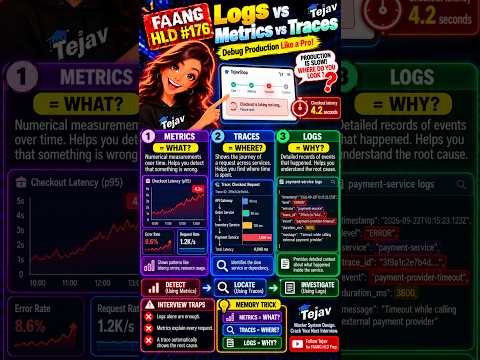
Understanding Logs, Metrics, and Traces in Software Engineering
Logs, metrics, and traces help engineers debug issues in software systems.

⚡ One HLD concept. 60 seconds. Interview ready
Elasticsearch Aggregations: Metrics vs Buckets Explained
Elasticsearch aggregations help summarize data using metrics for calculations and buckets for grouping.

⚡ One HLD concept. 60 seconds. Interview ready
Kafka Consumer Lag Monitoring: Prevent Production Issues
Monitoring Kafka consumer lag helps prevent production problems by ensuring consumers keep up with message traffic.

⚡ One HLD concept. 60 seconds. Interview ready
Elasticsearch Query Optimization: Filters and Caching
Optimizing Elasticsearch involves using filters, caching, and measuring performance.

⚡ One HLD concept. 60 seconds. Interview ready
Understanding Latency, Throughput, and Response Time
Latency, throughput, and response time are key metrics in system performance.

⚡ One HLD concept. 60 seconds. Interview ready
Kafka Streams Local State: Fast Processing and Recovery
Kafka Streams uses local state for quick data access and changelogs for recovery.

⚡ One HLD concept. 60 seconds. Interview ready
Elasticsearch Aggregations: Buckets, Metrics, and Cardinality
Elasticsearch aggregations help analyze data by grouping, calculating, and estimating values.

⚡ One HLD concept. 60 seconds. Interview ready
Understanding the USE Method for Infrastructure Bottlenecks
The USE Method helps find and analyze infrastructure bottlenecks in software systems.

⚡ One HLD concept. 60 seconds. Interview ready
Understanding Distributed Tracing in Microservices Architecture
Distributed tracing helps track requests across microservices to find delays.

⚡ One HLD concept. 60 seconds. Interview ready
Elasticsearch Data Streams vs. Time-Based Indices: Which to Choose?
Elasticsearch offers Data Streams for simplicity and Time-Based Indices for control in managing time-series data.

⚡ One HLD concept. 60 seconds. Interview ready
Observability in Distributed Systems: Debugging Production Issues
Observability helps engineers understand system behavior to debug production issues effectively.

⚡ One HLD concept. 60 seconds. Interview ready
Kafka Streams Windowing: Tumbling vs Hopping Windows Explained
Kafka Streams uses tumbling and hopping windows for time-based data aggregation.

⚡ One HLD concept. 60 seconds. Interview ready
Understanding Elasticsearch Snapshots: Replicas vs Backups
Replicas keep your system available, while snapshots allow for data recovery.

⚡ One HLD concept. 60 seconds. Interview ready
Understanding Elasticsearch Data Streams in HLD
Elasticsearch Data Streams simplify time-series data management with one name for many indices.

⚡ One HLD concept. 60 seconds. Interview ready
HLD: Tokenization and Analyzers in Search Engines
Tokenization and analyzers help search engines process and match text effectively.

⚡ One HLD concept. 60 seconds. Interview ready
Kafka Consumer Liveness: Heartbeats, Sessions & Timeouts Explained
Kafka uses heartbeats and timeouts to check if consumers are alive.

⚡ One HLD concept. 60 seconds. Interview ready
Kafka Replay Without Breaking Production: Safe Architecture
You can replay Kafka events safely by separating live and replay processes.

⚡ One HLD concept. 60 seconds. Interview ready
Kafka Stateful Stream Processing: How Does It Remember?
Kafka uses state stores to remember previous events in stateful stream processing.

⚡ One HLD concept. 60 seconds. Interview ready
Redis: Why Is It So Fast for High-Scale Systems?
Redis is a fast in-memory data store used for caching and low-latency applications.

⚡ One HLD concept. 60 seconds. Interview ready
Identifying and Optimizing Database Bottlenecks
Database bottlenecks slow down performance, but identifying them helps optimize and scale effectively.

⚡ One HLD concept. 60 seconds. Interview ready
Kafka Lag Recovery Time: How Fast Can Consumers Catch Up?
Kafka lag recovery time is how fast consumers can process backlogged messages.
⚡ One HLD concept. 60 seconds. Interview ready
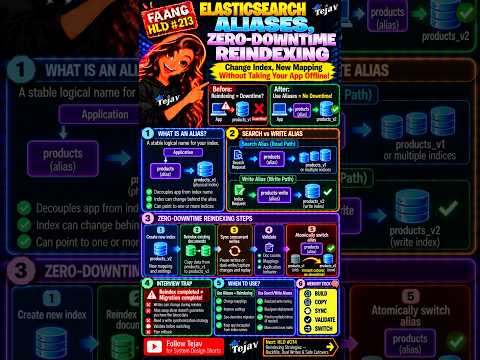
Elasticsearch Zero-Downtime Reindexing: The Alias Switch Trick
You can update Elasticsearch indices without downtime using alias switching.

⚡ One HLD concept. 60 seconds. Interview ready
Understanding Cache Hits: Reducing Database Load
Caching helps applications respond faster by serving data from memory instead of hitting the database.

⚡ One HLD concept. 60 seconds. Interview ready
Structured Logging: Debugging Production Issues Faster
Structured logging helps in quickly identifying issues by organizing log data consistently.

⚡ One HLD concept. 60 seconds. Interview ready
FAANG HLD 🔥 | Kafka Seek — Replay Specific Messages Without Replaying Everything! 🎯
Kafka's `seek()` lets you replay only specific messages, saving time.

⚡ One HLD concept. 60 seconds. Interview ready
Kafka Consumer Fetch & Batching: Boosting Throughput
Kafka consumers can fetch data in batches to improve throughput and reduce latency.

⚡ One HLD concept. 60 seconds. Interview ready
Understanding Cache Breakdown and Request Coalescing
Cache breakdowns can overwhelm databases, but request coalescing solves this issue.

⚡ One HLD concept. 60 seconds. Interview ready
FAANG HLD 🔥 | Kafka Backpressure Explained — What Happens When Consumers Can't Keep Up? 🚨
Backpressure prevents system overload by managing message processing rates in Kafka.