
I'm preparing for
Topic · IT & Coding
system design
116 shorts across 1 course, in learning order
🎛️ Narrow down IT & Codingsubject · level · topic1▾
Results · 21 for “Retry Mechanism”
← Front page✨ Smart search: matched by meaning, not just words

⚡ One HLD concept. 60 seconds. Interview ready
Token Bucket vs Leaky Bucket: Key Differences Explained
Token Bucket allows burst traffic, while Leaky Bucket smooths out traffic flow.

⚡ One HLD concept. 60 seconds. Interview ready
Token Bucket Rate Limiting Explained for Interviews
The Token Bucket algorithm helps manage how many requests a server can handle.

⚡ One HLD concept. 60 seconds. Interview ready
Transactional Outbox Pattern: Never Lose Events!
The Transactional Outbox Pattern ensures database updates and event publishing are synchronized to avoid losing events.

⚡ One HLD concept. 60 seconds. Interview ready
HLD: Fallbacks Explained for System Design
Fallbacks allow systems to handle failures safely and maintain user experience.

⚡ One HLD concept. 60 seconds. Interview ready
FAANG HLD 🔥 | Raft Safety — Why Committed Entries Survive Leader Failure! 🛡️
Raft's safety rules guarantee that committed entries are preserved even after leader failures.

⚡ One HLD concept. 60 seconds. Interview ready
Kafka Retry Topics and Delayed Retries Explained
Kafka uses retry topics and delayed retries to manage message failures efficiently.

⚡ One HLD concept. 60 seconds. Interview ready
Understanding Cache Breakdown and Request Coalescing
Cache breakdowns can overwhelm databases, but request coalescing solves this issue.

⚡ One HLD concept. 60 seconds. Interview ready
Distributed Locks: Preventing Duplicate Work Across Servers
Distributed locks ensure only one server performs a task, avoiding duplication.

⚡ One HLD concept. 60 seconds. Interview ready
Read-After-Write Consistency in Database Systems
Read-after-write consistency ensures users see their latest updates immediately.

⚡ One HLD concept. 60 seconds. Interview ready
HLD Timeout Pattern: Understanding Timeouts in Distributed Systems
A timeout indicates a deadline was exceeded, not necessarily a failure.

⚡ One HLD concept. 60 seconds. Interview ready
Choosing a Distributed Lock: Redis vs Database vs ZooKeeper
Choosing the right distributed lock depends on your system's needs and existing tools.

⚡ One HLD concept. 60 seconds. Interview ready
Kafka Error Handling and Retry Strategies in HLD
Classifying failures and using controlled retries in Kafka prevents outages.

⚡ One HLD concept. 60 seconds. Interview ready
Cascading Failures in Distributed Systems Explained
Cascading failures occur when one service's failure impacts others, causing widespread issues.

⚡ One HLD concept. 60 seconds. Interview ready
Failover and Split-Brain in High-Level Design
Failover ensures systems remain operational by managing leader changes during failures.
⚡ One HLD concept. 60 seconds. Interview ready
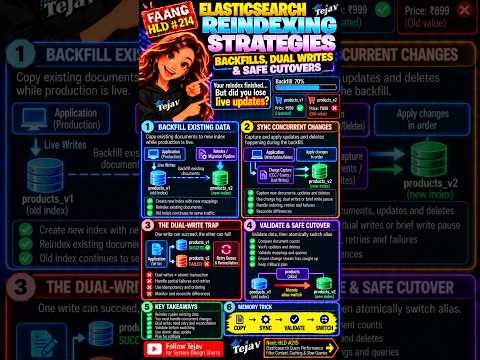
Elasticsearch Reindexing: Understanding the Dual-Write Trap
The dual-write trap in Elasticsearch can cause data inconsistency during reindexing.

⚡ One HLD concept. 60 seconds. Interview ready
Understanding Elasticsearch Cross-Cluster Replication (CCR)
Elasticsearch CCR allows real-time data replication for faster disaster recovery.

⚡ One HLD concept. 60 seconds. Interview ready
Message Delivery Semantics: At-Most-Once vs At-Least-Once vs Exactly-Once
Message delivery semantics define how messages are sent in distributed systems and handle failures.

⚡ One HLD concept. 60 seconds. Interview ready
Kafka Rebalance: Avoiding Work Loss or Duplication
Kafka rebalance can lead to lost or duplicated work if not handled carefully.

⚡ One HLD concept. 60 seconds. Interview ready
Understanding Kafka Dead Letter Topics and Poison Messages
Kafka uses Dead Letter Topics to handle messages that repeatedly fail processing.

⚡ One HLD concept. 60 seconds. Interview ready
HLD: Understanding Server Failure Detection and Timeouts
Timeouts in distributed systems indicate suspicion, not confirmed failure.

⚡ One HLD concept. 60 seconds. Interview ready
Understanding CAP Theorem: Trade-offs in Distributed Systems
The CAP Theorem explains the trade-offs in distributed systems during network failures.
🧠Related by meaning
Not tagged “system design”, but closely connected

