
I'm preparing for
🎛️ Narrow down IT & Codingsubject · level · topic▾
Results · 40 for “Scaling in Kubernetes”
← Front page✨ Smart search: matched by meaning, not just words

⚡ One HLD concept. 60 seconds. Interview ready
Understanding Kubernetes Pods and Deployments
Kubernetes uses Pods, ReplicaSets, and Deployments to manage application availability and updates.
⚡ One HLD concept. 60 seconds. Interview ready
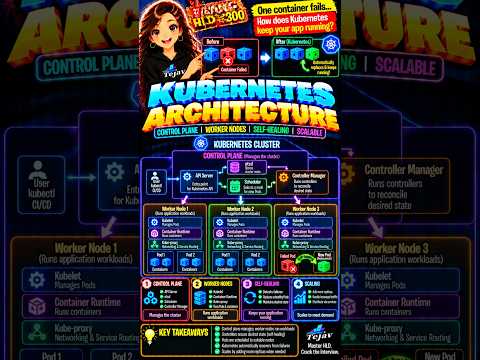
Understanding Kubernetes Architecture: Control Plane vs Worker Nodes
Kubernetes uses a Control Plane to manage Worker Nodes and ensure application reliability.

⚡ One HLD concept. 60 seconds. Interview ready
Understanding Vertical and Horizontal Scaling in System Design
Vertical scaling means upgrading one server, while horizontal scaling means adding more servers.

⚡ One HLD concept. 60 seconds. Interview ready
Read vs Write Scaling: How to Scale Databases
Scaling databases involves deciding whether to enhance read or write capabilities based on traffic patterns.
⚡ One HLD concept. 60 seconds. Interview ready
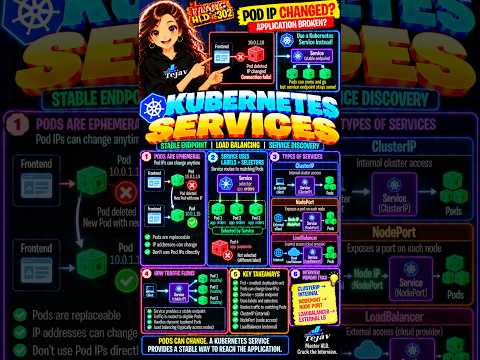
Kubernetes Services: Stable Endpoints for Dynamic Pods
Kubernetes Services provide stable endpoints for applications despite changing Pod IPs.

⚡ One HLD concept. 60 seconds. Interview ready
Understanding Elasticsearch Node Roles for Scaling Clusters
Elasticsearch has different node roles that help manage data and scale clusters effectively.

⚡ One HLD concept. 60 seconds. Interview ready
Kubernetes Ingress: One Entry Point for Multiple Apps
Kubernetes Ingress allows one entry point for multiple applications, simplifying routing.

⚡ One HLD concept. 60 seconds. Interview ready
Elasticsearch Cluster Sizing: How Many Nodes Do You Need?
The number of Elasticsearch nodes depends on storage, workload, and performance needs.

⚡ One HLD concept. 60 seconds. Interview ready
Stateless vs Stateful Servers: Scaling Made Easy
Stateless servers are easier to scale because they don't store user session data locally.

⚡ One HLD concept. 60 seconds. Interview ready
Understanding Read Replicas in Database Scaling
Read replicas allow databases to handle more read requests by distributing them across multiple copies.

⚡ One HLD concept. 60 seconds. Interview ready
Understanding Scalable System Design in FAANG Companies
FAANG engineers use high-level design principles to create scalable systems.

⚡ One HLD concept. 60 seconds. Interview ready
Cassandra Architecture: Masterless Database Scaling Explained
Cassandra uses a masterless architecture to distribute and replicate data efficiently.

⚡ One HLD concept. 60 seconds. Interview ready
Understanding Apache Kafka for Scalable Event Streaming
Apache Kafka is a system for managing large volumes of events efficiently.

⚡ One HLD concept. 60 seconds. Interview ready
MongoDB Sharding: Scaling to Millions of Orders
MongoDB uses sharding to distribute data across multiple servers for better scalability.

⚡ One HLD concept. 60 seconds. Interview ready
Understanding Kafka Partitioning for Scalable Messaging
Kafka uses partitions to allow multiple consumers to process messages in parallel.

⚡ One HLD concept. 60 seconds. Interview ready
Kafka Schema Evolution: Changing Schemas Without Breaking Consumers
Kafka Schema Evolution allows safe changes to message structures without breaking existing consumers.

⚡ One HLD concept. 60 seconds. Interview ready
Cascading Failures in Distributed Systems Explained
Cascading failures occur when one service's failure impacts others, causing widespread issues.

⚡ One HLD concept. 60 seconds. Interview ready
Understanding Availability Zones in High-Level Design
Availability Zones help prevent downtime by isolating failures across multiple locations.

⚡ One HLD concept. 60 seconds. Interview ready
Identifying and Optimizing Database Bottlenecks
Database bottlenecks slow down performance, but identifying them helps optimize and scale effectively.

⚡ One HLD concept. 60 seconds. Interview ready
REST API Design: Building Scalable APIs for Real-World Use
REST API design focuses on creating clean, efficient, and scalable web services.

⚡ One HLD concept. 60 seconds. Interview ready
Container Networking: How Do Containers Communicate?
Container networking enables communication between services in different containers.

⚡ One HLD concept. 60 seconds. Interview ready
When to Use Microservices in Software Design
Microservices are useful when you need independent scaling, deployment, and clear boundaries in software design.

⚡ One HLD concept. 60 seconds. Interview ready
Elasticsearch Pagination: From & Size vs Search After
Elasticsearch offers two pagination methods: from & size for shallow pages and search_after for deep pages.
⚡ One HLD concept. 60 seconds. Interview ready
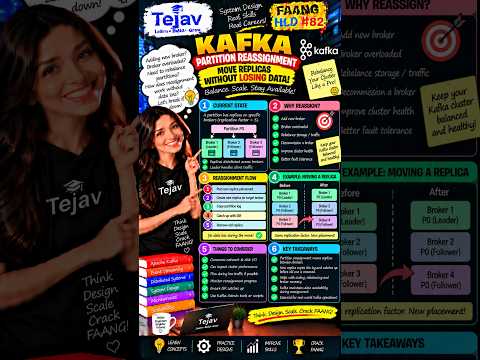
Kafka Partition Reassignment: Move Replicas Without Data Loss
Kafka Partition Reassignment moves replicas between brokers while keeping data safe.

⚡ One HLD concept. 60 seconds. Interview ready
Database Replication: Scale and Survive Failures
Database replication helps keep data available and allows systems to handle more read requests.

⚡ One HLD concept. 60 seconds. Interview ready
Understanding Sharding: How Databases Manage Large Data
Sharding splits databases into smaller parts to improve performance and scalability.

⚡ One HLD concept. 60 seconds. Interview ready
Consistent Hashing: Key to Distributed Systems Scalability
Consistent hashing helps distribute data across servers with minimal movement.

⚡ One HLD concept. 60 seconds. Interview ready
Container Health Checks: Ensuring Your App Is Healthy
Container health checks ensure your app is running and ready to serve users.

⚡ One HLD concept. 60 seconds. Interview ready
Elasticsearch Pagination: Fixing Slow Page Searches
Deep pagination in Elasticsearch can slow down searches significantly, but there are efficient methods to handle it.

⚡ One HLD concept. 60 seconds. Interview ready
Kafka Consumer Parallelism: Partitions, Keys, and Throughput
Kafka uses partitions to allow parallel processing while ensuring message order with keys.

⚡ One HLD concept. 60 seconds. Interview ready
MongoDB Architecture: Understanding Replica Sets and Sharding
MongoDB uses replica sets for data redundancy and sharding for scalability.

⚡ One HLD concept. 60 seconds. Interview ready
HLD: Understanding Container Storage and Data Persistence
Container data can be lost unless stored in persistent volumes.

⚡ One HLD concept. 60 seconds. Interview ready
Understanding Elasticsearch Cross-Cluster Replication (CCR)
Elasticsearch CCR allows real-time data replication for faster disaster recovery.

⚡ One HLD concept. 60 seconds. Interview ready
API Pagination: Efficiently Handling Large Datasets
API pagination helps manage large datasets by breaking them into smaller parts.

⚡ One HLD concept. 60 seconds. Interview ready
Kafka Backpressure Strategies: Handling Traffic Spikes
Backpressure helps manage message flow in Kafka during traffic spikes.
⚡ One HLD concept. 60 seconds. Interview ready
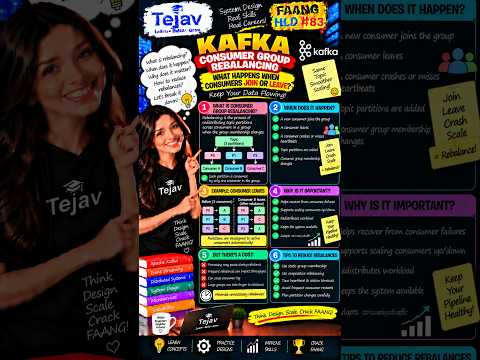
Kafka Consumer Group Rebalancing Explained
Kafka rebalances consumer groups to manage partition assignments effectively.

⚡ One HLD concept. 60 seconds. Interview ready
Understanding Elasticsearch Snapshots: Replicas vs Backups
Replicas keep your system available, while snapshots allow for data recovery.

⚡ One HLD concept. 60 seconds. Interview ready
Kafka Replay Without Breaking Production: Safe Architecture
You can replay Kafka events safely by separating live and replay processes.

⚡ One HLD concept. 60 seconds. Interview ready
Choosing Service Boundaries in Microservices Architecture
Choosing the right boundaries for microservices is crucial for effective architecture.

⚡ One HLD concept. 60 seconds. Interview ready
Understanding Load Balancers in System Design
Load balancers distribute traffic across multiple servers to enhance performance and reliability.