
I'm preparing for
🎛️ Narrow down IT & Codingsubject · level · topic▾
Results · 37 for “State Management in Streams”
← Front page✨ Smart search: matched by meaning, not just words

⚡ One HLD concept. 60 seconds. Interview ready
Kafka Stateful Stream Processing: How Does It Remember?
Kafka uses state stores to remember previous events in stateful stream processing.

⚡ One HLD concept. 60 seconds. Interview ready
Kafka Streams Local State: Fast Processing and Recovery
Kafka Streams uses local state for quick data access and changelogs for recovery.

⚡ One HLD concept. 60 seconds. Interview ready
Stream Processing Architecture: From Events to Real-Time Insights
Stream Processing Architecture helps turn incoming events into real-time insights efficiently.
⚡ One HLD concept. 60 seconds. Interview ready
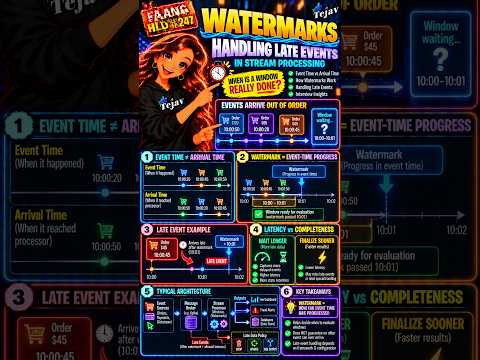
Understanding Watermarks in Stream Processing
Watermarks help stream processing systems manage event time and late events.

⚡ One HLD concept. 60 seconds. Interview ready
Understanding Elasticsearch Data Streams in HLD
Elasticsearch Data Streams simplify time-series data management with one name for many indices.

⚡ One HLD concept. 60 seconds. Interview ready
Kafka Streams vs Consumer: Choosing the Right Tool
Kafka Streams offers higher-level abstractions, while Kafka Consumer provides direct control.

⚡ One HLD concept. 60 seconds. Interview ready
HLD: Late-Arriving Events - Drop, Update, or Replay?
Late-arriving events can be dropped, updated, or routed based on system needs.

⚡ One HLD concept. 60 seconds. Interview ready
Kafka Streams Windowing: Tumbling vs Hopping Windows Explained
Kafka Streams uses tumbling and hopping windows for time-based data aggregation.

⚡ One HLD concept. 60 seconds. Interview ready
Elasticsearch Data Streams vs. Time-Based Indices: Which to Choose?
Elasticsearch offers Data Streams for simplicity and Time-Based Indices for control in managing time-series data.

⚡ One HLD concept. 60 seconds. Interview ready
HLD: Batch vs Stream Processing in System Design
Batch processing collects data to process later, while stream processing handles data in real-time.

⚡ One HLD concept. 60 seconds. Interview ready
Kafka Commit Strategies: Auto vs Manual Commit Explained
Kafka commit strategies determine how offsets are managed during message processing.

⚡ One HLD concept. 60 seconds. Interview ready
Kafka Consumer State: Position, Offset, and Business State
Kafka consumers have three important states: Position, Committed Offset, and Application State.
⚡ One HLD concept. 60 seconds. Interview ready
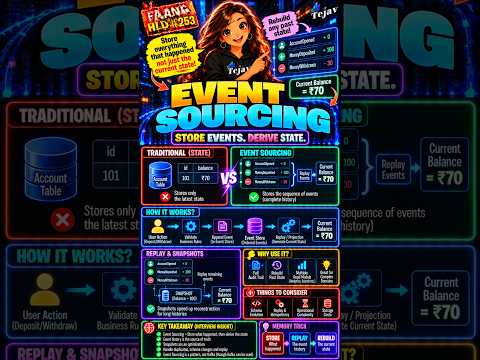
Event Sourcing: Store What Happened, Rebuild the State
Event Sourcing stores every action as an event to recreate the current state.

⚡ One HLD concept. 60 seconds. Interview ready
Kafka Static Membership: Reducing Unnecessary Rebalancing
Kafka's static membership allows consumers to maintain stable identities, reducing unnecessary rebalances.

⚡ One HLD concept. 60 seconds. Interview ready
Tumbling vs Hopping Windows in Stream Processing
Tumbling windows are non-overlapping time segments, while hopping windows can overlap.

⚡ One HLD concept. 60 seconds. Interview ready
Kafka Async Commit Ordering: Can Older Offsets Overwrite Newer Ones?
Older offsets can overwrite newer ones in Kafka if not handled properly.

⚡ One HLD concept. 60 seconds. Interview ready
Kafka Consumer Reprocessing: Safe Event Replay Strategies
Kafka consumer reprocessing involves safely replaying events to correct system states.

⚡ One HLD concept. 60 seconds. Interview ready
Understanding Apache Kafka for Scalable Event Streaming
Apache Kafka is a system for managing large volumes of events efficiently.

⚡ One HLD concept. 60 seconds. Interview ready
Kafka subscribe() vs assign(): Who Controls Partition Assignment?
Kafka's subscribe() lets the group manage partitions, while assign() gives control to the application.

⚡ One HLD concept. 60 seconds. Interview ready
FAANG HLD 🔥 | Kafka Backpressure Explained — What Happens When Consumers Can't Keep Up? 🚨
Backpressure prevents system overload by managing message processing rates in Kafka.

⚡ One HLD concept. 60 seconds. Interview ready
Kafka Backpressure Strategies: Handling Traffic Spikes
Backpressure helps manage message flow in Kafka during traffic spikes.

⚡ One HLD concept. 60 seconds. Interview ready
Kafka Schema Evolution: Changing Schemas Without Breaking Consumers
Kafka Schema Evolution allows safe changes to message structures without breaking existing consumers.

⚡ One HLD concept. 60 seconds. Interview ready
Kafka Retention vs Compaction: History or Latest State?
Kafka uses retention to keep historical data and compaction to keep the latest state.

⚡ One HLD concept. 60 seconds. Interview ready
Stateless vs Stateful Servers: Scaling Made Easy
Stateless servers are easier to scale because they don't store user session data locally.
⚡ One HLD concept. 60 seconds. Interview ready
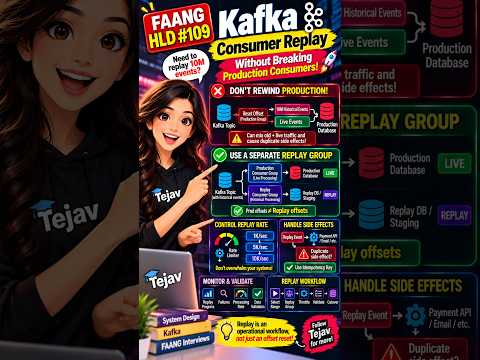
Kafka Replay Without Breaking Production: Safe Architecture
You can replay Kafka events safely by separating live and replay processes.

⚡ One HLD concept. 60 seconds. Interview ready
Understanding Event Time vs Processing Time in Stream Processing
Event time is when an event occurs, while processing time is when it is handled.

⚡ One HLD concept. 60 seconds. Interview ready
FAANG HLD 🔥 | Raft Safety — Why Committed Entries Survive Leader Failure! 🛡️
Raft's safety rules guarantee that committed entries are preserved even after leader failures.

⚡ One HLD concept. 60 seconds. Interview ready
Kafka Consumer Pause & Resume: Managing Backpressure Smartly
Kafka consumers can pause and resume message processing to handle backpressure effectively.

⚡ One HLD concept. 60 seconds. Interview ready
Kafka Manual Partition Assignment: Using assign() for Control
Kafka's assign() method allows manual control of partition assignments for consumers.
⚡ One HLD concept. 60 seconds. Interview ready
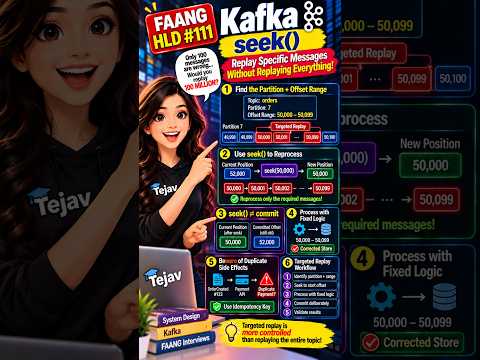
FAANG HLD 🔥 | Kafka Seek — Replay Specific Messages Without Replaying Everything! 🎯
Kafka's `seek()` lets you replay only specific messages, saving time.

⚡ One HLD concept. 60 seconds. Interview ready
Kafka commitSync vs commitAsync: Choosing the Right Method
Kafka's commitSync waits for confirmation, while commitAsync continues immediately.

⚡ One HLD concept. 60 seconds. Interview ready
Understanding Kafka Rebalance Listeners in High-Level Design
Kafka Rebalance Listeners help manage state during partition changes in consumer groups.

⚡ One HLD concept. 60 seconds. Interview ready
Token Bucket vs Leaky Bucket: Key Differences Explained
Token Bucket allows burst traffic, while Leaky Bucket smooths out traffic flow.

⚡ One HLD concept. 60 seconds. Interview ready
Kafka Graceful Shutdown: Stop Without Losing Work
Graceful shutdown in Kafka ensures no data loss during consumer termination.

⚡ One HLD concept. 60 seconds. Interview ready
Understanding Raft Consensus: Terms, Elections & Log Replication
Raft consensus helps distributed systems elect leaders and replicate logs reliably.
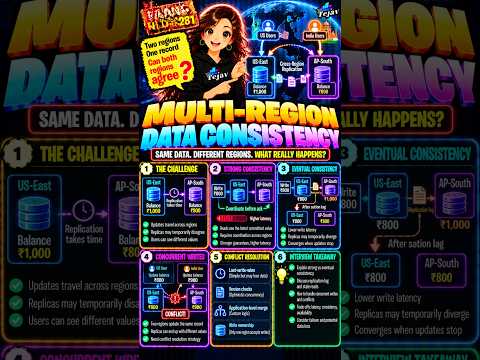
⚡ One HLD concept. 60 seconds. Interview ready
HLD: Multi-Region Data Consistency Explained
Multi-region data consistency ensures that users in different locations see the same data.

⚡ One HLD concept. 60 seconds. Interview ready
Kafka Consumer Liveness: Heartbeats, Sessions & Timeouts Explained
Kafka uses heartbeats and timeouts to check if consumers are alive.