
I'm preparing for
🎛️ Narrow downsubject · level · topic2▾
Results · 16 for “Replication Strategies”
← Front page✨ Smart search: matched by meaning, not just words

⚡ One HLD concept. 60 seconds. Interview ready
Backup Strategies: Full vs Incremental vs Differential
Backup strategies include Full, Incremental, and Differential, each with unique benefits.

⚡ One HLD concept. 60 seconds. Interview ready
Cross-Region Database Replication: Keeping Databases in Sync
Cross-region database replication keeps databases synchronized across different geographical locations.

⚡ One HLD concept. 60 seconds. Interview ready
Understanding Database Replication in High-Level Design
Database replication enhances data availability and read performance but has challenges like replication lag.

⚡ One HLD concept. 60 seconds. Interview ready
Database Replication: Scale and Survive Failures
Database replication helps keep data available and allows systems to handle more read requests.

⚡ One HLD concept. 60 seconds. Interview ready
Sync vs Async Replication: Choosing the Right Approach
Synchronous replication waits for confirmation from replicas, while asynchronous allows faster writes without waiting.

⚡ One HLD concept. 60 seconds. Interview ready
Understanding Elasticsearch Cross-Cluster Replication (CCR)
Elasticsearch CCR allows real-time data replication for faster disaster recovery.

⚡ One HLD concept. 60 seconds. Interview ready
Log Replication and Majority Commit in Distributed Systems
Log replication ensures data consistency by requiring majority acknowledgment before committing changes.

⚡ One HLD concept. 60 seconds. Interview ready
Understanding Read Replicas in Database Scaling
Read replicas allow databases to handle more read requests by distributing them across multiple copies.

⚡ One HLD concept. 60 seconds. Interview ready
Quorum-Based Replication: How Many Replicas Must Agree?
Quorum-based replication determines how many database replicas must agree for reads and writes.

⚡ One HLD concept. 60 seconds. Interview ready
Kafka Replication and ISR: Ensuring Data Availability
Kafka uses replication and in-sync replicas to ensure data is always available.

⚡ One HLD concept. 60 seconds. Interview ready
Kafka Commit Strategies: Auto vs Manual Commit Explained
Kafka commit strategies determine how offsets are managed during message processing.
⚡ One HLD concept. 60 seconds. Interview ready
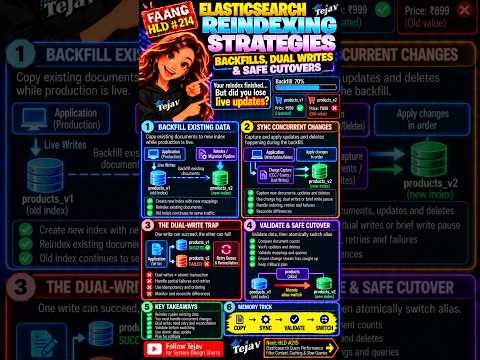
Elasticsearch Reindexing: Understanding the Dual-Write Trap
The dual-write trap in Elasticsearch can cause data inconsistency during reindexing.

⚡ One HLD concept. 60 seconds. Interview ready
Elasticsearch Shards vs Replicas: Partitioning vs Duplication
Primary shards partition data, while replica shards duplicate it for redundancy.

⚡ One HLD concept. 60 seconds. Interview ready
Kafka Consumer Assignment Strategies: Range vs RoundRobin vs Sticky
Kafka uses different strategies to assign partitions to consumers in a group efficiently.

⚡ One HLD concept. 60 seconds. Interview ready
Understanding Raft Log Replication: matchIndex vs commitIndex
matchIndex tracks what each follower has, while commitIndex shows what is committed.

⚡ One HLD concept. 60 seconds. Interview ready
Kafka Consumer Reprocessing: Safe Event Replay Strategies
Kafka consumer reprocessing involves safely replaying events to correct system states.