
I'm preparing for
🎛️ Narrow downsubject · level · topic2▾
Results · 30 for “State Machine Replication”
← Front page✨ Smart search: matched by meaning, not just words

⚡ One HLD concept. 60 seconds. Interview ready
Database Replication: Scale and Survive Failures
Database replication helps keep data available and allows systems to handle more read requests.

⚡ One HLD concept. 60 seconds. Interview ready
Log Replication and Majority Commit in Distributed Systems
Log replication ensures data consistency by requiring majority acknowledgment before committing changes.

⚡ One HLD concept. 60 seconds. Interview ready
Sync vs Async Replication: Choosing the Right Approach
Synchronous replication waits for confirmation from replicas, while asynchronous allows faster writes without waiting.

⚡ One HLD concept. 60 seconds. Interview ready
Understanding Database Replication in High-Level Design
Database replication enhances data availability and read performance but has challenges like replication lag.

⚡ One HLD concept. 60 seconds. Interview ready
Understanding Consistency Models in Distributed Systems
Consistency models determine what data reads in distributed systems can see.

⚡ One HLD concept. 60 seconds. Interview ready
Kafka Replication and ISR: Ensuring Data Availability
Kafka uses replication and in-sync replicas to ensure data is always available.

⚡ One HLD concept. 60 seconds. Interview ready
Understanding Read Replicas in Database Scaling
Read replicas allow databases to handle more read requests by distributing them across multiple copies.

⚡ One HLD concept. 60 seconds. Interview ready
Elasticsearch Split Brain: Master Election and Quorum Explained
Elasticsearch uses master election and quorum to prevent split brain scenarios.

⚡ One HLD concept. 60 seconds. Interview ready
Stateless vs Stateful Servers: Scaling Made Easy
Stateless servers are easier to scale because they don't store user session data locally.

⚡ One HLD concept. 60 seconds. Interview ready
Understanding Raft Log Replication: matchIndex vs commitIndex
matchIndex tracks what each follower has, while commitIndex shows what is committed.

⚡ One HLD concept. 60 seconds. Interview ready
Failover and Split-Brain in High-Level Design
Failover ensures systems remain operational by managing leader changes during failures.

⚡ One HLD concept. 60 seconds. Interview ready
Kafka Consumer Reprocessing: Safe Event Replay Strategies
Kafka consumer reprocessing involves safely replaying events to correct system states.

⚡ One HLD concept. 60 seconds. Interview ready
Kafka Exactly-Once Processing: Avoiding Duplicates
Kafka can help ensure messages are processed once, but requires careful design.

⚡ One HLD concept. 60 seconds. Interview ready
HLD: Fail-Stop vs Fail-Recover Explained
Fail-stop means a system stops and stays down, while fail-recover means it can come back but needs to be ready.

⚡ One HLD concept. 60 seconds. Interview ready
Read-After-Write Consistency in Database Systems
Read-after-write consistency ensures users see their latest updates immediately.
⚡ One HLD concept. 60 seconds. Interview ready
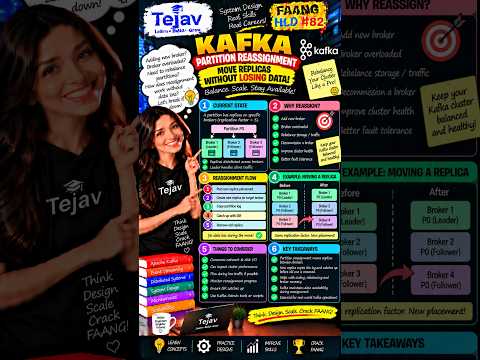
Kafka Partition Reassignment: Move Replicas Without Data Loss
Kafka Partition Reassignment moves replicas between brokers while keeping data safe.

⚡ One HLD concept. 60 seconds. Interview ready
Transactional Outbox Pattern: Never Lose Events!
The Transactional Outbox Pattern ensures database updates and event publishing are synchronized to avoid losing events.

⚡ One HLD concept. 60 seconds. Interview ready
Distributed Locks: Preventing Duplicate Work Across Servers
Distributed locks ensure only one server performs a task, avoiding duplication.

⚡ One HLD concept. 60 seconds. Interview ready
Kafka Stateful Stream Processing: How Does It Remember?
Kafka uses state stores to remember previous events in stateful stream processing.

⚡ One HLD concept. 60 seconds. Interview ready
Understanding Retry Storms in Distributed Systems
Retry storms occur when too many retries overload a failing service.

⚡ One HLD concept. 60 seconds. Interview ready
Kafka Commit Strategies: Auto vs Manual Commit Explained
Kafka commit strategies determine how offsets are managed during message processing.

⚡ One HLD concept. 60 seconds. Interview ready
Kafka Static Membership: Reducing Unnecessary Rebalancing
Kafka's static membership allows consumers to maintain stable identities, reducing unnecessary rebalances.

⚡ One HLD concept. 60 seconds. Interview ready
Understanding the Saga Pattern in Distributed Transactions
The Saga Pattern manages distributed transactions using local transactions and compensating actions.
⚡ One HLD concept. 60 seconds. Interview ready
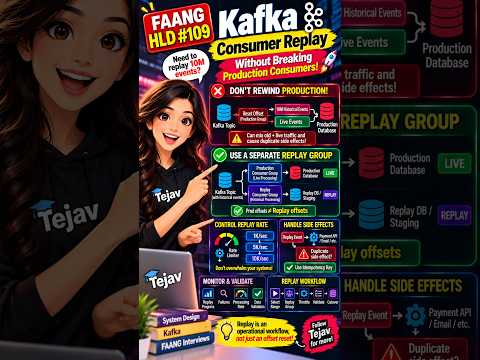
Kafka Replay Without Breaking Production: Safe Architecture
You can replay Kafka events safely by separating live and replay processes.

⚡ One HLD concept. 60 seconds. Interview ready
Message Delivery Semantics: At-Most-Once vs At-Least-Once vs Exactly-Once
Message delivery semantics define how messages are sent in distributed systems and handle failures.
⚡ One HLD concept. 60 seconds. Interview ready
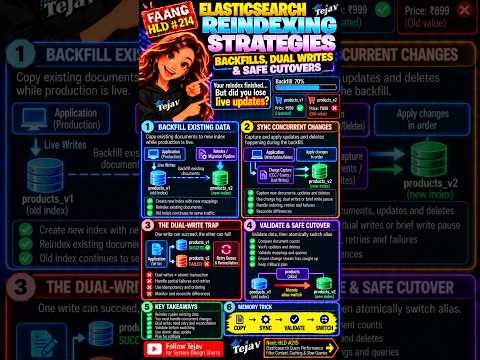
Elasticsearch Reindexing: Understanding the Dual-Write Trap
The dual-write trap in Elasticsearch can cause data inconsistency during reindexing.

⚡ One HLD concept. 60 seconds. Interview ready
Understanding Circuit Breaker: CLOSED, OPEN, and HALF-OPEN States
The Circuit Breaker pattern controls service calls to prevent failures from spreading.

⚡ One HLD concept. 60 seconds. Interview ready
Kafka Rebalance: Avoiding Work Loss or Duplication
Kafka rebalance can lead to lost or duplicated work if not handled carefully.

⚡ One HLD concept. 60 seconds. Interview ready
Kafka Streams Local State: Fast Processing and Recovery
Kafka Streams uses local state for quick data access and changelogs for recovery.

⚡ One HLD concept. 60 seconds. Interview ready
Understanding Elasticsearch Cross-Cluster Replication (CCR)
Elasticsearch CCR allows real-time data replication for faster disaster recovery.