
I'm preparing for
🎛️ Narrow downsubject · level · topic2▾
Results · 10 for “Understanding of Containers”
← Front page✨ Smart search: matched by meaning, not just words

⚡ One HLD concept. 60 seconds. Interview ready
HLD: Understanding Container Storage and Data Persistence
Container data can be lost unless stored in persistent volumes.
⚡ One HLD concept. 60 seconds. Interview ready
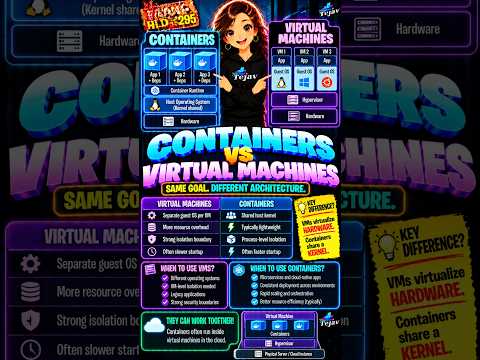
Understanding Containers vs Virtual Machines in HLD
Containers share the host OS kernel, while VMs virtualize hardware with separate OS.

⚡ One HLD concept. 60 seconds. Interview ready
Container Networking: How Do Containers Communicate?
Container networking enables communication between services in different containers.

⚡ One HLD concept. 60 seconds. Interview ready
Container Health Checks: Ensuring Your App Is Healthy
Container health checks ensure your app is running and ready to serve users.

⚡ One HLD concept. 60 seconds. Interview ready
Understanding Kubernetes Pods and Deployments
Kubernetes uses Pods, ReplicaSets, and Deployments to manage application availability and updates.
⚡ One HLD concept. 60 seconds. Interview ready
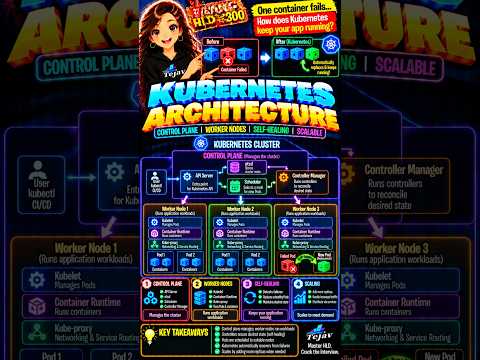
Understanding Kubernetes Architecture: Control Plane vs Worker Nodes
Kubernetes uses a Control Plane to manage Worker Nodes and ensure application reliability.

⚡ One HLD concept. 60 seconds. Interview ready
Understanding the Bulkhead Pattern in System Design
The Bulkhead Pattern isolates resources to protect critical workloads from failures.

⚡ One HLD concept. 60 seconds. Interview ready
Understanding the USE Method for Infrastructure Bottlenecks
The USE Method helps find and analyze infrastructure bottlenecks in software systems.
⚡ One HLD concept. 60 seconds. Interview ready
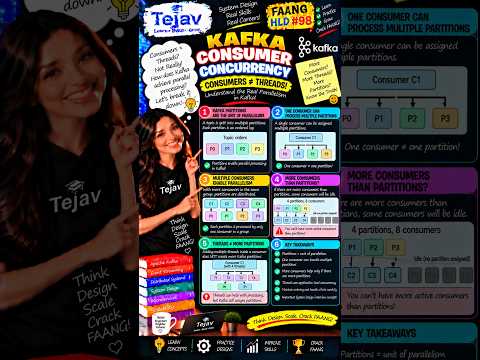
Kafka Consumer Concurrency: Understanding Partitions and Threads
Kafka's parallel processing depends on partitions, not just consumers or threads.
⚡ One HLD concept. 60 seconds. Interview ready
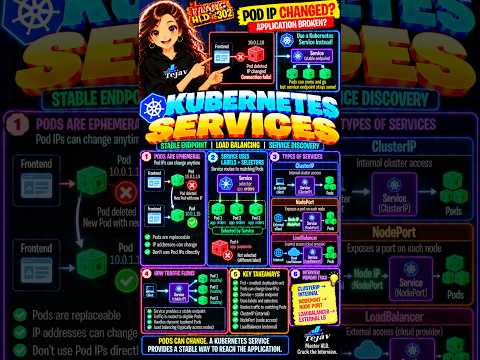
Kubernetes Services: Stable Endpoints for Dynamic Pods
Kubernetes Services provide stable endpoints for applications despite changing Pod IPs.