
I'm preparing for
🎛️ Narrow downsubject · level · topic2▾
Results · 60 for “Understanding of System Design”
← Front page✨ Smart search: matched by meaning, not just words

⚡ One HLD concept. 60 seconds. Interview ready
What FAANG Interviewers Evaluate in System Design Interviews
FAANG interviewers evaluate problem understanding, architecture, scalability, and communication skills.

⚡ One HLD concept. 60 seconds. Interview ready
Understanding Availability vs Reliability in System Design
Availability is about access; reliability is about correct performance.

⚡ One HLD concept. 60 seconds. Interview ready
Understanding the Retry Pattern in System Design
The retry pattern helps systems recover from temporary failures but can cause overload if misused.

⚡ One HLD concept. 60 seconds. Interview ready
Understanding Scalable System Design in FAANG Companies
FAANG engineers use high-level design principles to create scalable systems.
⚡ One HLD concept. 60 seconds. Interview ready
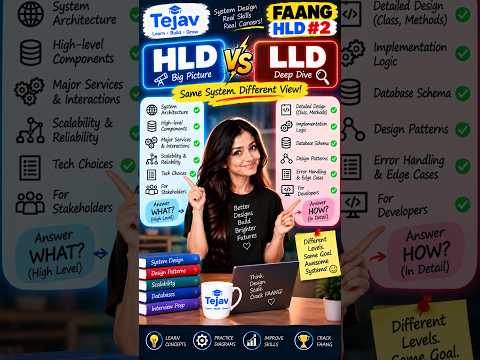
Understanding High-Level Design (HLD) and Low-Level Design (LLD)
HLD provides an overview of system architecture, while LLD details implementation specifics.

⚡ One HLD concept. 60 seconds. Interview ready
Understanding Functional and Non-Functional Requirements
Functional requirements define what a system does, while non-functional requirements define how it performs.

⚡ One HLD concept. 60 seconds. Interview ready
HLD: Understanding Request-Response vs Events in System Design
Request-Response asks for a result, while Events notify that something has happened.

⚡ One HLD concept. 60 seconds. Interview ready
Understanding Latency, Throughput, and Response Time
Latency, throughput, and response time are key metrics in system performance.

⚡ One HLD concept. 60 seconds. Interview ready
Graceful Degradation in System Design
Graceful degradation allows apps to function partially during service failures.

⚡ One HLD concept. 60 seconds. Interview ready
HLD: Authentication vs Authorization Explained
Authentication verifies who you are, while authorization determines what you can do.

⚡ One HLD concept. 60 seconds. Interview ready
Understanding N+1 Redundancy in High-Level Design
N+1 redundancy means having one extra server to maintain capacity during a failure.

⚡ One HLD concept. 60 seconds. Interview ready
Understanding the Bulkhead Pattern in System Design
The Bulkhead Pattern isolates resources to protect critical workloads from failures.

⚡ One HLD concept. 60 seconds. Interview ready
HLD: Fallbacks Explained for System Design
Fallbacks allow systems to handle failures safely and maintain user experience.

⚡ One HLD concept. 60 seconds. Interview ready
Understanding the USE Method for Infrastructure Bottlenecks
The USE Method helps find and analyze infrastructure bottlenecks in software systems.

⚡ One HLD concept. 60 seconds. Interview ready
Understanding Fault Domains in High-Level Design
Fault domains help prevent multiple servers from failing together in an architecture.

⚡ One HLD concept. 60 seconds. Interview ready
Stream Processing Architecture: From Events to Real-Time Insights
Stream Processing Architecture helps turn incoming events into real-time insights efficiently.

⚡ One HLD concept. 60 seconds. Interview ready
Understanding Vertical and Horizontal Scaling in System Design
Vertical scaling means upgrading one server, while horizontal scaling means adding more servers.

⚡ One HLD concept. 60 seconds. Interview ready
Understanding Distributed Clocks in Systems Design
In distributed systems, timestamps don't always reflect the true order of events.
⚡ One HLD concept. 60 seconds. Interview ready
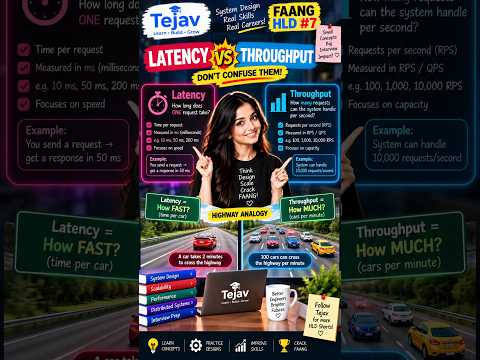
Understanding Latency and Throughput in System Design
Latency is the time for one request, while throughput is how many requests are processed.

⚡ One HLD concept. 60 seconds. Interview ready
Understanding High Availability in System Design
High Availability ensures your application remains operational even during server failures.

⚡ One HLD concept. 60 seconds. Interview ready
Understanding Alerting in High-Level Design
Alerting helps notify the right people about production issues quickly.

⚡ One HLD concept. 60 seconds. Interview ready
HLD: Batch vs Stream Processing in System Design
Batch processing collects data to process later, while stream processing handles data in real-time.
⚡ One HLD concept. 60 seconds. Interview ready
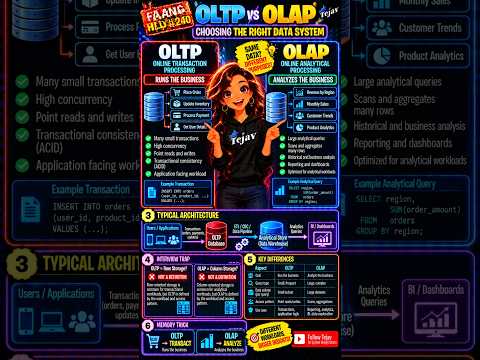
Understanding OLTP and OLAP in Database Design
OLTP handles transactions while OLAP is for data analysis and reporting.

⚡ One HLD concept. 60 seconds. Interview ready
Understanding SLIs, SLOs, and SLAs in Reliability Engineering
SLIs measure service performance, SLOs set reliability targets, and SLAs are customer agreements.

⚡ One HLD concept. 60 seconds. Interview ready
When to Use Microservices in Software Design
Microservices are useful when you need independent scaling, deployment, and clear boundaries in software design.
⚡ One HLD concept. 60 seconds. Interview ready
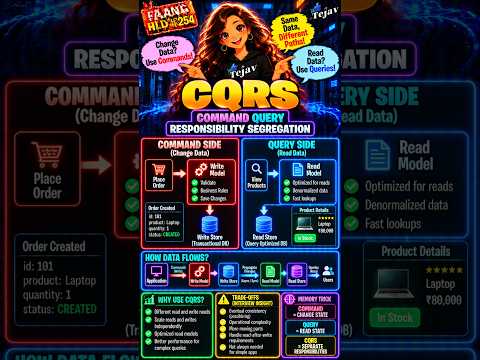
CQRS Explained: Commands vs Queries in System Design
CQRS separates how we change data from how we read data, improving scalability.

⚡ One HLD concept. 60 seconds. Interview ready
HLD: Search Engine Architecture and Its Components
Search engines collect, index, retrieve, and rank documents to provide relevant results.

⚡ One HLD concept. 60 seconds. Interview ready
HLD: Fail Fast vs Fail Safe in System Design
Fail Fast means stopping quickly on errors, while Fail Safe ensures safety in failures.

⚡ One HLD concept. 60 seconds. Interview ready
HLD: Understanding Server Failure Detection and Timeouts
Timeouts in distributed systems indicate suspicion, not confirmed failure.

⚡ One HLD concept. 60 seconds. Interview ready
HLD: Crash Failures vs Network Failures in Distributed Systems
Crash failures stop a service, while network failures disrupt communication.

⚡ One HLD concept. 60 seconds. Interview ready
Understanding CAP Theorem: Trade-offs in Distributed Systems
The CAP Theorem explains the trade-offs in distributed systems during network failures.

⚡ One HLD concept. 60 seconds. Interview ready
HLD: Managing Dependency Failures in Distributed Systems
Dependency failures can disrupt applications, but resilience patterns can help manage them.

⚡ One HLD concept. 60 seconds. Interview ready
Understanding Idempotency in System Design
Idempotency ensures that repeated operations in APIs do not cause duplicate effects.

⚡ One HLD concept. 60 seconds. Interview ready
Monolith vs Microservices: Choosing the Right Architecture
Monolithic and microservices architectures each have unique advantages and challenges for software development.

⚡ One HLD concept. 60 seconds. Interview ready
HLD: 5 Microservices Communication Patterns Explained
Microservices can communicate using five key patterns based on their needs.

⚡ One HLD concept. 60 seconds. Interview ready
Understanding Message Queues in Distributed Systems
Message queues allow services to communicate asynchronously, improving scalability and reliability.

⚡ One HLD concept. 60 seconds. Interview ready
HLD: Microservices vs Modular Monolith Explained
Microservices and modular monoliths differ mainly in deployment and communication methods.
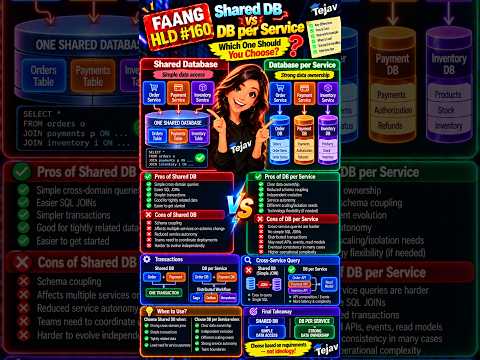
⚡ One HLD concept. 60 seconds. Interview ready
HLD: Shared DB vs Database per Service Trade-Offs
Choosing between a shared database and a database per service affects system design significantly.

⚡ One HLD concept. 60 seconds. Interview ready
Understanding Load Balancers in System Design
Load balancers distribute traffic across multiple servers to enhance performance and reliability.

⚡ One HLD concept. 60 seconds. Interview ready
Understanding Cache Penetration in System Design
Cache penetration occurs when requests for non-existent data overload the database.

⚡ One HLD concept. 60 seconds. Interview ready
HLD: Fail-Stop vs Fail-Recover Explained
Fail-stop means a system stops and stays down, while fail-recover means it can come back but needs to be ready.

⚡ One HLD concept. 60 seconds. Interview ready
Understanding Event Time vs Processing Time in Stream Processing
Event time is when an event occurs, while processing time is when it is handled.

⚡ One HLD concept. 60 seconds. Interview ready
Understanding Database Replication in High-Level Design
Database replication enhances data availability and read performance but has challenges like replication lag.

⚡ One HLD concept. 60 seconds. Interview ready
Cascading Failures in Distributed Systems Explained
Cascading failures occur when one service's failure impacts others, causing widespread issues.

⚡ One HLD concept. 60 seconds. Interview ready
Understanding Physical vs Logical Time in Distributed Systems
Physical time tells when events happen, while logical time tells their order.

⚡ One HLD concept. 60 seconds. Interview ready
HLD: Synchronous vs Asynchronous Communication Explained
Synchronous communication waits for a response, while asynchronous continues without waiting.

⚡ One HLD concept. 60 seconds. Interview ready
Understanding Error Budgets in High-Level Design
An error budget shows how much downtime is acceptable while meeting reliability goals.
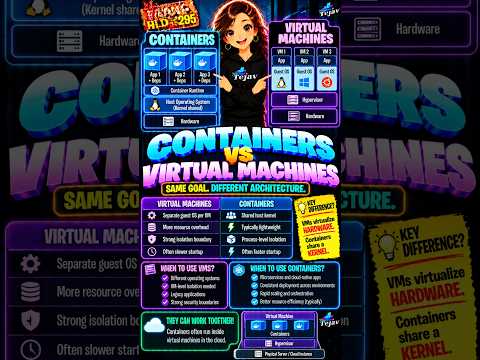
⚡ One HLD concept. 60 seconds. Interview ready
Understanding Containers vs Virtual Machines in HLD
Containers share the host OS kernel, while VMs virtualize hardware with separate OS.

⚡ One HLD concept. 60 seconds. Interview ready
HLD Timeout Pattern: Understanding Timeouts in Distributed Systems
A timeout indicates a deadline was exceeded, not necessarily a failure.

⚡ One HLD concept. 60 seconds. Interview ready
Understanding Reverse Proxy in High-Level Design
A reverse proxy routes client requests to different backend services efficiently.

⚡ One HLD concept. 60 seconds. Interview ready
Understanding Logs, Metrics, and Traces in Software Engineering
Logs, metrics, and traces help engineers debug issues in software systems.

⚡ One HLD concept. 60 seconds. Interview ready
Failover and Split-Brain in High-Level Design
Failover ensures systems remain operational by managing leader changes during failures.

⚡ One HLD concept. 60 seconds. Interview ready
Understanding Availability Zones in High-Level Design
Availability Zones help prevent downtime by isolating failures across multiple locations.

⚡ One HLD concept. 60 seconds. Interview ready
HLD: Downsampling and Aggregation in Time-Series Databases
Downsampling and aggregation reduce data volume while preserving essential trends.

⚡ One HLD concept. 60 seconds. Interview ready
Understanding DNS Resolution: How URLs Load in Browsers
DNS resolution translates a URL into an IP address for web access.

⚡ One HLD concept. 60 seconds. Interview ready
Queue vs Pub/Sub: Key Differences in System Design
Queues distribute tasks to one consumer, while Pub/Sub broadcasts events to multiple subscribers.

⚡ One HLD concept. 60 seconds. Interview ready
Time-Series Database Architecture: Storing Millions of Metrics
Time-series databases are designed to store and query time-stamped metrics efficiently.

⚡ One HLD concept. 60 seconds. Interview ready
Understanding the Cache-Aside Pattern in System Design
The Cache-Aside Pattern speeds up data retrieval by using a cache to store frequently accessed data.

⚡ One HLD concept. 60 seconds. Interview ready
REST API Design: Building Scalable APIs for Real-World Use
REST API design focuses on creating clean, efficient, and scalable web services.

⚡ One HLD concept. 60 seconds. Interview ready
Understanding Jitter in High-Level Design
Jitter helps spread out client retries to avoid traffic spikes.