
I'm preparing for
🎛️ Narrow downsubject · level · topic1▾
Results · 60 for “High Availability Systems”
← Front page✨ Smart search: matched by meaning, not just words

⚡ One HLD concept. 60 seconds. Interview ready
Understanding Availability vs Reliability in System Design
Availability is about access; reliability is about correct performance.

⚡ One HLD concept. 60 seconds. Interview ready
Database Replication: Scale and Survive Failures
Database replication helps keep data available and allows systems to handle more read requests.

⚡ One HLD concept. 60 seconds. Interview ready
Failover and Split-Brain in High-Level Design
Failover ensures systems remain operational by managing leader changes during failures.

⚡ One HLD concept. 60 seconds. Interview ready
HLD: Fail-Stop vs Fail-Recover Explained
Fail-stop means a system stops and stays down, while fail-recover means it can come back but needs to be ready.

⚡ One HLD concept. 60 seconds. Interview ready
Understanding Load Balancers in System Design
Load balancers distribute traffic across multiple servers to enhance performance and reliability.

⚡ One HLD concept. 60 seconds. Interview ready
Kafka Replication and ISR: Ensuring Data Availability
Kafka uses replication and in-sync replicas to ensure data is always available.

⚡ One HLD concept. 60 seconds. Interview ready
HLD: Fallbacks Explained for System Design
Fallbacks allow systems to handle failures safely and maintain user experience.

⚡ One HLD concept. 60 seconds. Interview ready
Understanding Database Replication in High-Level Design
Database replication enhances data availability and read performance but has challenges like replication lag.

⚡ One HLD concept. 60 seconds. Interview ready
HLD: Managing Dependency Failures in Distributed Systems
Dependency failures can disrupt applications, but resilience patterns can help manage them.

⚡ One HLD concept. 60 seconds. Interview ready
Understanding CAP Theorem: Trade-offs in Distributed Systems
The CAP Theorem explains the trade-offs in distributed systems during network failures.

⚡ One HLD concept. 60 seconds. Interview ready
Elasticsearch Split Brain: Master Election and Quorum Explained
Elasticsearch uses master election and quorum to prevent split brain scenarios.

⚡ One HLD concept. 60 seconds. Interview ready
Understanding Network Partitions in Distributed Systems
Network partitions occur when servers are operational but can't communicate, affecting system performance.

⚡ One HLD concept. 60 seconds. Interview ready
Consistent Hashing: Key to Distributed Systems Scalability
Consistent hashing helps distribute data across servers with minimal movement.

⚡ One HLD concept. 60 seconds. Interview ready
Graceful Degradation in System Design
Graceful degradation allows apps to function partially during service failures.

⚡ One HLD concept. 60 seconds. Interview ready
Understanding Message Queues in Distributed Systems
Message queues allow services to communicate asynchronously, improving scalability and reliability.

⚡ One HLD concept. 60 seconds. Interview ready
Understanding Partial Failure in Distributed Systems
Partial failure means some services fail while others keep running, impacting system reliability.

⚡ One HLD concept. 60 seconds. Interview ready
HLD: Fail Fast vs Fail Safe in System Design
Fail Fast means stopping quickly on errors, while Fail Safe ensures safety in failures.

⚡ One HLD concept. 60 seconds. Interview ready
Understanding Cache Breakdown and Request Coalescing
Cache breakdowns can overwhelm databases, but request coalescing solves this issue.

⚡ One HLD concept. 60 seconds. Interview ready
Redis: Why Is It So Fast for High-Scale Systems?
Redis is a fast in-memory data store used for caching and low-latency applications.

⚡ One HLD concept. 60 seconds. Interview ready
HLD: Understanding Server Failure Detection and Timeouts
Timeouts in distributed systems indicate suspicion, not confirmed failure.

⚡ One HLD concept. 60 seconds. Interview ready
Understanding Scalable System Design in FAANG Companies
FAANG engineers use high-level design principles to create scalable systems.

⚡ One HLD concept. 60 seconds. Interview ready
Cascading Failures in Distributed Systems Explained
Cascading failures occur when one service's failure impacts others, causing widespread issues.

⚡ One HLD concept. 60 seconds. Interview ready
Distributed Caching: Why Spread It Out?
Distributed caching spreads data across multiple servers for better performance and reliability.

⚡ One HLD concept. 60 seconds. Interview ready
Understanding the Bulkhead Pattern in System Design
The Bulkhead Pattern isolates resources to protect critical workloads from failures.

⚡ One HLD concept. 60 seconds. Interview ready
Choosing a Distributed Lock: Redis vs Database vs ZooKeeper
Choosing the right distributed lock depends on your system's needs and existing tools.

⚡ One HLD concept. 60 seconds. Interview ready
HLD: Crash Failures vs Network Failures in Distributed Systems
Crash failures stop a service, while network failures disrupt communication.
⚡ One HLD concept. 60 seconds. Interview ready
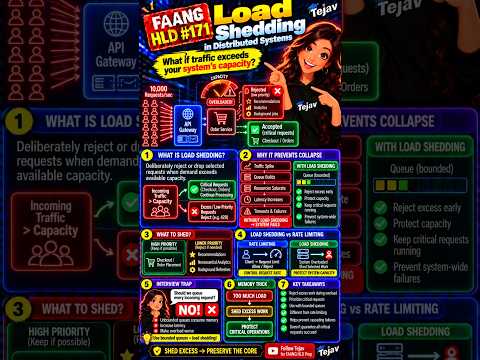
Load Shedding in Distributed Systems: Protecting Capacity
Load shedding helps systems reject excess requests to maintain performance during high demand.

⚡ One HLD concept. 60 seconds. Interview ready
Stateless vs Stateful Servers: Scaling Made Easy
Stateless servers are easier to scale because they don't store user session data locally.

⚡ One HLD concept. 60 seconds. Interview ready
Log Replication and Majority Commit in Distributed Systems
Log replication ensures data consistency by requiring majority acknowledgment before committing changes.

⚡ One HLD concept. 60 seconds. Interview ready
Sync vs Async Replication: Choosing the Right Approach
Synchronous replication waits for confirmation from replicas, while asynchronous allows faster writes without waiting.

⚡ One HLD concept. 60 seconds. Interview ready
Understanding Vertical and Horizontal Scaling in System Design
Vertical scaling means upgrading one server, while horizontal scaling means adding more servers.

⚡ One HLD concept. 60 seconds. Interview ready
Understanding Consistency Models in Distributed Systems
Consistency models determine what data reads in distributed systems can see.

⚡ One HLD concept. 60 seconds. Interview ready
Understanding Alerting in High-Level Design
Alerting helps notify the right people about production issues quickly.

⚡ One HLD concept. 60 seconds. Interview ready
Distributed Locks: Preventing Duplicate Work Across Servers
Distributed locks ensure only one server performs a task, avoiding duplication.

⚡ One HLD concept. 60 seconds. Interview ready
Understanding Read Replicas in Database Scaling
Read replicas allow databases to handle more read requests by distributing them across multiple copies.

⚡ One HLD concept. 60 seconds. Interview ready
Message Delivery Semantics: At-Most-Once vs At-Least-Once vs Exactly-Once
Message delivery semantics define how messages are sent in distributed systems and handle failures.

⚡ One HLD concept. 60 seconds. Interview ready
Read-After-Write Consistency in Database Systems
Read-after-write consistency ensures users see their latest updates immediately.

⚡ One HLD concept. 60 seconds. Interview ready
Distributed Backpressure: Managing Service Overload
Distributed backpressure helps manage the flow of work between services to prevent overload.
⚡ One HLD concept. 60 seconds. Interview ready
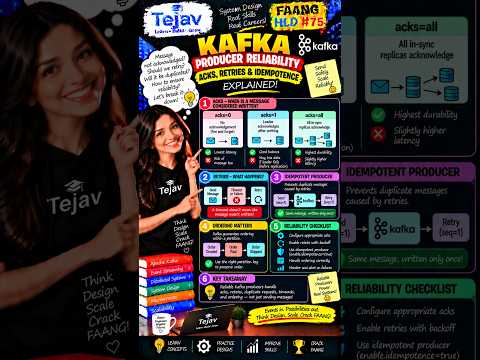
Kafka Producer Reliability: ACKs, Retries & Idempotence
Kafka producers use ACKs, retries, and idempotence to ensure reliable message delivery.

⚡ One HLD concept. 60 seconds. Interview ready
Understanding the USE Method for Infrastructure Bottlenecks
The USE Method helps find and analyze infrastructure bottlenecks in software systems.

⚡ One HLD concept. 60 seconds. Interview ready
Kafka Error Handling and Retry Strategies in HLD
Classifying failures and using controlled retries in Kafka prevents outages.

⚡ One HLD concept. 60 seconds. Interview ready
Kafka Retry Topics and Delayed Retries Explained
Kafka uses retry topics and delayed retries to manage message failures efficiently.

⚡ One HLD concept. 60 seconds. Interview ready
Keep-Alive in Networking: Efficient HTTP Connections
Keep-Alive allows reusing HTTP connections to improve efficiency and reduce overhead.

⚡ One HLD concept. 60 seconds. Interview ready
Understanding the Cache-Aside Pattern in System Design
The Cache-Aside Pattern speeds up data retrieval by using a cache to store frequently accessed data.
⚡ One HLD concept. 60 seconds. Interview ready
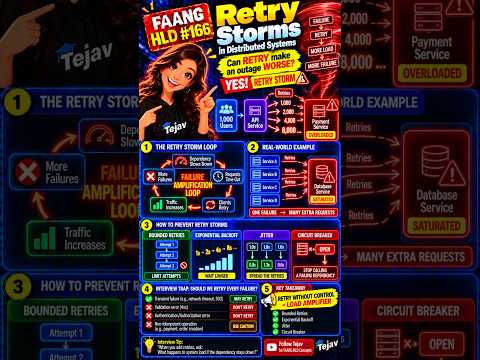
Understanding Retry Storms in Distributed Systems
Retry storms occur when too many retries overload a failing service.

⚡ One HLD concept. 60 seconds. Interview ready
HLD: Circuit Breaker Explained to Prevent Failures
A Circuit Breaker helps prevent system failures by stopping calls to unhealthy services.

⚡ One HLD concept. 60 seconds. Interview ready
Understanding Elasticsearch Cross-Cluster Replication (CCR)
Elasticsearch CCR allows real-time data replication for faster disaster recovery.

⚡ One HLD concept. 60 seconds. Interview ready
Exponential Backoff: Managing Retry Storms in Systems
Exponential backoff helps manage retries by increasing wait times to reduce system overload.

⚡ One HLD concept. 60 seconds. Interview ready
ZooKeeper Watches: Avoiding the Thundering Herd Problem
ZooKeeper watches notify clients of changes, avoiding constant polling and reducing server load.

⚡ One HLD concept. 60 seconds. Interview ready
Kafka Exactly-Once Processing: Avoiding Duplicates
Kafka can help ensure messages are processed once, but requires careful design.

⚡ One HLD concept. 60 seconds. Interview ready
Understanding Elasticsearch Shards and Replicas in HLD
Elasticsearch uses shards for data distribution and replicas for redundancy.
⚡ One HLD concept. 60 seconds. Interview ready
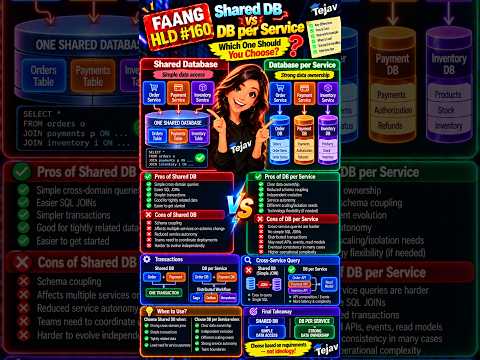
HLD: Shared DB vs Database per Service Trade-Offs
Choosing between a shared database and a database per service affects system design significantly.

⚡ One HLD concept. 60 seconds. Interview ready
Leader Election in Distributed Systems: Handling Leader Failures
Leader election ensures a single node coordinates tasks in distributed systems, even after failures.

⚡ One HLD concept. 60 seconds. Interview ready
Understanding Kafka Retries and Dead Letter Queue (DLQ)
Kafka uses retries and Dead Letter Queues to manage message processing failures.

⚡ One HLD concept. 60 seconds. Interview ready
Understanding Elasticsearch Snapshots: Replicas vs Backups
Replicas keep your system available, while snapshots allow for data recovery.

⚡ One HLD concept. 60 seconds. Interview ready
FAANG HLD 🔥 | Raft Safety — Why Committed Entries Survive Leader Failure! 🛡️
Raft's safety rules guarantee that committed entries are preserved even after leader failures.

⚡ One HLD concept. 60 seconds. Interview ready
Kafka Poison Messages: Risks of Infinite Retries
Poison messages in Kafka can cause infinite retries, risking system stability.

⚡ One HLD concept. 60 seconds. Interview ready
Understanding Quorum Reads in Distributed Systems
Quorum Reads ensure data consistency by querying multiple replicas in distributed systems.

⚡ One HLD concept. 60 seconds. Interview ready
Kafka Replay Without Breaking Production: Safe Architecture
You can replay Kafka events safely by separating live and replay processes.

⚡ One HLD concept. 60 seconds. Interview ready
Understanding Apache Kafka for Scalable Event Streaming
Apache Kafka is a system for managing large volumes of events efficiently.