
I'm preparing for
Topic
distributed systems
60 shorts across 1 course, in learning order
🎛️ Narrow downsubject · level · topic2▾
Results · 28 for “High Availability Systems”
← Front page✨ Smart search: matched by meaning, not just words

⚡ One HLD concept. 60 seconds. Interview ready
Failover and Split-Brain in High-Level Design
Failover ensures systems remain operational by managing leader changes during failures.

⚡ One HLD concept. 60 seconds. Interview ready
HLD: Fail-Stop vs Fail-Recover Explained
Fail-stop means a system stops and stays down, while fail-recover means it can come back but needs to be ready.

⚡ One HLD concept. 60 seconds. Interview ready
Kafka Replication and ISR: Ensuring Data Availability
Kafka uses replication and in-sync replicas to ensure data is always available.

⚡ One HLD concept. 60 seconds. Interview ready
HLD: Fallbacks Explained for System Design
Fallbacks allow systems to handle failures safely and maintain user experience.

⚡ One HLD concept. 60 seconds. Interview ready
HLD: Managing Dependency Failures in Distributed Systems
Dependency failures can disrupt applications, but resilience patterns can help manage them.

⚡ One HLD concept. 60 seconds. Interview ready
Understanding CAP Theorem: Trade-offs in Distributed Systems
The CAP Theorem explains the trade-offs in distributed systems during network failures.

⚡ One HLD concept. 60 seconds. Interview ready
Understanding Network Partitions in Distributed Systems
Network partitions occur when servers are operational but can't communicate, affecting system performance.

⚡ One HLD concept. 60 seconds. Interview ready
Consistent Hashing: Key to Distributed Systems Scalability
Consistent hashing helps distribute data across servers with minimal movement.

⚡ One HLD concept. 60 seconds. Interview ready
Graceful Degradation in System Design
Graceful degradation allows apps to function partially during service failures.

⚡ One HLD concept. 60 seconds. Interview ready
Understanding Partial Failure in Distributed Systems
Partial failure means some services fail while others keep running, impacting system reliability.

⚡ One HLD concept. 60 seconds. Interview ready
HLD: Understanding Server Failure Detection and Timeouts
Timeouts in distributed systems indicate suspicion, not confirmed failure.

⚡ One HLD concept. 60 seconds. Interview ready
Cascading Failures in Distributed Systems Explained
Cascading failures occur when one service's failure impacts others, causing widespread issues.

⚡ One HLD concept. 60 seconds. Interview ready
HLD: Crash Failures vs Network Failures in Distributed Systems
Crash failures stop a service, while network failures disrupt communication.
⚡ One HLD concept. 60 seconds. Interview ready
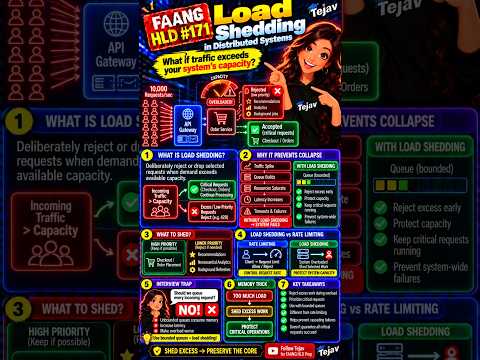
Load Shedding in Distributed Systems: Protecting Capacity
Load shedding helps systems reject excess requests to maintain performance during high demand.

⚡ One HLD concept. 60 seconds. Interview ready
Log Replication and Majority Commit in Distributed Systems
Log replication ensures data consistency by requiring majority acknowledgment before committing changes.

⚡ One HLD concept. 60 seconds. Interview ready
Understanding Vertical and Horizontal Scaling in System Design
Vertical scaling means upgrading one server, while horizontal scaling means adding more servers.

⚡ One HLD concept. 60 seconds. Interview ready
Understanding Consistency Models in Distributed Systems
Consistency models determine what data reads in distributed systems can see.

⚡ One HLD concept. 60 seconds. Interview ready
Message Delivery Semantics: At-Most-Once vs At-Least-Once vs Exactly-Once
Message delivery semantics define how messages are sent in distributed systems and handle failures.

⚡ One HLD concept. 60 seconds. Interview ready
Read-After-Write Consistency in Database Systems
Read-after-write consistency ensures users see their latest updates immediately.

⚡ One HLD concept. 60 seconds. Interview ready
Distributed Backpressure: Managing Service Overload
Distributed backpressure helps manage the flow of work between services to prevent overload.
⚡ One HLD concept. 60 seconds. Interview ready
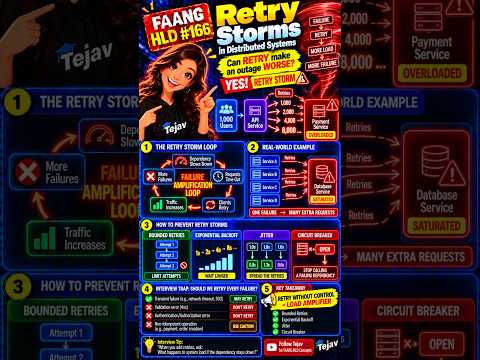
Understanding Retry Storms in Distributed Systems
Retry storms occur when too many retries overload a failing service.

⚡ One HLD concept. 60 seconds. Interview ready
HLD: Circuit Breaker Explained to Prevent Failures
A Circuit Breaker helps prevent system failures by stopping calls to unhealthy services.

⚡ One HLD concept. 60 seconds. Interview ready
Exponential Backoff: Managing Retry Storms in Systems
Exponential backoff helps manage retries by increasing wait times to reduce system overload.

⚡ One HLD concept. 60 seconds. Interview ready
ZooKeeper Watches: Avoiding the Thundering Herd Problem
ZooKeeper watches notify clients of changes, avoiding constant polling and reducing server load.

⚡ One HLD concept. 60 seconds. Interview ready
Kafka Exactly-Once Processing: Avoiding Duplicates
Kafka can help ensure messages are processed once, but requires careful design.

⚡ One HLD concept. 60 seconds. Interview ready
Leader Election in Distributed Systems: Handling Leader Failures
Leader election ensures a single node coordinates tasks in distributed systems, even after failures.

⚡ One HLD concept. 60 seconds. Interview ready
Understanding Quorum Reads in Distributed Systems
Quorum Reads ensure data consistency by querying multiple replicas in distributed systems.

⚡ One HLD concept. 60 seconds. Interview ready
Understanding Apache Kafka for Scalable Event Streaming
Apache Kafka is a system for managing large volumes of events efficiently.
🧠Related by meaning
Not tagged “distributed systems”, but closely connected


