
I'm preparing for
🎛️ Narrow downsubject · level · topic1▾
Results · 26 for “Transaction Management”
← Front page✨ Smart search: matched by meaning, not just words

⚡ One HLD concept. 60 seconds. Interview ready
Understanding Transactions and ACID Properties in Databases
Transactions ensure database operations are reliable using ACID properties.

⚡ One HLD concept. 60 seconds. Interview ready
Transactional Outbox Pattern: Never Lose Events!
The Transactional Outbox Pattern ensures database updates and event publishing are synchronized to avoid losing events.

⚡ One HLD concept. 60 seconds. Interview ready
Understanding the Saga Pattern in Distributed Transactions
The Saga Pattern manages distributed transactions using local transactions and compensating actions.

⚡ One HLD concept. 60 seconds. Interview ready
Optimistic vs Pessimistic Locking in Database Management
Optimistic and pessimistic locking are strategies to manage database access during concurrent transactions.

⚡ One HLD concept. 60 seconds. Interview ready
Kafka Exactly-Once Processing: Avoiding Duplicates
Kafka can help ensure messages are processed once, but requires careful design.
⚡ One HLD concept. 60 seconds. Interview ready
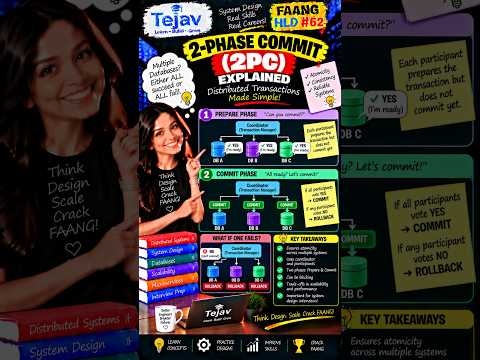
Understanding 2-Phase Commit in Distributed Transactions
2-Phase Commit helps maintain data consistency in transactions across multiple databases.

⚡ One HLD concept. 60 seconds. Interview ready
Kafka Consumer Offsets: Auto Commit vs Manual Commit
Kafka consumer offsets help track message processing to avoid loss and duplication.

⚡ One HLD concept. 60 seconds. Interview ready
Kafka Commit Strategies: Auto vs Manual Commit Explained
Kafka commit strategies determine how offsets are managed during message processing.

⚡ One HLD concept. 60 seconds. Interview ready
Kafka Async Commit Ordering: Can Older Offsets Overwrite Newer Ones?
Older offsets can overwrite newer ones in Kafka if not handled properly.

⚡ One HLD concept. 60 seconds. Interview ready
Understanding Database Isolation Levels in Software Engineering
Database isolation levels determine how transactions interact and affect data consistency.

⚡ One HLD concept. 60 seconds. Interview ready
Kafka commitSync vs commitAsync: Choosing the Right Method
Kafka's commitSync waits for confirmation, while commitAsync continues immediately.

⚡ One HLD concept. 60 seconds. Interview ready
Message Delivery Semantics: At-Most-Once vs At-Least-Once vs Exactly-Once
Message delivery semantics define how messages are sent in distributed systems and handle failures.

⚡ One HLD concept. 60 seconds. Interview ready
Understanding Write-Ahead Log (WAL) in Databases
Write-Ahead Log ensures data is safely recorded before changes are made.

⚡ One HLD concept. 60 seconds. Interview ready
Understanding Kafka Dead Letter Topics and Poison Messages
Kafka uses Dead Letter Topics to handle messages that repeatedly fail processing.

⚡ One HLD concept. 60 seconds. Interview ready
Understanding Idempotency in System Design
Idempotency ensures that repeated operations in APIs do not cause duplicate effects.

⚡ One HLD concept. 60 seconds. Interview ready
Understanding Message Queues in Distributed Systems
Message queues allow services to communicate asynchronously, improving scalability and reliability.

⚡ One HLD concept. 60 seconds. Interview ready
Choosing Service Boundaries in Microservices Architecture
Choosing the right boundaries for microservices is crucial for effective architecture.

⚡ One HLD concept. 60 seconds. Interview ready
Distributed Locks: Preventing Duplicate Work Across Servers
Distributed locks ensure only one server performs a task, avoiding duplication.

⚡ One HLD concept. 60 seconds. Interview ready
Token Bucket vs Leaky Bucket: Key Differences Explained
Token Bucket allows burst traffic, while Leaky Bucket smooths out traffic flow.

⚡ One HLD concept. 60 seconds. Interview ready
Kafka Stateful Stream Processing: How Does It Remember?
Kafka uses state stores to remember previous events in stateful stream processing.

⚡ One HLD concept. 60 seconds. Interview ready
Understanding CAP Theorem: Trade-offs in Distributed Systems
The CAP Theorem explains the trade-offs in distributed systems during network failures.
⚡ One HLD concept. 60 seconds. Interview ready
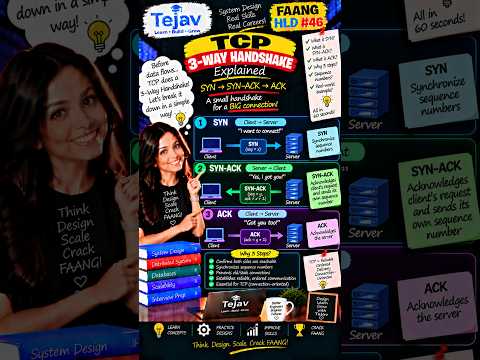
Understanding TCP 3-Way Handshake: SYN, SYN-ACK, ACK
The TCP 3-way handshake ensures reliable connection establishment between a client and server.

⚡ One HLD concept. 60 seconds. Interview ready
Understanding Lamport Timestamps in Distributed Systems
Lamport Timestamps help order events in distributed systems while preserving causality.

⚡ One HLD concept. 60 seconds. Interview ready
Kafka Consumer State: Position, Offset, and Business State
Kafka consumers have three important states: Position, Committed Offset, and Application State.

⚡ One HLD concept. 60 seconds. Interview ready
Understanding Kafka Retries and Dead Letter Queue (DLQ)
Kafka uses retries and Dead Letter Queues to manage message processing failures.

⚡ One HLD concept. 60 seconds. Interview ready
Understanding Consistency Models in Distributed Systems
Consistency models determine what data reads in distributed systems can see.