
I'm preparing for
🎛️ Narrow downsubject · level · topic2▾
Results · 20 for “Understanding of backups”
← Front page✨ Smart search: matched by meaning, not just words

⚡ One HLD concept. 60 seconds. Interview ready
Understanding Elasticsearch Snapshots: Replicas vs Backups
Replicas keep your system available, while snapshots allow for data recovery.

⚡ One HLD concept. 60 seconds. Interview ready
Disaster Recovery Across Regions: Can Your System Recover?
Disaster recovery ensures systems can restore services and data after major disruptions.

⚡ One HLD concept. 60 seconds. Interview ready
Point-in-Time Recovery: Recovering Deleted Database Data
Point-in-Time Recovery allows databases to be restored to a specific moment before data loss.

⚡ One HLD concept. 60 seconds. Interview ready
Disaster Recovery Testing: Ensuring Your DR Plan Works
Disaster Recovery Testing verifies that your recovery plan works effectively in real situations.
⚡ One HLD concept. 60 seconds. Interview ready
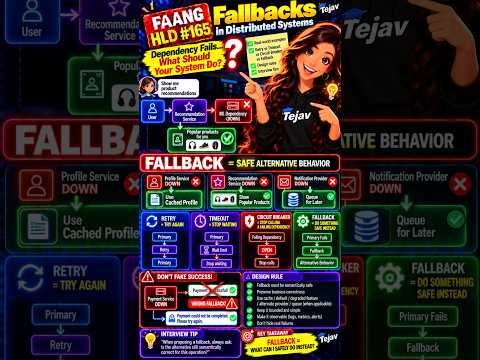
HLD: Fallbacks Explained for System Design
Fallbacks allow systems to handle failures safely and maintain user experience.

⚡ One HLD concept. 60 seconds. Interview ready
HLD: Understanding Container Storage and Data Persistence
Container data can be lost unless stored in persistent volumes.

⚡ One HLD concept. 60 seconds. Interview ready
Distributed Backpressure: Managing Service Overload
Distributed backpressure helps manage the flow of work between services to prevent overload.

⚡ One HLD concept. 60 seconds. Interview ready
Understanding Database Replication in High-Level Design
Database replication enhances data availability and read performance but has challenges like replication lag.

⚡ One HLD concept. 60 seconds. Interview ready
Kafka Backpressure Strategies: Handling Traffic Spikes
Backpressure helps manage message flow in Kafka during traffic spikes.

⚡ One HLD concept. 60 seconds. Interview ready
Understanding Elasticsearch Cross-Cluster Replication (CCR)
Elasticsearch CCR allows real-time data replication for faster disaster recovery.

⚡ One HLD concept. 60 seconds. Interview ready
Understanding High Availability in System Design
High Availability ensures your application remains operational even during server failures.

⚡ One HLD concept. 60 seconds. Interview ready
Active-Passive Architecture: Handling Production Downtime
Active-passive architecture ensures a standby system takes over if the main system fails.

⚡ One HLD concept. 60 seconds. Interview ready
Understanding Data Residency in High-Level Design
Data residency is crucial for compliance with laws about where data can be stored.

⚡ One HLD concept. 60 seconds. Interview ready
Exponential Backoff: Managing Retry Storms in Systems
Exponential backoff helps manage retries by increasing wait times to reduce system overload.
⚡ One HLD concept. 60 seconds. Interview ready
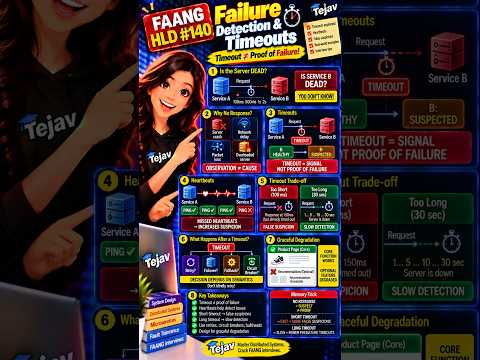
HLD: Understanding Server Failure Detection and Timeouts
Timeouts in distributed systems indicate suspicion, not confirmed failure.

⚡ One HLD concept. 60 seconds. Interview ready
Global Failover: What Happens When an Entire Region Goes Down?
Global failover ensures applications remain available by redirecting traffic from failed regions to functioning ones.

⚡ One HLD concept. 60 seconds. Interview ready
Transactional Outbox Pattern: Never Lose Events!
The Transactional Outbox Pattern ensures database updates and event publishing are synchronized to avoid losing events.

⚡ One HLD concept. 60 seconds. Interview ready
Understanding the Bulkhead Pattern in System Design
The Bulkhead Pattern isolates resources to protect critical workloads from failures.

⚡ One HLD concept. 60 seconds. Interview ready
Understanding Elasticsearch Shards and Replicas in HLD
Elasticsearch uses shards for data distribution and replicas for redundancy.

⚡ One HLD concept. 60 seconds. Interview ready
Understanding SPOF: Why Your App Can Go Down with Healthy Servers
A single component's failure can take down your entire application, even with redundancy.