
I'm preparing for
Topic
distributed systems
27 shorts across 1 course, in learning order
🎛️ Narrow downsubject · level · topic2▾
Results · 8 for “Database Sharding”
← Front page✨ Smart search: matched by meaning, not just words

⚡ One HLD concept. 60 seconds. Interview ready
Elasticsearch Shards vs Replicas: Partitioning vs Duplication
Primary shards partition data, while replica shards duplicate it for redundancy.

⚡ One HLD concept. 60 seconds. Interview ready
Elasticsearch Architecture: How Distributed Search Works
Elasticsearch uses distributed architecture to search data quickly across multiple servers.
⚡ One HLD concept. 60 seconds. Interview ready
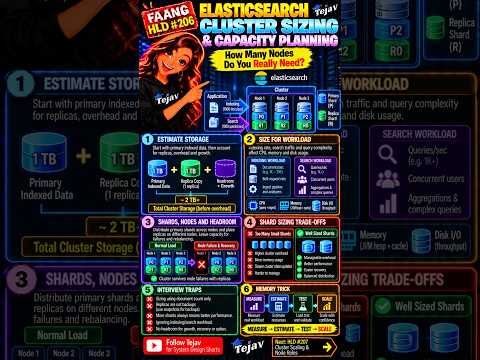
Elasticsearch Cluster Sizing: How Many Nodes Do You Need?
The number of Elasticsearch nodes depends on storage, workload, and performance needs.

⚡ One HLD concept. 60 seconds. Interview ready
Understanding Elasticsearch Node Roles for Scaling Clusters
Elasticsearch has different node roles that help manage data and scale clusters effectively.

⚡ One HLD concept. 60 seconds. Interview ready
Kafka Replication and ISR: Ensuring Data Availability
Kafka uses replication and in-sync replicas to ensure data is always available.

⚡ One HLD concept. 60 seconds. Interview ready
ZooKeeper Architecture and ZAB Explained
ZooKeeper coordinates distributed systems using an ensemble of servers and the ZAB protocol.

⚡ One HLD concept. 60 seconds. Interview ready
Understanding Vertical and Horizontal Scaling in System Design
Vertical scaling means upgrading one server, while horizontal scaling means adding more servers.

⚡ One HLD concept. 60 seconds. Interview ready
Distributed Backpressure: Managing Service Overload
Distributed backpressure helps manage the flow of work between services to prevent overload.
🧠Related by meaning
Not tagged “distributed systems”, but closely connected


