
I'm preparing for
🎛️ Narrow downsubject · level · topic1▾
Results · 19 for “Search Query Optimization”
← Front page✨ Smart search: matched by meaning, not just words

⚡ One HLD concept. 60 seconds. Interview ready
Elasticsearch Query Optimization: Filters and Caching
Optimizing Elasticsearch involves using filters, caching, and measuring performance.

⚡ One HLD concept. 60 seconds. Interview ready
Elasticsearch Pagination: Fixing Slow Page Searches
Deep pagination in Elasticsearch can slow down searches significantly, but there are efficient methods to handle it.

⚡ One HLD concept. 60 seconds. Interview ready
HLD: Search Engine Architecture and Its Components
Search engines collect, index, retrieve, and rank documents to provide relevant results.

⚡ One HLD concept. 60 seconds. Interview ready
Elasticsearch Query Execution: How Searches Work Across Shards
Elasticsearch distributes search queries across shards to find and retrieve results quickly.

⚡ One HLD concept. 60 seconds. Interview ready
Inverted Index: How Search Engines Find Pages Efficiently
An inverted index helps search engines quickly find documents containing specific terms.

⚡ One HLD concept. 60 seconds. Interview ready
HLD: Full-Text Search vs Database Search with Elasticsearch
Choose Elasticsearch for complex text searches, but use databases for structured queries.

⚡ One HLD concept. 60 seconds. Interview ready
Elasticsearch Fuzzy Search: Handling Typos in Queries
Elasticsearch fuzzy search allows finding results even with typos in queries.
⚡ One HLD concept. 60 seconds. Interview ready
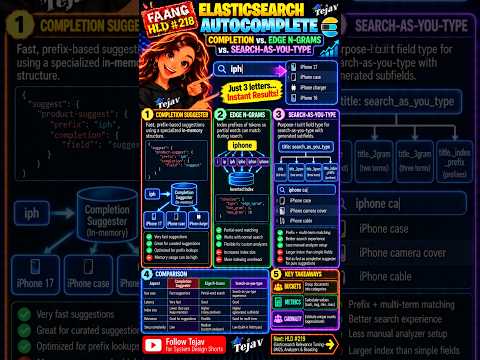
Elasticsearch Autocomplete: Completion vs. Edge N-Grams vs. Search-as-You-Type
Elasticsearch offers three main autocomplete strategies, each with unique benefits and trade-offs.

⚡ One HLD concept. 60 seconds. Interview ready
Elasticsearch Architecture: How Distributed Search Works
Elasticsearch uses distributed architecture to search data quickly across multiple servers.

⚡ One HLD concept. 60 seconds. Interview ready
Elasticsearch Indexing: Why Can't You Search Your Document Yet?
Elasticsearch documents aren't searchable immediately due to the indexing process.

⚡ One HLD concept. 60 seconds. Interview ready
HLD: Tokenization and Analyzers in Search Engines
Tokenization and analyzers help search engines process and match text effectively.

⚡ One HLD concept. 60 seconds. Interview ready
Understanding Cache Breakdown and Request Coalescing
Cache breakdowns can overwhelm databases, but request coalescing solves this issue.

⚡ One HLD concept. 60 seconds. Interview ready
Elasticsearch Refresh: Why Your Document Isn’t Searchable Yet
A document in Elasticsearch isn't searchable right after it's saved due to the refresh process.

⚡ One HLD concept. 60 seconds. Interview ready
API Pagination: Efficiently Handling Large Datasets
API pagination helps manage large datasets by breaking them into smaller parts.

⚡ One HLD concept. 60 seconds. Interview ready
Understanding Cache Penetration in System Design
Cache penetration occurs when requests for non-existent data overload the database.
⚡ One HLD concept. 60 seconds. Interview ready
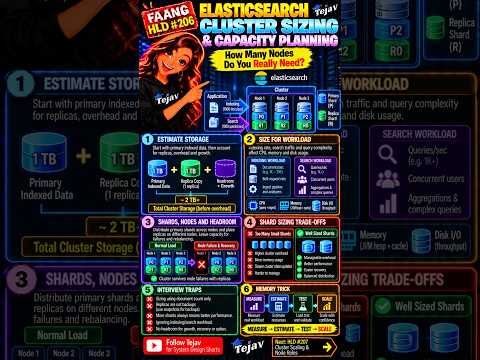
Elasticsearch Cluster Sizing: How Many Nodes Do You Need?
The number of Elasticsearch nodes depends on storage, workload, and performance needs.
⚡ One HLD concept. 60 seconds. Interview ready
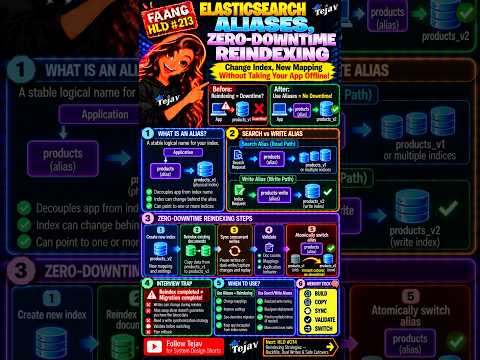
Elasticsearch Zero-Downtime Reindexing: The Alias Switch Trick
You can update Elasticsearch indices without downtime using alias switching.

⚡ One HLD concept. 60 seconds. Interview ready
Identifying and Optimizing Database Bottlenecks
Database bottlenecks slow down performance, but identifying them helps optimize and scale effectively.

⚡ One HLD concept. 60 seconds. Interview ready
Understanding Cache Hits: Reducing Database Load
Caching helps applications respond faster by serving data from memory instead of hitting the database.