
I'm preparing for
🎛️ Narrow downsubject · level · topic▾
Results · 18 for “Basic Networking”
← Front page✨ Smart search: matched by meaning, not just words
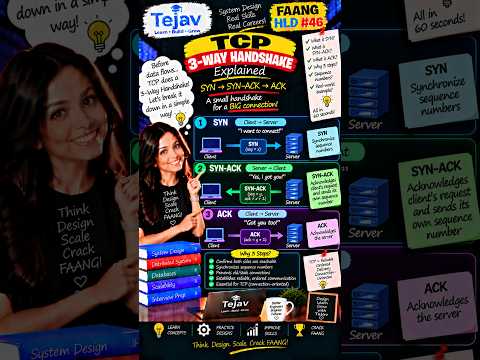
⚡ One HLD concept. 60 seconds. Interview ready
Understanding TCP 3-Way Handshake: SYN, SYN-ACK, ACK
The TCP 3-way handshake ensures reliable connection establishment between a client and server.

⚡ One HLD concept. 60 seconds. Interview ready
Keep-Alive in Networking: Efficient HTTP Connections
Keep-Alive allows reusing HTTP connections to improve efficiency and reduce overhead.
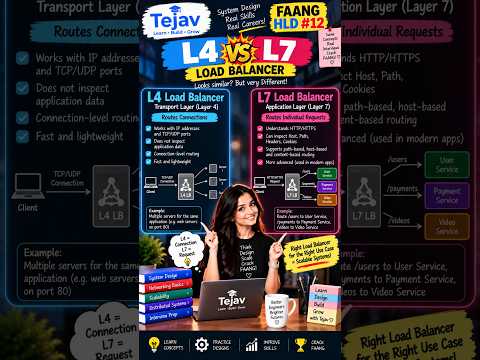
⚡ One HLD concept. 60 seconds. Interview ready
L4 vs L7 Load Balancers: Key Differences Explained
L4 and L7 load balancers differ in how they route network traffic based on layers of the OSI model.

⚡ One HLD concept. 60 seconds. Interview ready
Understanding Network Partitions in Distributed Systems
Network partitions occur when servers are operational but can't communicate, affecting system performance.

⚡ One HLD concept. 60 seconds. Interview ready
HLD: Crash Failures vs Network Failures in Distributed Systems
Crash failures stop a service, while network failures disrupt communication.

⚡ One HLD concept. 60 seconds. Interview ready
Understanding RPC: Remote Procedure Calls in Distributed Systems
RPC allows one service to call a function in another service over the network.

⚡ One HLD concept. 60 seconds. Interview ready
Understanding gRPC Architecture: Behind the Call
gRPC allows efficient communication between services using a structured request-response model.

⚡ One HLD concept. 60 seconds. Interview ready
Understanding DNS Resolution: How URLs Load in Browsers
DNS resolution translates a URL into an IP address for web access.

⚡ One HLD concept. 60 seconds. Interview ready
DNS Service Discovery: Is DNS Enough for Microservices?
DNS helps microservices find each other, but it has limitations that may require a service registry.

⚡ One HLD concept. 60 seconds. Interview ready
Service Discovery in Microservices Architecture
Service Discovery helps microservices locate each other dynamically without fixed IP addresses.

⚡ One HLD concept. 60 seconds. Interview ready
Understanding CAP Theorem: Trade-offs in Distributed Systems
The CAP Theorem explains the trade-offs in distributed systems during network failures.

⚡ One HLD concept. 60 seconds. Interview ready
API Gateway vs Proxy vs Load Balancer: Key Differences
API Gateway, Proxy, and Load Balancer serve different roles in managing requests and traffic in systems.

⚡ One HLD concept. 60 seconds. Interview ready
HLD: Understanding REST, RPC, and gRPC Differences
REST, RPC, and gRPC are different methods for communication in software systems.
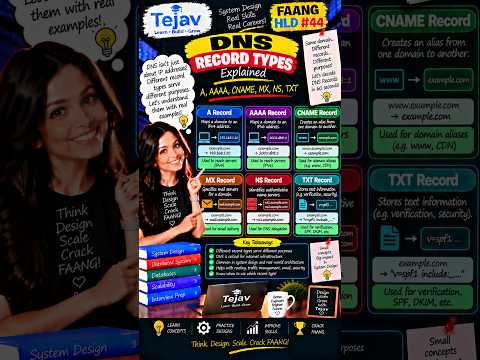
⚡ One HLD concept. 60 seconds. Interview ready
Understanding DNS Record Types: A, CNAME, MX, and More
DNS records like A, CNAME, and MX help route internet traffic and manage services.

⚡ One HLD concept. 60 seconds. Interview ready
Understanding Load Balancers in System Design
Load balancers distribute traffic across multiple servers to enhance performance and reliability.

⚡ One HLD concept. 60 seconds. Interview ready
Understanding Unary vs Streaming RPC in gRPC
gRPC supports four communication patterns: Unary, Server Streaming, Client Streaming, and Bidirectional Streaming.

⚡ One HLD concept. 60 seconds. Interview ready
HLD: 5 Microservices Communication Patterns Explained
Microservices can communicate using five key patterns based on their needs.

⚡ One HLD concept. 60 seconds. Interview ready
Understanding Reverse Proxy in High-Level Design
A reverse proxy routes client requests to different backend services efficiently.