
I'm preparing for
Topic
distributed systems
60 shorts across 1 course, in learning order
🎛️ Narrow downsubject · level · topic1▾
Results · 15 for “Concurrency control”
← Front page✨ Smart search: matched by meaning, not just words

⚡ One HLD concept. 60 seconds. Interview ready
Understanding Vector Clocks in Distributed Systems
Vector clocks help track the order and concurrency of events in distributed systems.
⚡ One HLD concept. 60 seconds. Interview ready
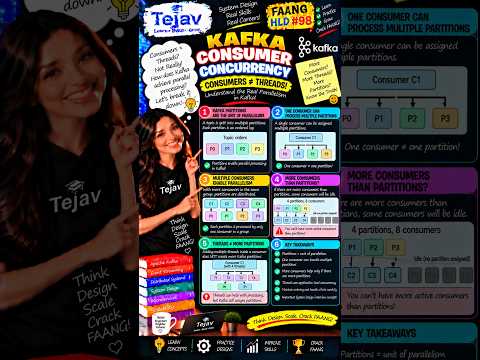
Kafka Consumer Concurrency: Understanding Partitions and Threads
Kafka's parallel processing depends on partitions, not just consumers or threads.

⚡ One HLD concept. 60 seconds. Interview ready
Kafka Exactly-Once Processing: Avoiding Duplicates
Kafka can help ensure messages are processed once, but requires careful design.

⚡ One HLD concept. 60 seconds. Interview ready
Kafka Backpressure Strategies: Handling Traffic Spikes
Backpressure helps manage message flow in Kafka during traffic spikes.

⚡ One HLD concept. 60 seconds. Interview ready
Understanding Lamport Timestamps in Distributed Systems
Lamport Timestamps help order events in distributed systems while preserving causality.

⚡ One HLD concept. 60 seconds. Interview ready
Token Bucket Rate Limiting Explained for Interviews
The Token Bucket algorithm helps manage how many requests a server can handle.

⚡ One HLD concept. 60 seconds. Interview ready
Understanding Jitter in High-Level Design
Jitter helps spread out client retries to avoid traffic spikes.

⚡ One HLD concept. 60 seconds. Interview ready
Understanding Consistency Models in Distributed Systems
Consistency models determine what data reads in distributed systems can see.

⚡ One HLD concept. 60 seconds. Interview ready
Understanding Idempotency in System Design
Idempotency ensures that repeated operations in APIs do not cause duplicate effects.

⚡ One HLD concept. 60 seconds. Interview ready
Paxos Consensus: Understanding Distributed Agreement
Paxos is a protocol that helps distributed systems agree on one value despite failures.

⚡ One HLD concept. 60 seconds. Interview ready
Understanding CAP Theorem: Trade-offs in Distributed Systems
The CAP Theorem explains the trade-offs in distributed systems during network failures.

⚡ One HLD concept. 60 seconds. Interview ready
Read-After-Write Consistency in Database Systems
Read-after-write consistency ensures users see their latest updates immediately.

⚡ One HLD concept. 60 seconds. Interview ready
Understanding Distributed Clocks in Systems Design
In distributed systems, timestamps don't always reflect the true order of events.

⚡ One HLD concept. 60 seconds. Interview ready
Understanding Causality in Distributed Systems
Causality in distributed systems helps understand how events influence each other, beyond just timestamps.

⚡ One HLD concept. 60 seconds. Interview ready
Distributed Backpressure: Managing Service Overload
Distributed backpressure helps manage the flow of work between services to prevent overload.
🧠Related by meaning
Not tagged “distributed systems”, but closely connected


