
I'm preparing for
Topic
distributed systems
60 shorts across 1 course, in learning order
🎛️ Narrow downsubject · level · topic1▾
Results · 9 for “Partitioning Strategies”
← Front page✨ Smart search: matched by meaning, not just words

⚡ One HLD concept. 60 seconds. Interview ready
Kafka Consumer Assignment Strategies: Range vs RoundRobin vs Sticky
Kafka uses different strategies to assign partitions to consumers in a group efficiently.

⚡ One HLD concept. 60 seconds. Interview ready
Kafka Partition Reassignment: Move Replicas Without Data Loss
Kafka Partition Reassignment moves replicas between brokers while keeping data safe.

⚡ One HLD concept. 60 seconds. Interview ready
Elasticsearch Shards vs Replicas: Partitioning vs Duplication
Primary shards partition data, while replica shards duplicate it for redundancy.

⚡ One HLD concept. 60 seconds. Interview ready
Understanding Network Partitions in Distributed Systems
Network partitions occur when servers are operational but can't communicate, affecting system performance.

⚡ One HLD concept. 60 seconds. Interview ready
Understanding CAP Theorem: Trade-offs in Distributed Systems
The CAP Theorem explains the trade-offs in distributed systems during network failures.

⚡ One HLD concept. 60 seconds. Interview ready
Understanding Vertical and Horizontal Scaling in System Design
Vertical scaling means upgrading one server, while horizontal scaling means adding more servers.

⚡ One HLD concept. 60 seconds. Interview ready
Consistent Hashing: Key to Distributed Systems Scalability
Consistent hashing helps distribute data across servers with minimal movement.

⚡ One HLD concept. 60 seconds. Interview ready
When to Use Microservices in Software Design
Microservices are useful when you need independent scaling, deployment, and clear boundaries in software design.
⚡ One HLD concept. 60 seconds. Interview ready
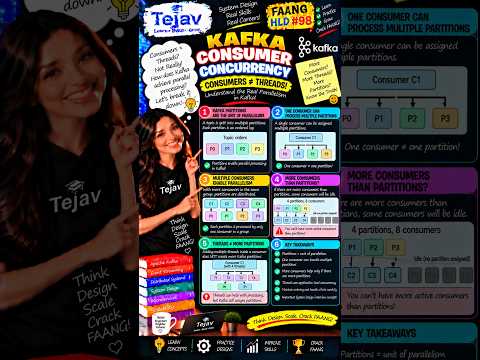
Kafka Consumer Concurrency: Understanding Partitions and Threads
Kafka's parallel processing depends on partitions, not just consumers or threads.
🧠Related by meaning
Not tagged “distributed systems”, but closely connected


