⚡ One HLD concept. 60 seconds. Interview ready· 1 of 116

What FAANG Interviewers Evaluate in System Design Interviews

⚡ One HLD concept. 60 seconds. Interview ready· 2 of 116

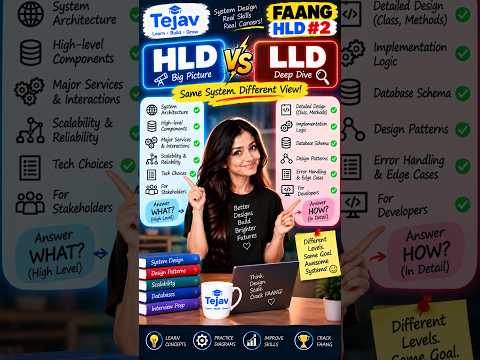
Understanding High-Level Design (HLD) and Low-Level Design (LLD)

⚡ One HLD concept. 60 seconds. Interview ready· 3 of 116

Understanding Functional and Non-Functional Requirements

⚡ One HLD concept. 60 seconds. Interview ready· 4 of 116

Understanding Latency, Throughput, and Response Time

⚡ One HLD concept. 60 seconds. Interview ready· 5 of 116

Understanding Availability vs Reliability in System Design

⚡ One HLD concept. 60 seconds. Interview ready· 6 of 116

Understanding Latency and Throughput in System Design

⚡ One HLD concept. 60 seconds. Interview ready· 7 of 116

Understanding Vertical and Horizontal Scaling in System Design

⚡ One HLD concept. 60 seconds. Interview ready· 8 of 116

Monolith vs Microservices: Choosing the Right Architecture

⚡ One HLD concept. 60 seconds. Interview ready· 9 of 116

Understanding Load Balancers in System Design

⚡ One HLD concept. 60 seconds. Interview ready· 10 of 116

L4 vs L7 Load Balancers: Key Differences Explained

⚡ One HLD concept. 60 seconds. Interview ready· 11 of 116

Understanding Reverse Proxy in High-Level Design

⚡ One HLD concept. 60 seconds. Interview ready· 12 of 116

Understanding CDN: How Cache Hits Improve Performance

⚡ One HLD concept. 60 seconds. Interview ready· 13 of 116

Understanding Cache Hits: Reducing Database Load

⚡ One HLD concept. 60 seconds. Interview ready· 14 of 116

Understanding the Cache-Aside Pattern in System Design

⚡ One HLD concept. 60 seconds. Interview ready· 15 of 116

Redis: Why Is It So Fast for High-Scale Systems?

⚡ One HLD concept. 60 seconds. Interview ready· 16 of 116

SQL vs NoSQL: Choosing the Right Database for Your Needs

⚡ One HLD concept. 60 seconds. Interview ready· 17 of 116

Understanding Database Replication in High-Level Design

⚡ One HLD concept. 60 seconds. Interview ready· 18 of 116

Understanding Sharding: How Databases Manage Large Data

⚡ One HLD concept. 60 seconds. Interview ready· 19 of 116

B-Tree Index: Efficient Database Navigation

⚡ One HLD concept. 60 seconds. Interview ready· 20 of 116

Read-After-Write Consistency in Database Systems

⚡ One HLD concept. 60 seconds. Interview ready· 21 of 116

Understanding Read Replicas in Database Scaling

⚡ One HLD concept. 60 seconds. Interview ready· 22 of 116

Identifying and Optimizing Database Bottlenecks

⚡ One HLD concept. 60 seconds. Interview ready· 23 of 116

Understanding CAP Theorem: Trade-offs in Distributed Systems

⚡ One HLD concept. 60 seconds. Interview ready· 24 of 116

Understanding Quorum Reads in Distributed Systems

⚡ One HLD concept. 60 seconds. Interview ready· 25 of 116

Distributed Caching: Why Spread It Out?

⚡ One HLD concept. 60 seconds. Interview ready· 26 of 116

Cache Invalidation: TTL vs Freshness Explained

⚡ One HLD concept. 60 seconds. Interview ready· 27 of 116

Understanding Cache Penetration in System Design

⚡ One HLD concept. 60 seconds. Interview ready· 28 of 116

Understanding Cache Breakdown and Request Coalescing

⚡ One HLD concept. 60 seconds. Interview ready· 29 of 116

Token Bucket Rate Limiting Explained for Interviews

⚡ One HLD concept. 60 seconds. Interview ready· 30 of 116

Token Bucket vs Leaky Bucket: Key Differences Explained

⚡ One HLD concept. 60 seconds. Interview ready· 31 of 116

API Gateway: The Front Door of Your System

⚡ One HLD concept. 60 seconds. Interview ready· 32 of 116

API Gateway vs Proxy vs Load Balancer: Key Differences

⚡ One HLD concept. 60 seconds. Interview ready· 33 of 116

Understanding DNS Record Types: A, CNAME, MX, and More

⚡ One HLD concept. 60 seconds. Interview ready· 34 of 116

Understanding DNS Resolution: How URLs Load in Browsers

⚡ One HLD concept. 60 seconds. Interview ready· 35 of 116

Understanding TCP 3-Way Handshake: SYN, SYN-ACK, ACK

⚡ One HLD concept. 60 seconds. Interview ready· 36 of 116

Understanding the TLS Handshake in HTTPS Connections

⚡ One HLD concept. 60 seconds. Interview ready· 37 of 116

Understanding HTTP Methods and Status Codes

⚡ One HLD concept. 60 seconds. Interview ready· 38 of 116

REST API Design: Building Scalable APIs for Real-World Use

⚡ One HLD concept. 60 seconds. Interview ready· 39 of 116

Read vs Write Scaling: How to Scale Databases

⚡ One HLD concept. 60 seconds. Interview ready· 40 of 116

Failover and Split-Brain in High-Level Design

⚡ One HLD concept. 60 seconds. Interview ready· 41 of 116

Understanding Transactions and ACID Properties in Databases

⚡ One HLD concept. 60 seconds. Interview ready· 42 of 116

Understanding 2-Phase Commit in Distributed Transactions

⚡ One HLD concept. 60 seconds. Interview ready· 43 of 116

Understanding the Saga Pattern in Distributed Transactions

⚡ One HLD concept. 60 seconds. Interview ready· 44 of 116

Transactional Outbox Pattern: Never Lose Events!

⚡ One HLD concept. 60 seconds. Interview ready· 45 of 116

Understanding Idempotency in System Design

⚡ One HLD concept. 60 seconds. Interview ready· 46 of 116

Understanding Message Queues in Distributed Systems

⚡ One HLD concept. 60 seconds. Interview ready· 47 of 116

Queue vs Pub/Sub: Key Differences in System Design

⚡ One HLD concept. 60 seconds. Interview ready· 48 of 116

Message Delivery Semantics: At-Most-Once vs At-Least-Once vs Exactly-Once

⚡ One HLD concept. 60 seconds. Interview ready· 49 of 116

Understanding Kafka Consumer Lag and Its Impact

⚡ One HLD concept. 60 seconds. Interview ready· 50 of 116

Kafka Consumer Offsets: Auto Commit vs Manual Commit

⚡ One HLD concept. 60 seconds. Interview ready· 51 of 116

FAANG HLD 🔥 | Kafka Backpressure Explained — What Happens When Consumers Can't Keep Up? 🚨

⚡ One HLD concept. 60 seconds. Interview ready· 52 of 116

Kafka Consumer Assignment Strategies: Range vs RoundRobin vs Sticky

⚡ One HLD concept. 60 seconds. Interview ready· 53 of 116

Kafka Fetch Limits vs Poll Records: Understanding the Difference

⚡ One HLD concept. 60 seconds. Interview ready· 54 of 116

Kafka Async Commit Ordering: Can Older Offsets Overwrite Newer Ones?

⚡ One HLD concept. 60 seconds. Interview ready· 55 of 116

Kafka Backpressure Strategies: Handling Traffic Spikes

⚡ One HLD concept. 60 seconds. Interview ready· 56 of 116

Kafka Graceful Shutdown: Stop Without Losing Work

⚡ One HLD concept. 60 seconds. Interview ready· 57 of 116

Kafka Error Handling and Retry Strategies in HLD

⚡ One HLD concept. 60 seconds. Interview ready· 58 of 116

Kafka Retry Topics and Delayed Retries Explained

⚡ One HLD concept. 60 seconds. Interview ready· 59 of 116

Understanding Kafka Dead Letter Topics and Poison Messages

⚡ One HLD concept. 60 seconds. Interview ready· 60 of 116

Kafka Manual Partition Assignment: Using assign() for Control

⚡ One HLD concept. 60 seconds. Interview ready· 61 of 116

Kafka Rebalance: Avoiding Work Loss or Duplication

⚡ One HLD concept. 60 seconds. Interview ready· 62 of 116

Distributed Locks: Preventing Duplicate Work Across Servers

⚡ One HLD concept. 60 seconds. Interview ready· 63 of 116

Choosing a Distributed Lock: Redis vs Database vs ZooKeeper

⚡ One HLD concept. 60 seconds. Interview ready· 64 of 116

Leader Election in Distributed Systems Explained

⚡ One HLD concept. 60 seconds. Interview ready· 65 of 116

FAANG HLD 🔥 | Raft Safety — Why Committed Entries Survive Leader Failure! 🛡️

⚡ One HLD concept. 60 seconds. Interview ready· 66 of 116

HLD: Crash Failures vs Network Failures in Distributed Systems

⚡ One HLD concept. 60 seconds. Interview ready· 67 of 116

Understanding Network Partitions in Distributed Systems

⚡ One HLD concept. 60 seconds. Interview ready· 68 of 116

HLD: Understanding Server Failure Detection and Timeouts

⚡ One HLD concept. 60 seconds. Interview ready· 69 of 116

Understanding Vector Clocks in Distributed Systems

⚡ One HLD concept. 60 seconds. Interview ready· 70 of 116

HLD: Understanding REST, RPC, and gRPC Differences

⚡ One HLD concept. 60 seconds. Interview ready· 71 of 116

Protobuf and Schema Evolution: Avoid Breaking Changes

⚡ One HLD concept. 60 seconds. Interview ready· 72 of 116

HLD: Synchronous vs Asynchronous Communication Explained

⚡ One HLD concept. 60 seconds. Interview ready· 73 of 116

HLD: Understanding Request-Response vs Events in System Design

⚡ One HLD concept. 60 seconds. Interview ready· 74 of 116

HLD: 5 Microservices Communication Patterns Explained

⚡ One HLD concept. 60 seconds. Interview ready· 75 of 116

Connection Pooling Explained: Why a Bigger Pool Can Hurt

⚡ One HLD concept. 60 seconds. Interview ready· 76 of 116

Keep-Alive in Networking: Efficient HTTP Connections

⚡ One HLD concept. 60 seconds. Interview ready· 77 of 116

When to Use Microservices in Software Design

⚡ One HLD concept. 60 seconds. Interview ready· 78 of 116

HLD: Microservices vs Modular Monolith Explained

⚡ One HLD concept. 60 seconds. Interview ready· 79 of 116

Choosing Service Boundaries in Microservices Architecture

⚡ One HLD concept. 60 seconds. Interview ready· 80 of 116

Understanding Database per Service in Microservices Architecture

⚡ One HLD concept. 60 seconds. Interview ready· 81 of 116

HLD: Shared DB vs Database per Service Trade-Offs

⚡ One HLD concept. 60 seconds. Interview ready· 82 of 116

HLD: Circuit Breaker Explained to Prevent Failures

⚡ One HLD concept. 60 seconds. Interview ready· 83 of 116

HLD Timeout Pattern: Understanding Timeouts in Distributed Systems

⚡ One HLD concept. 60 seconds. Interview ready· 84 of 116

Understanding the Bulkhead Pattern in System Design

⚡ One HLD concept. 60 seconds. Interview ready· 85 of 116

HLD: Fallbacks Explained for System Design

⚡ One HLD concept. 60 seconds. Interview ready· 86 of 116

Understanding Circuit Breaker: CLOSED, OPEN, and HALF-OPEN States

⚡ One HLD concept. 60 seconds. Interview ready· 87 of 116

Cascading Failures in Distributed Systems Explained

⚡ One HLD concept. 60 seconds. Interview ready· 88 of 116

Load Shedding in Distributed Systems: Protecting Capacity

⚡ One HLD concept. 60 seconds. Interview ready· 89 of 116

Graceful Degradation in System Design

⚡ One HLD concept. 60 seconds. Interview ready· 90 of 116

Distributed Backpressure: Managing Service Overload

⚡ One HLD concept. 60 seconds. Interview ready· 91 of 116

HLD: Fail Fast vs Fail Safe in System Design

⚡ One HLD concept. 60 seconds. Interview ready· 92 of 116

Understanding the RED Method for Microservices Monitoring

⚡ One HLD concept. 60 seconds. Interview ready· 93 of 116

Understanding the USE Method for Infrastructure Bottlenecks

⚡ One HLD concept. 60 seconds. Interview ready· 94 of 116

Understanding SLIs, SLOs, and SLAs in Reliability Engineering

⚡ One HLD concept. 60 seconds. Interview ready· 95 of 116

Understanding Error Budgets in High-Level Design

⚡ One HLD concept. 60 seconds. Interview ready· 96 of 116

Understanding Alerting in High-Level Design

⚡ One HLD concept. 60 seconds. Interview ready· 97 of 116

HLD: Search Engine Architecture and Its Components

⚡ One HLD concept. 60 seconds. Interview ready· 98 of 116

Inverted Index: How Search Engines Find Pages Efficiently

⚡ One HLD concept. 60 seconds. Interview ready· 99 of 116

HLD: Full-Text Search vs Database Search with Elasticsearch

⚡ One HLD concept. 60 seconds. Interview ready· 100 of 116

Elasticsearch Query Execution: How Searches Work Across Shards

⚡ One HLD concept. 60 seconds. Interview ready· 101 of 116

Elasticsearch Refresh: Why Your Document Isn’t Searchable Yet

⚡ One HLD concept. 60 seconds. Interview ready· 102 of 116

Elasticsearch Filters vs Queries: MUST vs FILTER Explained

⚡ One HLD concept. 60 seconds. Interview ready· 103 of 116

Elasticsearch Pagination: From & Size vs Search After

⚡ One HLD concept. 60 seconds. Interview ready· 104 of 116

Understanding Elasticsearch ILM: Hot, Warm, Cold Phases

⚡ One HLD concept. 60 seconds. Interview ready· 105 of 116

Elasticsearch Aliases and Rollover: Zero-Downtime Index Switching

⚡ One HLD concept. 60 seconds. Interview ready· 106 of 116

Understanding Elasticsearch Data Streams in HLD

⚡ One HLD concept. 60 seconds. Interview ready· 107 of 116

Understanding Elasticsearch Index Templates and Components

⚡ One HLD concept. 60 seconds. Interview ready· 108 of 116

Elasticsearch Mapping: Dynamic vs Explicit Explained

⚡ One HLD concept. 60 seconds. Interview ready· 109 of 116

Understanding Elasticsearch Shards and Replicas in HLD

⚡ One HLD concept. 60 seconds. Interview ready· 110 of 116

Elasticsearch Cluster Sizing: How Many Nodes Do You Need?

⚡ One HLD concept. 60 seconds. Interview ready· 111 of 116

Understanding Elasticsearch Cross-Cluster Replication (CCR)

⚡ One HLD concept. 60 seconds. Interview ready· 112 of 116

Understanding Elasticsearch ILM for Cost Management

⚡ One HLD concept. 60 seconds. Interview ready· 113 of 116

Elasticsearch Data Streams vs. Time-Based Indices: Which to Choose?

⚡ One HLD concept. 60 seconds. Interview ready· 114 of 116

Elasticsearch Zero-Downtime Reindexing: The Alias Switch Trick

⚡ One HLD concept. 60 seconds. Interview ready· 115 of 116

Elasticsearch Reindexing: Understanding the Dual-Write Trap

⚡ One HLD concept. 60 seconds. Interview ready· 116 of 116

Elasticsearch Fuzzy Search: Handling Typos in Queries

🏁

You’ve watched every short about system design!

Lock it in: take the quizzes, and SnapGyan will bring each topic back right before you’d forget it.

Back to the topic & quizzes