
I'm preparing for
🎛️ Narrow downsubject · level · topic1▾
Results · 60 for “Data Retention Strategies”
← Front page✨ Smart search: matched by meaning, not just words

⚡ One HLD concept. 60 seconds. Interview ready
Understanding Retention Policies in Databases
Retention policies help manage how long data is kept in databases.

⚡ One HLD concept. 60 seconds. Interview ready
Backup Strategies: Full vs Incremental vs Differential
Backup strategies include Full, Incremental, and Differential, each with unique benefits.

⚡ One HLD concept. 60 seconds. Interview ready
Kafka Retention vs Compaction: History or Latest State?
Kafka uses retention to keep historical data and compaction to keep the latest state.

⚡ One HLD concept. 60 seconds. Interview ready
Understanding Data Residency in High-Level Design
Data residency is crucial for compliance with laws about where data can be stored.

⚡ One HLD concept. 60 seconds. Interview ready
Cache Eviction Policies: LRU, LFU, and FIFO Explained
Cache eviction policies determine which data to remove when caches are full.

⚡ One HLD concept. 60 seconds. Interview ready
HLD: Understanding Container Storage and Data Persistence
Container data can be lost unless stored in persistent volumes.

⚡ One HLD concept. 60 seconds. Interview ready
Understanding Elasticsearch Snapshots: Replicas vs Backups
Replicas keep your system available, while snapshots allow for data recovery.

⚡ One HLD concept. 60 seconds. Interview ready
Disaster Recovery Across Regions: Can Your System Recover?
Disaster recovery ensures systems can restore services and data after major disruptions.

⚡ One HLD concept. 60 seconds. Interview ready
Understanding Elasticsearch ILM for Cost Management
Elasticsearch ILM automates index management to reduce storage costs and meet data needs.

⚡ One HLD concept. 60 seconds. Interview ready
Change Data Capture (CDC): Real-Time Database Syncing
Change Data Capture allows real-time syncing of database changes to other systems.

⚡ One HLD concept. 60 seconds. Interview ready
Point-in-Time Recovery: Recovering Deleted Database Data
Point-in-Time Recovery allows databases to be restored to a specific moment before data loss.

⚡ One HLD concept. 60 seconds. Interview ready
HLD: Late-Arriving Events - Drop, Update, or Replay?
Late-arriving events can be dropped, updated, or routed based on system needs.

⚡ One HLD concept. 60 seconds. Interview ready
Elasticsearch Data Streams vs. Time-Based Indices: Which to Choose?
Elasticsearch offers Data Streams for simplicity and Time-Based Indices for control in managing time-series data.

⚡ One HLD concept. 60 seconds. Interview ready
Data Lake Architecture: Storing Big Data at Scale
Data lakes store large volumes of diverse data for analytics and processing.

⚡ One HLD concept. 60 seconds. Interview ready
HLD: Downsampling and Aggregation in Time-Series Databases
Downsampling and aggregation reduce data volume while preserving essential trends.

⚡ One HLD concept. 60 seconds. Interview ready
Understanding the Cache-Aside Pattern in System Design
The Cache-Aside Pattern speeds up data retrieval by using a cache to store frequently accessed data.

⚡ One HLD concept. 60 seconds. Interview ready
HLD — KMS Explained 🔐 What If Your Encryption Key Gets Stolen?
KMS securely manages encryption keys to protect data from theft.

⚡ One HLD concept. 60 seconds. Interview ready
Time-Series Database Architecture: Storing Millions of Metrics
Time-series databases are designed to store and query time-stamped metrics efficiently.

⚡ One HLD concept. 60 seconds. Interview ready
Session-Based Authentication: How Cookies & Sessions Work
Session-based authentication uses cookies to remember users after login.

⚡ One HLD concept. 60 seconds. Interview ready
Understanding Elasticsearch ILM: Hot, Warm, Cold Phases
Elasticsearch ILM automates data management through defined lifecycle phases.

⚡ One HLD concept. 60 seconds. Interview ready
Encryption at Rest vs In Transit: Protecting Your Data
Encryption at rest and in transit are essential for protecting data both stored and in motion.

⚡ One HLD concept. 60 seconds. Interview ready
Redis: Why Is It So Fast for High-Scale Systems?
Redis is a fast in-memory data store used for caching and low-latency applications.

⚡ One HLD concept. 60 seconds. Interview ready
Distributed Caching: Why Spread It Out?
Distributed caching spreads data across multiple servers for better performance and reliability.

⚡ One HLD concept. 60 seconds. Interview ready
Understanding RPO and RTO in Disaster Recovery
RPO and RTO are key metrics for planning disaster recovery strategies.

⚡ One HLD concept. 60 seconds. Interview ready
Active-Passive Architecture: Handling Production Downtime
Active-passive architecture ensures a standby system takes over if the main system fails.

⚡ One HLD concept. 60 seconds. Interview ready
Dynamo-Style Databases: High-Level Design Overview
Dynamo-style databases are designed for high availability and fault tolerance in distributed systems.

⚡ One HLD concept. 60 seconds. Interview ready
HLD: Database CDC with Kafka for Real-Time Events
CDC with Kafka allows real-time updates from databases to multiple services.

⚡ One HLD concept. 60 seconds. Interview ready
Time-Based Partitioning: Scaling Time-Series Databases
Time-based partitioning organizes time-series data into smaller, efficient segments for better querying.

⚡ One HLD concept. 60 seconds. Interview ready
Disaster Recovery Testing: Ensuring Your DR Plan Works
Disaster Recovery Testing verifies that your recovery plan works effectively in real situations.

⚡ One HLD concept. 60 seconds. Interview ready
Data Lakehouse Architecture: Combining Lakes and Warehouses
Data Lakehouse architecture merges flexible data storage with reliable analytics capabilities.

⚡ One HLD concept. 60 seconds. Interview ready
Understanding Cache Penetration in System Design
Cache penetration occurs when requests for non-existent data overload the database.

⚡ One HLD concept. 60 seconds. Interview ready
HLD: Single Region vs Multi-Region Architecture
Choosing between single and multi-region architecture affects system resilience and cost.

⚡ One HLD concept. 60 seconds. Interview ready
Transactional Outbox Pattern: Never Lose Events!
The Transactional Outbox Pattern ensures database updates and event publishing are synchronized to avoid losing events.

⚡ One HLD concept. 60 seconds. Interview ready
Kafka Commit Strategies: Auto vs Manual Commit Explained
Kafka commit strategies determine how offsets are managed during message processing.
⚡ One HLD concept. 60 seconds. Interview ready
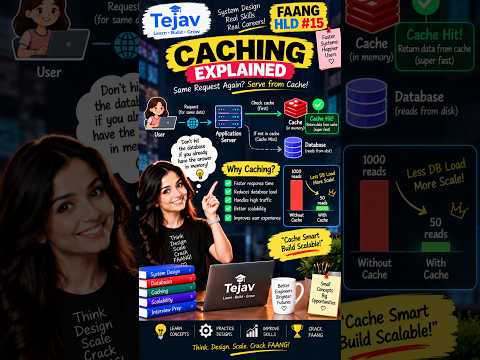
Understanding Cache Hits: Reducing Database Load
Caching helps applications respond faster by serving data from memory instead of hitting the database.

⚡ One HLD concept. 60 seconds. Interview ready
Kafka Replay Safely: Reprocess Messages Without Losing Data
Kafka allows safe message reprocessing by resetting consumer positions without altering data.

⚡ One HLD concept. 60 seconds. Interview ready
Hashing vs Encryption: Key Differences Explained
Hashing is one-way for verification, while encryption is two-way for confidentiality.

⚡ One HLD concept. 60 seconds. Interview ready
Understanding Cache Stampede in High-Level Design
Cache stampede occurs when many requests hit the database due to a cache miss.

⚡ One HLD concept. 60 seconds. Interview ready
Cache Invalidation: TTL vs Freshness Explained
Cache invalidation is about knowing when to refresh cached data.

⚡ One HLD concept. 60 seconds. Interview ready
Kafka Consumer Assignment Strategies: Range vs RoundRobin vs Sticky
Kafka uses different strategies to assign partitions to consumers in a group efficiently.

⚡ One HLD concept. 60 seconds. Interview ready
Understanding Database per Service in Microservices Architecture
Database per Service ensures each microservice owns its data, reducing dependencies.

⚡ One HLD concept. 60 seconds. Interview ready
Understanding Elasticsearch Cross-Cluster Replication (CCR)
Elasticsearch CCR allows real-time data replication for faster disaster recovery.

⚡ One HLD concept. 60 seconds. Interview ready
Optimistic vs Pessimistic Locking in Database Management
Optimistic and pessimistic locking are strategies to manage database access during concurrent transactions.

⚡ One HLD concept. 60 seconds. Interview ready
Data Warehouse Architecture: Analyzing Business Data Efficiently
Data warehouses help businesses analyze large amounts of data for better decision-making.

⚡ One HLD concept. 60 seconds. Interview ready
Understanding Write-Ahead Log (WAL) in Databases
Write-Ahead Log ensures data is safely recorded before changes are made.

⚡ One HLD concept. 60 seconds. Interview ready
HLD: Fallbacks Explained for System Design
Fallbacks allow systems to handle failures safely and maintain user experience.

⚡ One HLD concept. 60 seconds. Interview ready
Kafka Consumer Reprocessing: Safe Event Replay Strategies
Kafka consumer reprocessing involves safely replaying events to correct system states.

⚡ One HLD concept. 60 seconds. Interview ready
Kafka Stateful Stream Processing: How Does It Remember?
Kafka uses state stores to remember previous events in stateful stream processing.

⚡ One HLD concept. 60 seconds. Interview ready
HLD: Managing Dependency Failures in Distributed Systems
Dependency failures can disrupt applications, but resilience patterns can help manage them.
⚡ One HLD concept. 60 seconds. Interview ready
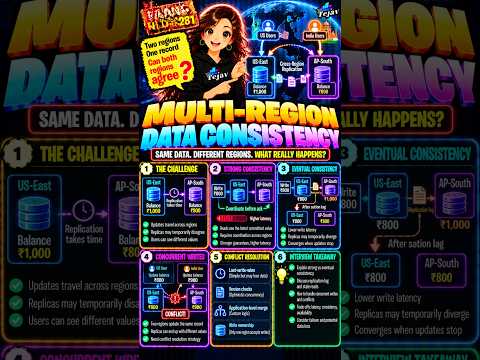
HLD: Multi-Region Data Consistency Explained
Multi-region data consistency ensures that users in different locations see the same data.

⚡ One HLD concept. 60 seconds. Interview ready
HLD: Password Hashing and Salt Explained
Password hashing with unique salts ensures security by creating different hashes for identical passwords.

⚡ One HLD concept. 60 seconds. Interview ready
Stateless vs Stateful Servers: Scaling Made Easy
Stateless servers are easier to scale because they don't store user session data locally.

⚡ One HLD concept. 60 seconds. Interview ready
Understanding Kafka Retries and Dead Letter Queue (DLQ)
Kafka uses retries and Dead Letter Queues to manage message processing failures.

⚡ One HLD concept. 60 seconds. Interview ready
Cassandra Architecture: Masterless Database Scaling Explained
Cassandra uses a masterless architecture to distribute and replicate data efficiently.

⚡ One HLD concept. 60 seconds. Interview ready
Understanding Elasticsearch Data Streams in HLD
Elasticsearch Data Streams simplify time-series data management with one name for many indices.

⚡ One HLD concept. 60 seconds. Interview ready
Event Sourcing: Store What Happened, Rebuild the State
Event Sourcing stores every action as an event to recreate the current state.

⚡ One HLD concept. 60 seconds. Interview ready
Time-Series Data Modeling: Avoiding Cardinality Issues
Choosing the right labels in time-series data is crucial to avoid inefficiencies.

⚡ One HLD concept. 60 seconds. Interview ready
Kafka Error Handling and Retry Strategies in HLD
Classifying failures and using controlled retries in Kafka prevents outages.

⚡ One HLD concept. 60 seconds. Interview ready
Understanding Cassandra Partition Keys for Data Storage
Cassandra uses partition keys to determine how and where to store data across nodes.

⚡ One HLD concept. 60 seconds. Interview ready
Secure API Design: 7 Essential Rules for Backend Engineers
Secure API design requires multiple strategies to protect sensitive data and access.