
I'm preparing for
🎛️ Narrow downsubject · level · topic1▾
Results · 9 for “Basic OS concepts”
← Front page✨ Smart search: matched by meaning, not just words
⚡ One HLD concept. 60 seconds. Interview ready
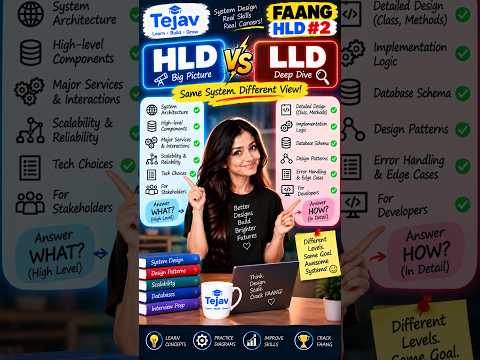
Understanding High-Level Design (HLD) and Low-Level Design (LLD)
HLD provides an overview of system architecture, while LLD details implementation specifics.

⚡ One HLD concept. 60 seconds. Interview ready
Understanding Scalable System Design in FAANG Companies
FAANG engineers use high-level design principles to create scalable systems.

⚡ One HLD concept. 60 seconds. Interview ready
HLD: Understanding Container Storage and Data Persistence
Container data can be lost unless stored in persistent volumes.

⚡ One HLD concept. 60 seconds. Interview ready
Understanding Functional and Non-Functional Requirements
Functional requirements define what a system does, while non-functional requirements define how it performs.

⚡ One HLD concept. 60 seconds. Interview ready
Understanding the Bulkhead Pattern in System Design
The Bulkhead Pattern isolates resources to protect critical workloads from failures.

⚡ One HLD concept. 60 seconds. Interview ready
Understanding Availability vs Reliability in System Design
Availability is about access; reliability is about correct performance.

⚡ One HLD concept. 60 seconds. Interview ready
HLD: Search Engine Architecture and Its Components
Search engines collect, index, retrieve, and rank documents to provide relevant results.

⚡ One HLD concept. 60 seconds. Interview ready
Understanding SPOF: Why Your App Can Go Down with Healthy Servers
A single component's failure can take down your entire application, even with redundancy.
⚡ One HLD concept. 60 seconds. Interview ready
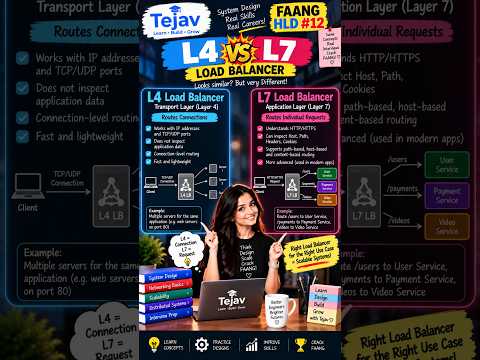
L4 vs L7 Load Balancers: Key Differences Explained
L4 and L7 load balancers differ in how they route network traffic based on layers of the OSI model.