
I'm preparing for
🎛️ Narrow downsubject · level · topic2▾
Results · 18 for “Understanding of concurrency”
← Front page✨ Smart search: matched by meaning, not just words

⚡ One HLD concept. 60 seconds. Interview ready
Understanding Causality in Distributed Systems
Causality in distributed systems helps understand how events influence each other, beyond just timestamps.

⚡ One HLD concept. 60 seconds. Interview ready
Kafka Async Commit Ordering: Can Older Offsets Overwrite Newer Ones?
Older offsets can overwrite newer ones in Kafka if not handled properly.
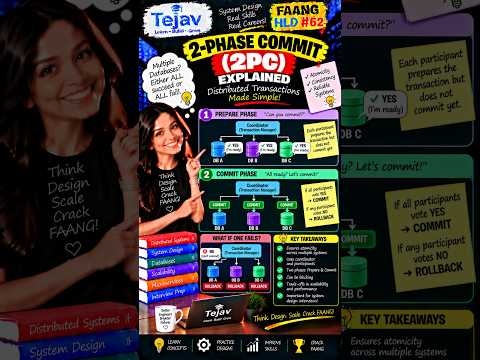
⚡ One HLD concept. 60 seconds. Interview ready
Understanding 2-Phase Commit in Distributed Transactions
2-Phase Commit helps maintain data consistency in transactions across multiple databases.

⚡ One HLD concept. 60 seconds. Interview ready
Kafka commitSync vs commitAsync: Choosing the Right Method
Kafka's commitSync waits for confirmation, while commitAsync continues immediately.

⚡ One HLD concept. 60 seconds. Interview ready
Kafka Consumer Parallelism: Partitions, Keys, and Throughput
Kafka uses partitions to allow parallel processing while ensuring message order with keys.

⚡ One HLD concept. 60 seconds. Interview ready
Kafka Stateful Stream Processing: How Does It Remember?
Kafka uses state stores to remember previous events in stateful stream processing.

⚡ One HLD concept. 60 seconds. Interview ready
Understanding Network Partitions in Distributed Systems
Network partitions occur when servers are operational but can't communicate, affecting system performance.

⚡ One HLD concept. 60 seconds. Interview ready
Paxos Consensus: Understanding Distributed Agreement
Paxos is a protocol that helps distributed systems agree on one value despite failures.

⚡ One HLD concept. 60 seconds. Interview ready
HLD: Crash Failures vs Network Failures in Distributed Systems
Crash failures stop a service, while network failures disrupt communication.

⚡ One HLD concept. 60 seconds. Interview ready
FAANG HLD 🔥 | Kafka Backpressure Explained — What Happens When Consumers Can't Keep Up? 🚨
Backpressure prevents system overload by managing message processing rates in Kafka.

⚡ One HLD concept. 60 seconds. Interview ready
Message Delivery Semantics: At-Most-Once vs At-Least-Once vs Exactly-Once
Message delivery semantics define how messages are sent in distributed systems and handle failures.

⚡ One HLD concept. 60 seconds. Interview ready
Understanding Physical vs Logical Time in Distributed Systems
Physical time tells when events happen, while logical time tells their order.

⚡ One HLD concept. 60 seconds. Interview ready
Kafka Poison Messages: Risks of Infinite Retries
Poison messages in Kafka can cause infinite retries, risking system stability.

⚡ One HLD concept. 60 seconds. Interview ready
Understanding ZooKeeper Ephemeral and Sequential Nodes
ZooKeeper uses ephemeral and sequential nodes for managing distributed services effectively.

⚡ One HLD concept. 60 seconds. Interview ready
Kafka Consumer Pause & Resume: Managing Backpressure Smartly
Kafka consumers can pause and resume message processing to handle backpressure effectively.

⚡ One HLD concept. 60 seconds. Interview ready
Kafka Consumer Offsets: Auto Commit vs Manual Commit
Kafka consumer offsets help track message processing to avoid loss and duplication.

⚡ One HLD concept. 60 seconds. Interview ready
Kafka Commit Strategies: Auto vs Manual Commit Explained
Kafka commit strategies determine how offsets are managed during message processing.

⚡ One HLD concept. 60 seconds. Interview ready
Kafka Consumer Crash Recovery: Resuming Processing Explained
Kafka consumers resume processing from the last committed offset after a crash.