
I'm preparing for
🎛️ Narrow downsubject · level · topic2▾
Results · 60 for “Concept of distributed systems”
← Front page✨ Smart search: matched by meaning, not just words

⚡ One HLD concept. 60 seconds. Interview ready
Understanding Distributed Clocks in Systems Design
In distributed systems, timestamps don't always reflect the true order of events.

⚡ One HLD concept. 60 seconds. Interview ready
Understanding Network Partitions in Distributed Systems
Network partitions occur when servers are operational but can't communicate, affecting system performance.

⚡ One HLD concept. 60 seconds. Interview ready
Distributed Locks: Preventing Duplicate Work Across Servers
Distributed locks ensure only one server performs a task, avoiding duplication.

⚡ One HLD concept. 60 seconds. Interview ready
Understanding Partial Failure in Distributed Systems
Partial failure means some services fail while others keep running, impacting system reliability.

⚡ One HLD concept. 60 seconds. Interview ready
Understanding Causality in Distributed Systems
Causality in distributed systems helps understand how events influence each other, beyond just timestamps.

⚡ One HLD concept. 60 seconds. Interview ready
Cascading Failures in Distributed Systems Explained
Cascading failures occur when one service's failure impacts others, causing widespread issues.

⚡ One HLD concept. 60 seconds. Interview ready
Understanding CAP Theorem: Trade-offs in Distributed Systems
The CAP Theorem explains the trade-offs in distributed systems during network failures.

⚡ One HLD concept. 60 seconds. Interview ready
Leader Election in Distributed Systems Explained
Leader election helps distributed systems select one coordinator from many nodes.

⚡ One HLD concept. 60 seconds. Interview ready
Distributed Caching: Why Spread It Out?
Distributed caching spreads data across multiple servers for better performance and reliability.

⚡ One HLD concept. 60 seconds. Interview ready
Understanding Consensus in Distributed Systems
Consensus ensures that distributed systems can agree on decisions even during failures.

⚡ One HLD concept. 60 seconds. Interview ready
Consistent Hashing: Key to Distributed Systems Scalability
Consistent hashing helps distribute data across servers with minimal movement.

⚡ One HLD concept. 60 seconds. Interview ready
Understanding Message Queues in Distributed Systems
Message queues allow services to communicate asynchronously, improving scalability and reliability.

⚡ One HLD concept. 60 seconds. Interview ready
Understanding Physical vs Logical Time in Distributed Systems
Physical time tells when events happen, while logical time tells their order.

⚡ One HLD concept. 60 seconds. Interview ready
Understanding Consistency Models in Distributed Systems
Consistency models determine what data reads in distributed systems can see.

⚡ One HLD concept. 60 seconds. Interview ready
Understanding Vector Clocks in Distributed Systems
Vector clocks help track the order and concurrency of events in distributed systems.

⚡ One HLD concept. 60 seconds. Interview ready
Choosing a Distributed Lock: Redis vs Database vs ZooKeeper
Choosing the right distributed lock depends on your system's needs and existing tools.

⚡ One HLD concept. 60 seconds. Interview ready
Understanding the Saga Pattern in Distributed Transactions
The Saga Pattern manages distributed transactions using local transactions and compensating actions.

⚡ One HLD concept. 60 seconds. Interview ready
Understanding Lamport Timestamps in Distributed Systems
Lamport Timestamps help order events in distributed systems while preserving causality.

⚡ One HLD concept. 60 seconds. Interview ready
Paxos Consensus: Understanding Distributed Agreement
Paxos is a protocol that helps distributed systems agree on one value despite failures.

⚡ One HLD concept. 60 seconds. Interview ready
HLD: Crash Failures vs Network Failures in Distributed Systems
Crash failures stop a service, while network failures disrupt communication.

⚡ One HLD concept. 60 seconds. Interview ready
HLD: Managing Dependency Failures in Distributed Systems
Dependency failures can disrupt applications, but resilience patterns can help manage them.

⚡ One HLD concept. 60 seconds. Interview ready
Distributed Backpressure: Managing Service Overload
Distributed backpressure helps manage the flow of work between services to prevent overload.

⚡ One HLD concept. 60 seconds. Interview ready
Understanding RPC: Remote Procedure Calls in Distributed Systems
RPC allows one service to call a function in another service over the network.
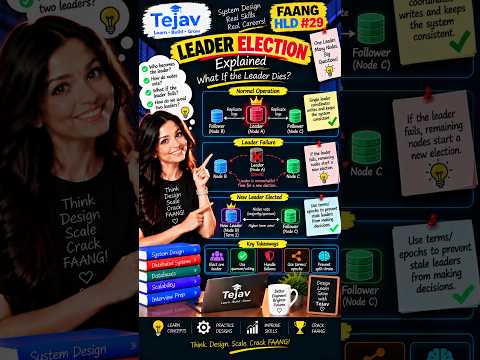
⚡ One HLD concept. 60 seconds. Interview ready
Leader Election in Distributed Systems: Handling Leader Failures
Leader election ensures a single node coordinates tasks in distributed systems, even after failures.

⚡ One HLD concept. 60 seconds. Interview ready
Elasticsearch Architecture: How Distributed Search Works
Elasticsearch uses distributed architecture to search data quickly across multiple servers.

⚡ One HLD concept. 60 seconds. Interview ready
HLD Timeout Pattern: Understanding Timeouts in Distributed Systems
A timeout indicates a deadline was exceeded, not necessarily a failure.
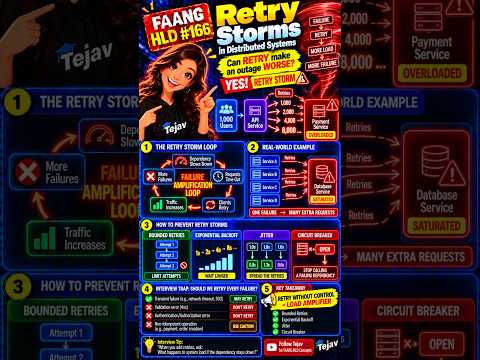
⚡ One HLD concept. 60 seconds. Interview ready
Understanding Retry Storms in Distributed Systems
Retry storms occur when too many retries overload a failing service.
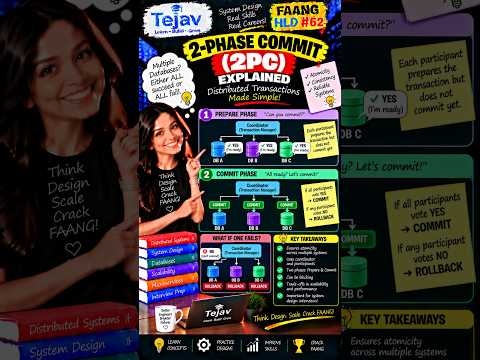
⚡ One HLD concept. 60 seconds. Interview ready
Understanding 2-Phase Commit in Distributed Transactions
2-Phase Commit helps maintain data consistency in transactions across multiple databases.

⚡ One HLD concept. 60 seconds. Interview ready
Message Delivery Semantics: At-Most-Once vs At-Least-Once vs Exactly-Once
Message delivery semantics define how messages are sent in distributed systems and handle failures.

⚡ One HLD concept. 60 seconds. Interview ready
Observability in Distributed Systems: Debugging Production Issues
Observability helps engineers understand system behavior to debug production issues effectively.

⚡ One HLD concept. 60 seconds. Interview ready
Understanding Scalable System Design in FAANG Companies
FAANG engineers use high-level design principles to create scalable systems.

⚡ One HLD concept. 60 seconds. Interview ready
Understanding Quorum and Majority in Distributed Systems
Quorum and majority help distributed systems maintain data consistency and availability.
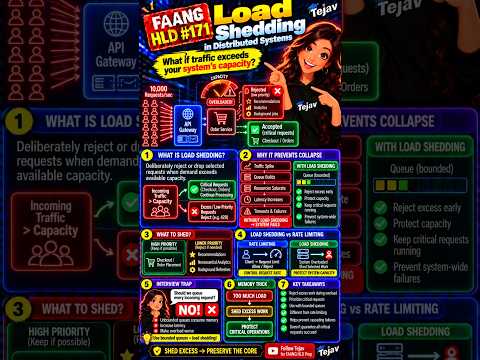
⚡ One HLD concept. 60 seconds. Interview ready
Load Shedding in Distributed Systems: Protecting Capacity
Load shedding helps systems reject excess requests to maintain performance during high demand.

⚡ One HLD concept. 60 seconds. Interview ready
HLD: Fail-Stop vs Fail-Recover Explained
Fail-stop means a system stops and stays down, while fail-recover means it can come back but needs to be ready.

⚡ One HLD concept. 60 seconds. Interview ready
Log Replication and Majority Commit in Distributed Systems
Log replication ensures data consistency by requiring majority acknowledgment before committing changes.

⚡ One HLD concept. 60 seconds. Interview ready
Understanding Distributed Tracing in Microservices Architecture
Distributed tracing helps track requests across microservices to find delays.

⚡ One HLD concept. 60 seconds. Interview ready
Stateless vs Stateful Servers: Scaling Made Easy
Stateless servers are easier to scale because they don't store user session data locally.

⚡ One HLD concept. 60 seconds. Interview ready
When to Use Microservices in Software Design
Microservices are useful when you need independent scaling, deployment, and clear boundaries in software design.
⚡ One HLD concept. 60 seconds. Interview ready
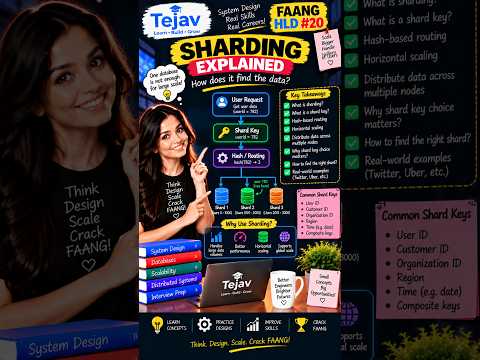
Understanding Sharding: How Databases Manage Large Data
Sharding splits databases into smaller parts to improve performance and scalability.

⚡ One HLD concept. 60 seconds. Interview ready
Understanding Vertical and Horizontal Scaling in System Design
Vertical scaling means upgrading one server, while horizontal scaling means adding more servers.

⚡ One HLD concept. 60 seconds. Interview ready
Understanding Load Balancers in System Design
Load balancers distribute traffic across multiple servers to enhance performance and reliability.

⚡ One HLD concept. 60 seconds. Interview ready
Understanding ZooKeeper Ephemeral and Sequential Nodes
ZooKeeper uses ephemeral and sequential nodes for managing distributed services effectively.

⚡ One HLD concept. 60 seconds. Interview ready
Failover and Split-Brain in High-Level Design
Failover ensures systems remain operational by managing leader changes during failures.
⚡ One HLD concept. 60 seconds. Interview ready
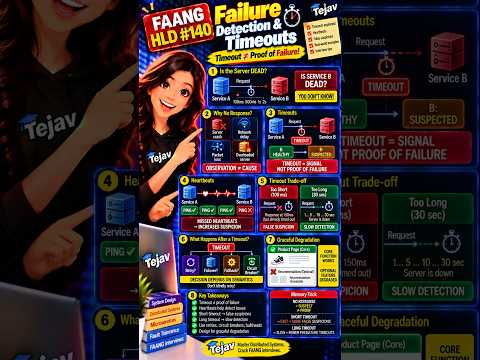
HLD: Understanding Server Failure Detection and Timeouts
Timeouts in distributed systems indicate suspicion, not confirmed failure.

⚡ One HLD concept. 60 seconds. Interview ready
HLD: Fallbacks Explained for System Design
Fallbacks allow systems to handle failures safely and maintain user experience.

⚡ One HLD concept. 60 seconds. Interview ready
Graceful Degradation in System Design
Graceful degradation allows apps to function partially during service failures.

⚡ One HLD concept. 60 seconds. Interview ready
Kafka Retry Topics and Delayed Retries Explained
Kafka uses retry topics and delayed retries to manage message failures efficiently.
⚡ One HLD concept. 60 seconds. Interview ready
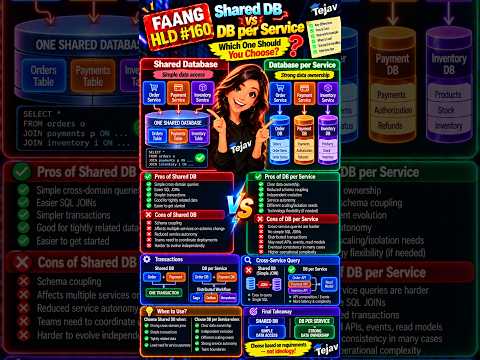
HLD: Shared DB vs Database per Service Trade-Offs
Choosing between a shared database and a database per service affects system design significantly.

⚡ One HLD concept. 60 seconds. Interview ready
Understanding Availability vs Reliability in System Design
Availability is about access; reliability is about correct performance.

⚡ One HLD concept. 60 seconds. Interview ready
Understanding Database per Service in Microservices Architecture
Database per Service ensures each microservice owns its data, reducing dependencies.

⚡ One HLD concept. 60 seconds. Interview ready
HLD: Microservices vs Modular Monolith Explained
Microservices and modular monoliths differ mainly in deployment and communication methods.

⚡ One HLD concept. 60 seconds. Interview ready
Leader Election Algorithms: Bully vs Raft vs ZooKeeper
Bully, Raft, and ZooKeeper are distinct algorithms for leader election in distributed systems.

⚡ One HLD concept. 60 seconds. Interview ready
Kafka Exactly-Once Processing: Avoiding Duplicates
Kafka can help ensure messages are processed once, but requires careful design.

⚡ One HLD concept. 60 seconds. Interview ready
Database Replication: Scale and Survive Failures
Database replication helps keep data available and allows systems to handle more read requests.

⚡ One HLD concept. 60 seconds. Interview ready
Understanding the Bulkhead Pattern in System Design
The Bulkhead Pattern isolates resources to protect critical workloads from failures.

⚡ One HLD concept. 60 seconds. Interview ready
Understanding Quorum Reads in Distributed Systems
Quorum Reads ensure data consistency by querying multiple replicas in distributed systems.

⚡ One HLD concept. 60 seconds. Interview ready
ZooKeeper Watches: Avoiding the Thundering Herd Problem
ZooKeeper watches notify clients of changes, avoiding constant polling and reducing server load.

⚡ One HLD concept. 60 seconds. Interview ready
HLD: Understanding Request-Response vs Events in System Design
Request-Response asks for a result, while Events notify that something has happened.

⚡ One HLD concept. 60 seconds. Interview ready
ZooKeeper Architecture and ZAB Explained
ZooKeeper coordinates distributed systems using an ensemble of servers and the ZAB protocol.

⚡ One HLD concept. 60 seconds. Interview ready
Kafka Stateful Stream Processing: How Does It Remember?
Kafka uses state stores to remember previous events in stateful stream processing.