
I'm preparing for
🎛️ Narrow downsubject · level · topic1▾
Results · 60 for “Basic Data Management”
← Front page✨ Smart search: matched by meaning, not just words

⚡ One HLD concept. 60 seconds. Interview ready
Data Warehouse Architecture: Analyzing Business Data Efficiently
Data warehouses help businesses analyze large amounts of data for better decision-making.

⚡ One HLD concept. 60 seconds. Interview ready
Data Lake Architecture: Storing Big Data at Scale
Data lakes store large volumes of diverse data for analytics and processing.

⚡ One HLD concept. 60 seconds. Interview ready
Time-Series Data Modeling: Avoiding Cardinality Issues
Choosing the right labels in time-series data is crucial to avoid inefficiencies.

⚡ One HLD concept. 60 seconds. Interview ready
Understanding Retention Policies in Databases
Retention policies help manage how long data is kept in databases.

⚡ One HLD concept. 60 seconds. Interview ready
B-Tree Index: Efficient Database Navigation
B-Trees help databases find data quickly without scanning every row.

⚡ One HLD concept. 60 seconds. Interview ready
Time-Series Database Architecture: Storing Millions of Metrics
Time-series databases are designed to store and query time-stamped metrics efficiently.

⚡ One HLD concept. 60 seconds. Interview ready
Data Lakehouse Architecture: Combining Lakes and Warehouses
Data Lakehouse architecture merges flexible data storage with reliable analytics capabilities.

⚡ One HLD concept. 60 seconds. Interview ready
HLD: Downsampling and Aggregation in Time-Series Databases
Downsampling and aggregation reduce data volume while preserving essential trends.

⚡ One HLD concept. 60 seconds. Interview ready
Understanding Database per Service in Microservices Architecture
Database per Service ensures each microservice owns its data, reducing dependencies.

⚡ One HLD concept. 60 seconds. Interview ready
Database Indexing: How to Make Queries Fast
Database indexing speeds up data retrieval by allowing quick lookups.

⚡ One HLD concept. 60 seconds. Interview ready
Understanding Data Residency in High-Level Design
Data residency is crucial for compliance with laws about where data can be stored.

⚡ One HLD concept. 60 seconds. Interview ready
Dynamo-Style Databases: High-Level Design Overview
Dynamo-style databases are designed for high availability and fault tolerance in distributed systems.

⚡ One HLD concept. 60 seconds. Interview ready
Understanding Sharding: How Databases Manage Large Data
Sharding splits databases into smaller parts to improve performance and scalability.
⚡ One HLD concept. 60 seconds. Interview ready
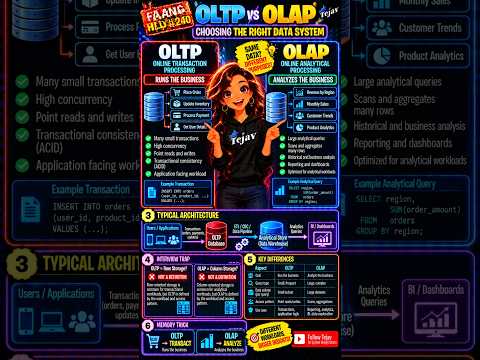
Understanding OLTP and OLAP in Database Design
OLTP handles transactions while OLAP is for data analysis and reporting.

⚡ One HLD concept. 60 seconds. Interview ready
Change Data Capture (CDC): Real-Time Database Syncing
Change Data Capture allows real-time syncing of database changes to other systems.

⚡ One HLD concept. 60 seconds. Interview ready
Cassandra Architecture: Masterless Database Scaling Explained
Cassandra uses a masterless architecture to distribute and replicate data efficiently.

⚡ One HLD concept. 60 seconds. Interview ready
HLD: Understanding Container Storage and Data Persistence
Container data can be lost unless stored in persistent volumes.

⚡ One HLD concept. 60 seconds. Interview ready
SQL vs NoSQL: Choosing the Right Database for Your Needs
The choice between SQL and NoSQL databases depends on your application's specific needs.

⚡ One HLD concept. 60 seconds. Interview ready
API Pagination: Efficiently Handling Large Datasets
API pagination helps manage large datasets by breaking them into smaller parts.

⚡ One HLD concept. 60 seconds. Interview ready
Time-Based Partitioning: Scaling Time-Series Databases
Time-based partitioning organizes time-series data into smaller, efficient segments for better querying.

⚡ One HLD concept. 60 seconds. Interview ready
HLD: Database CDC with Kafka for Real-Time Events
CDC with Kafka allows real-time updates from databases to multiple services.

⚡ One HLD concept. 60 seconds. Interview ready
Elasticsearch Data Streams vs. Time-Based Indices: Which to Choose?
Elasticsearch offers Data Streams for simplicity and Time-Based Indices for control in managing time-series data.

⚡ One HLD concept. 60 seconds. Interview ready
Backup Strategies: Full vs Incremental vs Differential
Backup strategies include Full, Incremental, and Differential, each with unique benefits.

⚡ One HLD concept. 60 seconds. Interview ready
HLD: Batch vs Stream Processing in System Design
Batch processing collects data to process later, while stream processing handles data in real-time.
⚡ One HLD concept. 60 seconds. Interview ready
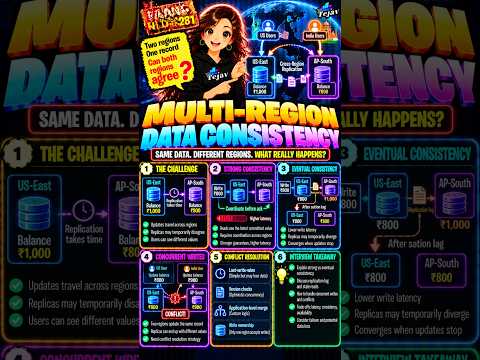
HLD: Multi-Region Data Consistency Explained
Multi-region data consistency ensures that users in different locations see the same data.

⚡ One HLD concept. 60 seconds. Interview ready
Understanding Elasticsearch Data Streams in HLD
Elasticsearch Data Streams simplify time-series data management with one name for many indices.

⚡ One HLD concept. 60 seconds. Interview ready
Identifying and Optimizing Database Bottlenecks
Database bottlenecks slow down performance, but identifying them helps optimize and scale effectively.
⚡ One HLD concept. 60 seconds. Interview ready
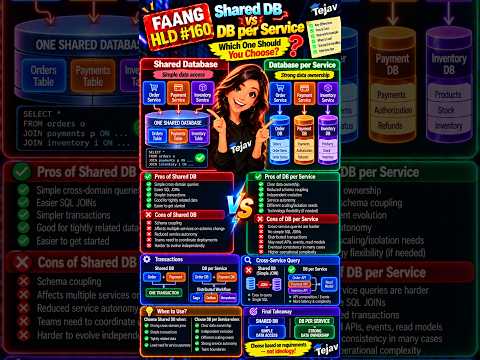
HLD: Shared DB vs Database per Service Trade-Offs
Choosing between a shared database and a database per service affects system design significantly.

⚡ One HLD concept. 60 seconds. Interview ready
Understanding Transactions and ACID Properties in Databases
Transactions ensure database operations are reliable using ACID properties.

⚡ One HLD concept. 60 seconds. Interview ready
Redis: Why Is It So Fast for High-Scale Systems?
Redis is a fast in-memory data store used for caching and low-latency applications.

⚡ One HLD concept. 60 seconds. Interview ready
Understanding Database Isolation Levels in Software Engineering
Database isolation levels determine how transactions interact and affect data consistency.

⚡ One HLD concept. 60 seconds. Interview ready
Optimistic vs Pessimistic Locking in Database Management
Optimistic and pessimistic locking are strategies to manage database access during concurrent transactions.

⚡ One HLD concept. 60 seconds. Interview ready
Understanding the Cache-Aside Pattern in System Design
The Cache-Aside Pattern speeds up data retrieval by using a cache to store frequently accessed data.

⚡ One HLD concept. 60 seconds. Interview ready
MongoDB Architecture: Understanding Replica Sets and Sharding
MongoDB uses replica sets for data redundancy and sharding for scalability.

⚡ One HLD concept. 60 seconds. Interview ready
Understanding Database Replication in High-Level Design
Database replication enhances data availability and read performance but has challenges like replication lag.

⚡ One HLD concept. 60 seconds. Interview ready
Understanding Elasticsearch ILM for Cost Management
Elasticsearch ILM automates index management to reduce storage costs and meet data needs.

⚡ One HLD concept. 60 seconds. Interview ready
HLD — KMS Explained 🔐 What If Your Encryption Key Gets Stolen?
KMS securely manages encryption keys to protect data from theft.

⚡ One HLD concept. 60 seconds. Interview ready
Kafka Retention vs Compaction: History or Latest State?
Kafka uses retention to keep historical data and compaction to keep the latest state.

⚡ One HLD concept. 60 seconds. Interview ready
Understanding Cache Penetration in System Design
Cache penetration occurs when requests for non-existent data overload the database.

⚡ One HLD concept. 60 seconds. Interview ready
Database Replication: Scale and Survive Failures
Database replication helps keep data available and allows systems to handle more read requests.

⚡ One HLD concept. 60 seconds. Interview ready
Stream Processing Architecture: From Events to Real-Time Insights
Stream Processing Architecture helps turn incoming events into real-time insights efficiently.
⚡ One HLD concept. 60 seconds. Interview ready
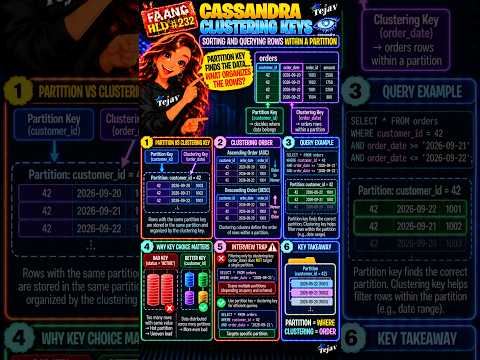
Cassandra Clustering Keys: How Rows Are Sorted
Cassandra uses clustering keys to sort rows within a partition for efficient querying.

⚡ One HLD concept. 60 seconds. Interview ready
Point-in-Time Recovery: Recovering Deleted Database Data
Point-in-Time Recovery allows databases to be restored to a specific moment before data loss.

⚡ One HLD concept. 60 seconds. Interview ready
FAANG HLD 🔥 | Partition Pruning Explained — Scan Less, Query Faster! ⚡
Partition pruning helps databases skip unnecessary data scans, speeding up queries.

⚡ One HLD concept. 60 seconds. Interview ready
Disaster Recovery Across Regions: Can Your System Recover?
Disaster recovery ensures systems can restore services and data after major disruptions.

⚡ One HLD concept. 60 seconds. Interview ready
Choosing Service Boundaries in Microservices Architecture
Choosing the right boundaries for microservices is crucial for effective architecture.

⚡ One HLD concept. 60 seconds. Interview ready
ETL vs ELT: Where Should Data Transformation Happen?
ETL transforms data before loading, while ELT loads raw data and transforms it later.

⚡ One HLD concept. 60 seconds. Interview ready
HLD: Full-Text Search vs Database Search with Elasticsearch
Choose Elasticsearch for complex text searches, but use databases for structured queries.

⚡ One HLD concept. 60 seconds. Interview ready
Understanding Consistency Models in Distributed Systems
Consistency models determine what data reads in distributed systems can see.

⚡ One HLD concept. 60 seconds. Interview ready
Understanding Cache Hits: Reducing Database Load
Caching helps applications respond faster by serving data from memory instead of hitting the database.

⚡ One HLD concept. 60 seconds. Interview ready
Kafka Stateful Stream Processing: How Does It Remember?
Kafka uses state stores to remember previous events in stateful stream processing.

⚡ One HLD concept. 60 seconds. Interview ready
Understanding Cassandra Partition Keys for Data Storage
Cassandra uses partition keys to determine how and where to store data across nodes.

⚡ One HLD concept. 60 seconds. Interview ready
Kafka Consumer Fetch & Batching: Boosting Throughput
Kafka consumers can fetch data in batches to improve throughput and reduce latency.

⚡ One HLD concept. 60 seconds. Interview ready
Elasticsearch Aggregations: Buckets, Metrics, and Cardinality
Elasticsearch aggregations help analyze data by grouping, calculating, and estimating values.

⚡ One HLD concept. 60 seconds. Interview ready
Kafka subscribe() vs assign(): Who Controls Partition Assignment?
Kafka's subscribe() lets the group manage partitions, while assign() gives control to the application.

⚡ One HLD concept. 60 seconds. Interview ready
Understanding the Bulkhead Pattern in System Design
The Bulkhead Pattern isolates resources to protect critical workloads from failures.

⚡ One HLD concept. 60 seconds. Interview ready
Protobuf and Schema Evolution: Avoid Breaking Changes
Protobuf schema evolution requires careful changes to avoid breaking existing clients.

⚡ One HLD concept. 60 seconds. Interview ready
Kafka Streams Local State: Fast Processing and Recovery
Kafka Streams uses local state for quick data access and changelogs for recovery.

⚡ One HLD concept. 60 seconds. Interview ready
Consistent Hashing: Efficient Node Management in Distributed Systems
Consistent hashing allows efficient addition and removal of nodes with minimal key movement.

⚡ One HLD concept. 60 seconds. Interview ready
REST API Design: Building Scalable APIs for Real-World Use
REST API design focuses on creating clean, efficient, and scalable web services.