
I'm preparing for
Topic
system design
116 shorts across 1 course, in learning order
🎛️ Narrow downsubject · level · topic2▾
Results · 27 for “Microservices architecture”
← Front page✨ Smart search: matched by meaning, not just words

⚡ One HLD concept. 60 seconds. Interview ready
When to Use Microservices in Software Design
Microservices are useful when you need independent scaling, deployment, and clear boundaries in software design.

⚡ One HLD concept. 60 seconds. Interview ready
Monolith vs Microservices: Choosing the Right Architecture
Monolithic and microservices architectures each have unique advantages and challenges for software development.

⚡ One HLD concept. 60 seconds. Interview ready
HLD: Microservices vs Modular Monolith Explained
Microservices and modular monoliths differ mainly in deployment and communication methods.

⚡ One HLD concept. 60 seconds. Interview ready
Choosing Service Boundaries in Microservices Architecture
Choosing the right boundaries for microservices is crucial for effective architecture.

⚡ One HLD concept. 60 seconds. Interview ready
HLD: 5 Microservices Communication Patterns Explained
Microservices can communicate using five key patterns based on their needs.

⚡ One HLD concept. 60 seconds. Interview ready
Understanding Database per Service in Microservices Architecture
Database per Service ensures each microservice owns its data, reducing dependencies.

⚡ One HLD concept. 60 seconds. Interview ready
API Gateway: The Front Door of Your System
An API Gateway simplifies client access to backend services in microservices.
⚡ One HLD concept. 60 seconds. Interview ready
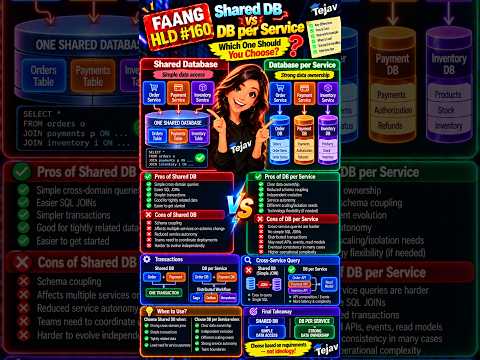
HLD: Shared DB vs Database per Service Trade-Offs
Choosing between a shared database and a database per service affects system design significantly.
⚡ One HLD concept. 60 seconds. Interview ready
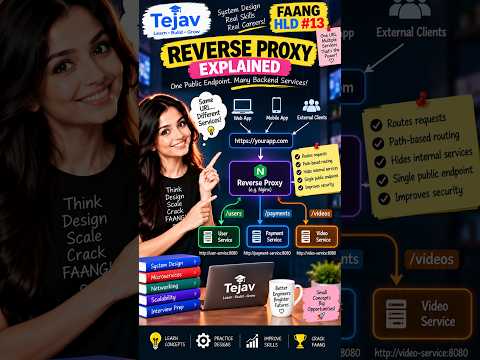
Understanding Reverse Proxy in High-Level Design
A reverse proxy routes client requests to different backend services efficiently.

⚡ One HLD concept. 60 seconds. Interview ready
API Gateway vs Proxy vs Load Balancer: Key Differences
API Gateway, Proxy, and Load Balancer serve different roles in managing requests and traffic in systems.

⚡ One HLD concept. 60 seconds. Interview ready
Understanding the RED Method for Microservices Monitoring
The RED Method helps monitor microservices using Rate, Errors, and Duration metrics.

⚡ One HLD concept. 60 seconds. Interview ready
Understanding Message Queues in Distributed Systems
Message queues allow services to communicate asynchronously, improving scalability and reliability.

⚡ One HLD concept. 60 seconds. Interview ready
HLD: Understanding REST, RPC, and gRPC Differences
REST, RPC, and gRPC are different methods for communication in software systems.

⚡ One HLD concept. 60 seconds. Interview ready
Understanding the Saga Pattern in Distributed Transactions
The Saga Pattern manages distributed transactions using local transactions and compensating actions.

⚡ One HLD concept. 60 seconds. Interview ready
Protobuf and Schema Evolution: Avoid Breaking Changes
Protobuf schema evolution requires careful changes to avoid breaking existing clients.

⚡ One HLD concept. 60 seconds. Interview ready
Transactional Outbox Pattern: Never Lose Events!
The Transactional Outbox Pattern ensures database updates and event publishing are synchronized to avoid losing events.

⚡ One HLD concept. 60 seconds. Interview ready
REST API Design: Building Scalable APIs for Real-World Use
REST API design focuses on creating clean, efficient, and scalable web services.

⚡ One HLD concept. 60 seconds. Interview ready
Understanding the Bulkhead Pattern in System Design
The Bulkhead Pattern isolates resources to protect critical workloads from failures.

⚡ One HLD concept. 60 seconds. Interview ready
Graceful Degradation in System Design
Graceful degradation allows apps to function partially during service failures.

⚡ One HLD concept. 60 seconds. Interview ready
Distributed Backpressure: Managing Service Overload
Distributed backpressure helps manage the flow of work between services to prevent overload.

⚡ One HLD concept. 60 seconds. Interview ready
HLD: Understanding Request-Response vs Events in System Design
Request-Response asks for a result, while Events notify that something has happened.

⚡ One HLD concept. 60 seconds. Interview ready
Queue vs Pub/Sub: Key Differences in System Design
Queues distribute tasks to one consumer, while Pub/Sub broadcasts events to multiple subscribers.
⚡ One HLD concept. 60 seconds. Interview ready
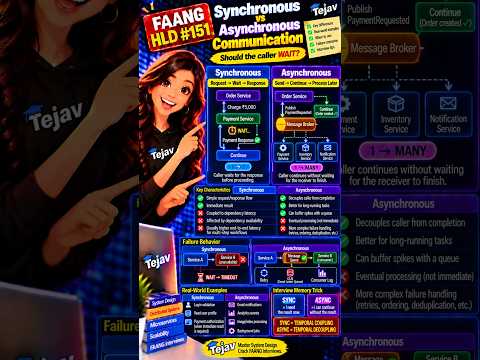
HLD: Synchronous vs Asynchronous Communication Explained
Synchronous communication waits for a response, while asynchronous continues without waiting.

⚡ One HLD concept. 60 seconds. Interview ready
Cascading Failures in Distributed Systems Explained
Cascading failures occur when one service's failure impacts others, causing widespread issues.
⚡ One HLD concept. 60 seconds. Interview ready
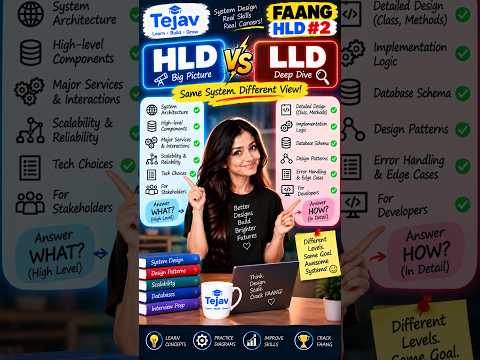
Understanding High-Level Design (HLD) and Low-Level Design (LLD)
HLD provides an overview of system architecture, while LLD details implementation specifics.

⚡ One HLD concept. 60 seconds. Interview ready
Understanding Circuit Breaker: CLOSED, OPEN, and HALF-OPEN States
The Circuit Breaker pattern controls service calls to prevent failures from spreading.

⚡ One HLD concept. 60 seconds. Interview ready
Distributed Locks: Preventing Duplicate Work Across Servers
Distributed locks ensure only one server performs a task, avoiding duplication.
🧠Related by meaning
Not tagged “system design”, but closely connected

