
I'm preparing for
Topic
system design
116 shorts across 1 course, in learning order
🎛️ Narrow downsubject · level · topic2▾
Results · 15 for “Redis persistence”
← Front page✨ Smart search: matched by meaning, not just words

⚡ One HLD concept. 60 seconds. Interview ready
Redis: Why Is It So Fast for High-Scale Systems?
Redis is a fast in-memory data store used for caching and low-latency applications.

⚡ One HLD concept. 60 seconds. Interview ready
Understanding Idempotency in System Design
Idempotency ensures that repeated operations in APIs do not cause duplicate effects.

⚡ One HLD concept. 60 seconds. Interview ready
Understanding Database per Service in Microservices Architecture
Database per Service ensures each microservice owns its data, reducing dependencies.

⚡ One HLD concept. 60 seconds. Interview ready
Read-After-Write Consistency in Database Systems
Read-after-write consistency ensures users see their latest updates immediately.

⚡ One HLD concept. 60 seconds. Interview ready
Transactional Outbox Pattern: Never Lose Events!
The Transactional Outbox Pattern ensures database updates and event publishing are synchronized to avoid losing events.

⚡ One HLD concept. 60 seconds. Interview ready
Understanding Cache Penetration in System Design
Cache penetration occurs when requests for non-existent data overload the database.

⚡ One HLD concept. 60 seconds. Interview ready
Understanding the Cache-Aside Pattern in System Design
The Cache-Aside Pattern speeds up data retrieval by using a cache to store frequently accessed data.

⚡ One HLD concept. 60 seconds. Interview ready
Connection Pooling Explained: Why a Bigger Pool Can Hurt
Connection pooling reuses database connections but can cause issues if misconfigured.

⚡ One HLD concept. 60 seconds. Interview ready
Understanding Cache Breakdown and Request Coalescing
Cache breakdowns can overwhelm databases, but request coalescing solves this issue.

⚡ One HLD concept. 60 seconds. Interview ready
Distributed Caching: Why Spread It Out?
Distributed caching spreads data across multiple servers for better performance and reliability.

⚡ One HLD concept. 60 seconds. Interview ready
Cache Invalidation: TTL vs Freshness Explained
Cache invalidation is about knowing when to refresh cached data.

⚡ One HLD concept. 60 seconds. Interview ready
Keep-Alive in Networking: Efficient HTTP Connections
Keep-Alive allows reusing HTTP connections to improve efficiency and reduce overhead.

⚡ One HLD concept. 60 seconds. Interview ready
HLD: Fallbacks Explained for System Design
Fallbacks allow systems to handle failures safely and maintain user experience.
⚡ One HLD concept. 60 seconds. Interview ready
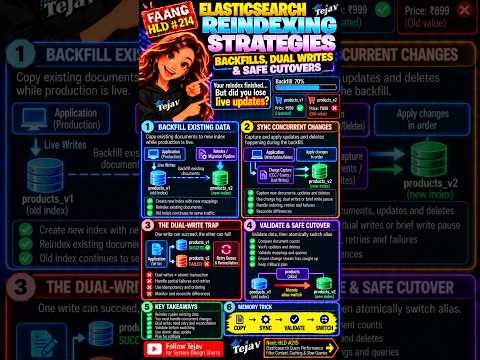
Elasticsearch Reindexing: Understanding the Dual-Write Trap
The dual-write trap in Elasticsearch can cause data inconsistency during reindexing.

⚡ One HLD concept. 60 seconds. Interview ready
Graceful Degradation in System Design
Graceful degradation allows apps to function partially during service failures.
🧠Related by meaning
Not tagged “system design”, but closely connected

