
I'm preparing for
🎛️ Narrow downsubject · level · topic2▾
Results · 40 for “System Design Trade-offs”
← Front page✨ Smart search: matched by meaning, not just words

⚡ One HLD concept. 60 seconds. Interview ready
Monolith vs Microservices: Choosing the Right Architecture
Monolithic and microservices architectures each have unique advantages and challenges for software development.

⚡ One HLD concept. 60 seconds. Interview ready
When to Use Microservices in Software Design
Microservices are useful when you need independent scaling, deployment, and clear boundaries in software design.

⚡ One HLD concept. 60 seconds. Interview ready
Understanding Scalable System Design in FAANG Companies
FAANG engineers use high-level design principles to create scalable systems.

⚡ One HLD concept. 60 seconds. Interview ready
HLD: Microservices vs Modular Monolith Explained
Microservices and modular monoliths differ mainly in deployment and communication methods.

⚡ One HLD concept. 60 seconds. Interview ready
Understanding Availability vs Reliability in System Design
Availability is about access; reliability is about correct performance.

⚡ One HLD concept. 60 seconds. Interview ready
Choosing Service Boundaries in Microservices Architecture
Choosing the right boundaries for microservices is crucial for effective architecture.

⚡ One HLD concept. 60 seconds. Interview ready
HLD: Fallbacks Explained for System Design
Fallbacks allow systems to handle failures safely and maintain user experience.

⚡ One HLD concept. 60 seconds. Interview ready
Understanding N+1 Redundancy in High-Level Design
N+1 redundancy means having one extra server to maintain capacity during a failure.

⚡ One HLD concept. 60 seconds. Interview ready
Understanding the Retry Pattern in System Design
The retry pattern helps systems recover from temporary failures but can cause overload if misused.

⚡ One HLD concept. 60 seconds. Interview ready
Understanding Vertical and Horizontal Scaling in System Design
Vertical scaling means upgrading one server, while horizontal scaling means adding more servers.
⚡ One HLD concept. 60 seconds. Interview ready
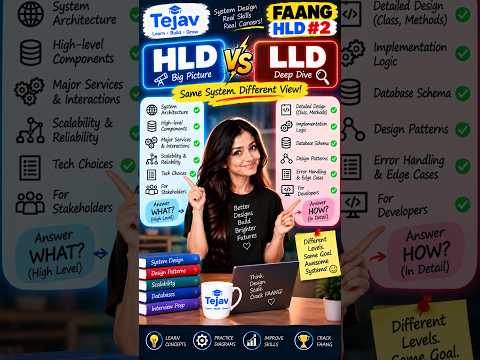
Understanding High-Level Design (HLD) and Low-Level Design (LLD)
HLD provides an overview of system architecture, while LLD details implementation specifics.

⚡ One HLD concept. 60 seconds. Interview ready
Understanding Fault Domains in High-Level Design
Fault domains help prevent multiple servers from failing together in an architecture.

⚡ One HLD concept. 60 seconds. Interview ready
HLD: Batch vs Stream Processing in System Design
Batch processing collects data to process later, while stream processing handles data in real-time.

⚡ One HLD concept. 60 seconds. Interview ready
Understanding Functional and Non-Functional Requirements
Functional requirements define what a system does, while non-functional requirements define how it performs.

⚡ One HLD concept. 60 seconds. Interview ready
Understanding the Bulkhead Pattern in System Design
The Bulkhead Pattern isolates resources to protect critical workloads from failures.

⚡ One HLD concept. 60 seconds. Interview ready
HLD: 5 Microservices Communication Patterns Explained
Microservices can communicate using five key patterns based on their needs.

⚡ One HLD concept. 60 seconds. Interview ready
HLD: Managing Dependency Failures in Distributed Systems
Dependency failures can disrupt applications, but resilience patterns can help manage them.

⚡ One HLD concept. 60 seconds. Interview ready
HLD: Full-Text Search vs Database Search with Elasticsearch
Choose Elasticsearch for complex text searches, but use databases for structured queries.

⚡ One HLD concept. 60 seconds. Interview ready
Understanding High Availability in System Design
High Availability ensures your application remains operational even during server failures.
⚡ One HLD concept. 60 seconds. Interview ready
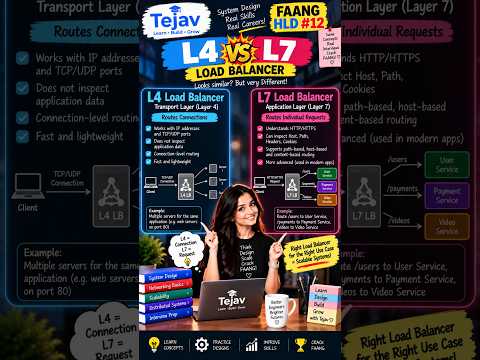
L4 vs L7 Load Balancers: Key Differences Explained
L4 and L7 load balancers differ in how they route network traffic based on layers of the OSI model.

⚡ One HLD concept. 60 seconds. Interview ready
Understanding the USE Method for Infrastructure Bottlenecks
The USE Method helps find and analyze infrastructure bottlenecks in software systems.

⚡ One HLD concept. 60 seconds. Interview ready
Token Bucket vs Leaky Bucket: Key Differences Explained
Token Bucket allows burst traffic, while Leaky Bucket smooths out traffic flow.

⚡ One HLD concept. 60 seconds. Interview ready
HLD: Understanding Server Failure Detection and Timeouts
Timeouts in distributed systems indicate suspicion, not confirmed failure.

⚡ One HLD concept. 60 seconds. Interview ready
Understanding Jitter in High-Level Design
Jitter helps spread out client retries to avoid traffic spikes.

⚡ One HLD concept. 60 seconds. Interview ready
Understanding Load Balancers in System Design
Load balancers distribute traffic across multiple servers to enhance performance and reliability.

⚡ One HLD concept. 60 seconds. Interview ready
Understanding SPOF: Why Your App Can Go Down with Healthy Servers
A single component's failure can take down your entire application, even with redundancy.

⚡ One HLD concept. 60 seconds. Interview ready
Understanding Alerting in High-Level Design
Alerting helps notify the right people about production issues quickly.

⚡ One HLD concept. 60 seconds. Interview ready
Stream Processing Architecture: From Events to Real-Time Insights
Stream Processing Architecture helps turn incoming events into real-time insights efficiently.

⚡ One HLD concept. 60 seconds. Interview ready
HLD: Understanding REST, RPC, and gRPC Differences
REST, RPC, and gRPC are different methods for communication in software systems.

⚡ One HLD concept. 60 seconds. Interview ready
Understanding the Cache-Aside Pattern in System Design
The Cache-Aside Pattern speeds up data retrieval by using a cache to store frequently accessed data.

⚡ One HLD concept. 60 seconds. Interview ready
Understanding Error Budgets in High-Level Design
An error budget shows how much downtime is acceptable while meeting reliability goals.

⚡ One HLD concept. 60 seconds. Interview ready
Understanding Data Residency in High-Level Design
Data residency is crucial for compliance with laws about where data can be stored.

⚡ One HLD concept. 60 seconds. Interview ready
Understanding Database per Service in Microservices Architecture
Database per Service ensures each microservice owns its data, reducing dependencies.

⚡ One HLD concept. 60 seconds. Interview ready
HLD: Late-Arriving Events - Drop, Update, or Replay?
Late-arriving events can be dropped, updated, or routed based on system needs.

⚡ One HLD concept. 60 seconds. Interview ready
Queue vs Pub/Sub: Key Differences in System Design
Queues distribute tasks to one consumer, while Pub/Sub broadcasts events to multiple subscribers.

⚡ One HLD concept. 60 seconds. Interview ready
Distributed Backpressure: Managing Service Overload
Distributed backpressure helps manage the flow of work between services to prevent overload.

⚡ One HLD concept. 60 seconds. Interview ready
Understanding Distributed Clocks in Systems Design
In distributed systems, timestamps don't always reflect the true order of events.

⚡ One HLD concept. 60 seconds. Interview ready
API Gateway vs Proxy vs Load Balancer: Key Differences
API Gateway, Proxy, and Load Balancer serve different roles in managing requests and traffic in systems.

⚡ One HLD concept. 60 seconds. Interview ready
Stateless vs Stateful Servers: Scaling Made Easy
Stateless servers are easier to scale because they don't store user session data locally.

⚡ One HLD concept. 60 seconds. Interview ready
CQRS Explained: Commands vs Queries in System Design
CQRS separates how we change data from how we read data, improving scalability.