
I'm preparing for
Topic
system design
66 shorts across 1 course, in learning order
🎛️ Narrow downsubject · level · topic2▾
Results · 18 for “Client-Server Architecture”
← Front page✨ Smart search: matched by meaning, not just words

⚡ One HLD concept. 60 seconds. Interview ready
HLD: 5 Microservices Communication Patterns Explained
Microservices can communicate using five key patterns based on their needs.

⚡ One HLD concept. 60 seconds. Interview ready
Understanding Database per Service in Microservices Architecture
Database per Service ensures each microservice owns its data, reducing dependencies.

⚡ One HLD concept. 60 seconds. Interview ready
Choosing Service Boundaries in Microservices Architecture
Choosing the right boundaries for microservices is crucial for effective architecture.

⚡ One HLD concept. 60 seconds. Interview ready
Distributed Locks: Preventing Duplicate Work Across Servers
Distributed locks ensure only one server performs a task, avoiding duplication.

⚡ One HLD concept. 60 seconds. Interview ready
API Gateway vs Proxy vs Load Balancer: Key Differences
API Gateway, Proxy, and Load Balancer serve different roles in managing requests and traffic in systems.

⚡ One HLD concept. 60 seconds. Interview ready
Monolith vs Microservices: Choosing the Right Architecture
Monolithic and microservices architectures each have unique advantages and challenges for software development.

⚡ One HLD concept. 60 seconds. Interview ready
Distributed Caching: Why Spread It Out?
Distributed caching spreads data across multiple servers for better performance and reliability.

⚡ One HLD concept. 60 seconds. Interview ready
Understanding Vertical and Horizontal Scaling in System Design
Vertical scaling means upgrading one server, while horizontal scaling means adding more servers.

⚡ One HLD concept. 60 seconds. Interview ready
When to Use Microservices in Software Design
Microservices are useful when you need independent scaling, deployment, and clear boundaries in software design.

⚡ One HLD concept. 60 seconds. Interview ready
API Gateway: The Front Door of Your System
An API Gateway simplifies client access to backend services in microservices.

⚡ One HLD concept. 60 seconds. Interview ready
HLD: Understanding REST, RPC, and gRPC Differences
REST, RPC, and gRPC are different methods for communication in software systems.

⚡ One HLD concept. 60 seconds. Interview ready
HLD: Microservices vs Modular Monolith Explained
Microservices and modular monoliths differ mainly in deployment and communication methods.

⚡ One HLD concept. 60 seconds. Interview ready
Transactional Outbox Pattern: Never Lose Events!
The Transactional Outbox Pattern ensures database updates and event publishing are synchronized to avoid losing events.

⚡ One HLD concept. 60 seconds. Interview ready
Understanding Cache Breakdown and Request Coalescing
Cache breakdowns can overwhelm databases, but request coalescing solves this issue.

⚡ One HLD concept. 60 seconds. Interview ready
Understanding CDN: How Cache Hits Improve Performance
A CDN speeds up web applications by caching content closer to users.
⚡ One HLD concept. 60 seconds. Interview ready
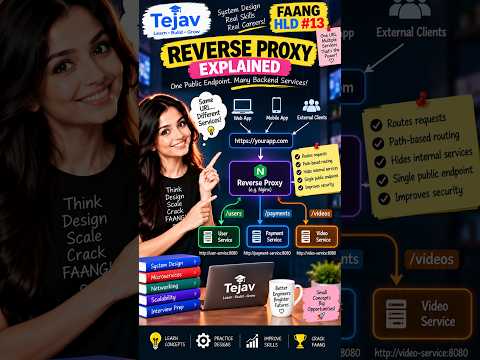
Understanding Reverse Proxy in High-Level Design
A reverse proxy routes client requests to different backend services efficiently.

⚡ One HLD concept. 60 seconds. Interview ready
Understanding Load Balancers in System Design
Load balancers distribute traffic across multiple servers to enhance performance and reliability.

⚡ One HLD concept. 60 seconds. Interview ready
HLD: Understanding Server Failure Detection and Timeouts
Timeouts in distributed systems indicate suspicion, not confirmed failure.
🧠Related by meaning
Not tagged “system design”, but closely connected

