
I'm preparing for
🎛️ Narrow downsubject · level · topic1▾
Results · 17 for “Cloud Computing Basics”
← Front page✨ Smart search: matched by meaning, not just words

⚡ One HLD concept. 60 seconds. Interview ready
Understanding CDN: How Cache Hits Improve Performance
A CDN speeds up web applications by caching content closer to users.

⚡ One HLD concept. 60 seconds. Interview ready
Stateless vs Stateful Servers: Scaling Made Easy
Stateless servers are easier to scale because they don't store user session data locally.

⚡ One HLD concept. 60 seconds. Interview ready
Distributed Caching: Why Spread It Out?
Distributed caching spreads data across multiple servers for better performance and reliability.

⚡ One HLD concept. 60 seconds. Interview ready
Understanding Scalable System Design in FAANG Companies
FAANG engineers use high-level design principles to create scalable systems.

⚡ One HLD concept. 60 seconds. Interview ready
Understanding Cache Hits: Reducing Database Load
Caching helps applications respond faster by serving data from memory instead of hitting the database.

⚡ One HLD concept. 60 seconds. Interview ready
Understanding Load Balancers in System Design
Load balancers distribute traffic across multiple servers to enhance performance and reliability.

⚡ One HLD concept. 60 seconds. Interview ready
Choosing Service Boundaries in Microservices Architecture
Choosing the right boundaries for microservices is crucial for effective architecture.

⚡ One HLD concept. 60 seconds. Interview ready
Understanding Database per Service in Microservices Architecture
Database per Service ensures each microservice owns its data, reducing dependencies.

⚡ One HLD concept. 60 seconds. Interview ready
When to Use Microservices in Software Design
Microservices are useful when you need independent scaling, deployment, and clear boundaries in software design.

⚡ One HLD concept. 60 seconds. Interview ready
Distributed Backpressure: Managing Service Overload
Distributed backpressure helps manage the flow of work between services to prevent overload.

⚡ One HLD concept. 60 seconds. Interview ready
Understanding Availability vs Reliability in System Design
Availability is about access; reliability is about correct performance.

⚡ One HLD concept. 60 seconds. Interview ready
Understanding Vertical and Horizontal Scaling in System Design
Vertical scaling means upgrading one server, while horizontal scaling means adding more servers.

⚡ One HLD concept. 60 seconds. Interview ready
HLD: 5 Microservices Communication Patterns Explained
Microservices can communicate using five key patterns based on their needs.
⚡ One HLD concept. 60 seconds. Interview ready
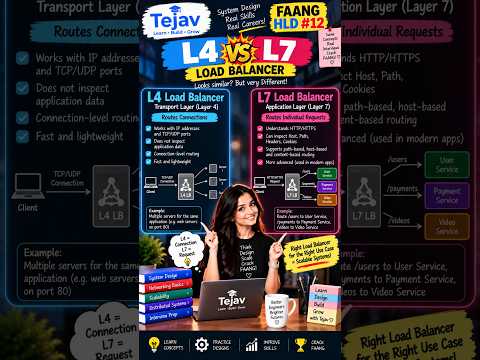
L4 vs L7 Load Balancers: Key Differences Explained
L4 and L7 load balancers differ in how they route network traffic based on layers of the OSI model.

⚡ One HLD concept. 60 seconds. Interview ready
HLD: Search Engine Architecture and Its Components
Search engines collect, index, retrieve, and rank documents to provide relevant results.

⚡ One HLD concept. 60 seconds. Interview ready
Understanding Cache Breakdown and Request Coalescing
Cache breakdowns can overwhelm databases, but request coalescing solves this issue.

⚡ One HLD concept. 60 seconds. Interview ready
Connection Pooling Explained: Why a Bigger Pool Can Hurt
Connection pooling reuses database connections but can cause issues if misconfigured.