
I'm preparing for
🎛️ Narrow downsubject · level · topic1▾
Results · 28 for “Database Sharding”
← Front page✨ Smart search: matched by meaning, not just words

⚡ One HLD concept. 60 seconds. Interview ready
Elasticsearch Shards vs Replicas: Partitioning vs Duplication
Primary shards partition data, while replica shards duplicate it for redundancy.

⚡ One HLD concept. 60 seconds. Interview ready
Understanding Elasticsearch Shards and Replicas in HLD
Elasticsearch uses shards for data distribution and replicas for redundancy.

⚡ One HLD concept. 60 seconds. Interview ready
Understanding Database per Service in Microservices Architecture
Database per Service ensures each microservice owns its data, reducing dependencies.

⚡ One HLD concept. 60 seconds. Interview ready
Elasticsearch Query Execution: How Searches Work Across Shards
Elasticsearch distributes search queries across shards to find and retrieve results quickly.

⚡ One HLD concept. 60 seconds. Interview ready
Elasticsearch Architecture: How Distributed Search Works
Elasticsearch uses distributed architecture to search data quickly across multiple servers.

⚡ One HLD concept. 60 seconds. Interview ready
Understanding Database Replication in High-Level Design
Database replication enhances data availability and read performance but has challenges like replication lag.

⚡ One HLD concept. 60 seconds. Interview ready
Database Replication: Scale and Survive Failures
Database replication helps keep data available and allows systems to handle more read requests.

⚡ One HLD concept. 60 seconds. Interview ready
Identifying and Optimizing Database Bottlenecks
Database bottlenecks slow down performance, but identifying them helps optimize and scale effectively.

⚡ One HLD concept. 60 seconds. Interview ready
Distributed Caching: Why Spread It Out?
Distributed caching spreads data across multiple servers for better performance and reliability.

⚡ One HLD concept. 60 seconds. Interview ready
Distributed Locks: Preventing Duplicate Work Across Servers
Distributed locks ensure only one server performs a task, avoiding duplication.

⚡ One HLD concept. 60 seconds. Interview ready
Understanding Cache Breakdown and Request Coalescing
Cache breakdowns can overwhelm databases, but request coalescing solves this issue.

⚡ One HLD concept. 60 seconds. Interview ready
Choosing a Distributed Lock: Redis vs Database vs ZooKeeper
Choosing the right distributed lock depends on your system's needs and existing tools.
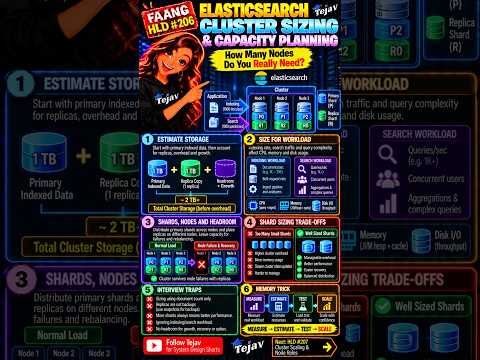
⚡ One HLD concept. 60 seconds. Interview ready
Elasticsearch Cluster Sizing: How Many Nodes Do You Need?
The number of Elasticsearch nodes depends on storage, workload, and performance needs.

⚡ One HLD concept. 60 seconds. Interview ready
Understanding Elasticsearch Node Roles for Scaling Clusters
Elasticsearch has different node roles that help manage data and scale clusters effectively.

⚡ One HLD concept. 60 seconds. Interview ready
Transactional Outbox Pattern: Never Lose Events!
The Transactional Outbox Pattern ensures database updates and event publishing are synchronized to avoid losing events.

⚡ One HLD concept. 60 seconds. Interview ready
Understanding Elasticsearch Cross-Cluster Replication (CCR)
Elasticsearch CCR allows real-time data replication for faster disaster recovery.

⚡ One HLD concept. 60 seconds. Interview ready
HLD: Full-Text Search vs Database Search with Elasticsearch
Choose Elasticsearch for complex text searches, but use databases for structured queries.

⚡ One HLD concept. 60 seconds. Interview ready
Understanding Elasticsearch Snapshots: Replicas vs Backups
Replicas keep your system available, while snapshots allow for data recovery.

⚡ One HLD concept. 60 seconds. Interview ready
Kafka Replication and ISR: Ensuring Data Availability
Kafka uses replication and in-sync replicas to ensure data is always available.

⚡ One HLD concept. 60 seconds. Interview ready
ZooKeeper Architecture and ZAB Explained
ZooKeeper coordinates distributed systems using an ensemble of servers and the ZAB protocol.

⚡ One HLD concept. 60 seconds. Interview ready
Understanding Vertical and Horizontal Scaling in System Design
Vertical scaling means upgrading one server, while horizontal scaling means adding more servers.

⚡ One HLD concept. 60 seconds. Interview ready
Understanding Load Balancers in System Design
Load balancers distribute traffic across multiple servers to enhance performance and reliability.

⚡ One HLD concept. 60 seconds. Interview ready
Stateless vs Stateful Servers: Scaling Made Easy
Stateless servers are easier to scale because they don't store user session data locally.

⚡ One HLD concept. 60 seconds. Interview ready
Sync vs Async Replication: Choosing the Right Approach
Synchronous replication waits for confirmation from replicas, while asynchronous allows faster writes without waiting.

⚡ One HLD concept. 60 seconds. Interview ready
API Pagination: Efficiently Handling Large Datasets
API pagination helps manage large datasets by breaking them into smaller parts.

⚡ One HLD concept. 60 seconds. Interview ready
Distributed Backpressure: Managing Service Overload
Distributed backpressure helps manage the flow of work between services to prevent overload.

⚡ One HLD concept. 60 seconds. Interview ready
Redis: Why Is It So Fast for High-Scale Systems?
Redis is a fast in-memory data store used for caching and low-latency applications.

⚡ One HLD concept. 60 seconds. Interview ready
Kafka Schema Evolution: Changing Schemas Without Breaking Consumers
Kafka Schema Evolution allows safe changes to message structures without breaking existing consumers.