
I'm preparing for
🎛️ Narrow downsubject · level · topic1▾
Results · 14 for “Client-Server Model”
← Front page✨ Smart search: matched by meaning, not just words

⚡ One HLD concept. 60 seconds. Interview ready
Stateless vs Stateful Servers: Scaling Made Easy
Stateless servers are easier to scale because they don't store user session data locally.

⚡ One HLD concept. 60 seconds. Interview ready
Understanding Unary vs Streaming RPC in gRPC
gRPC supports four communication patterns: Unary, Server Streaming, Client Streaming, and Bidirectional Streaming.

⚡ One HLD concept. 60 seconds. Interview ready
Understanding RPC: Remote Procedure Calls in Distributed Systems
RPC allows one service to call a function in another service over the network.
⚡ One HLD concept. 60 seconds. Interview ready
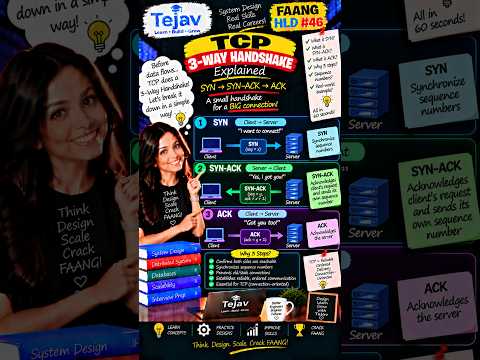
Understanding TCP 3-Way Handshake: SYN, SYN-ACK, ACK
The TCP 3-way handshake ensures reliable connection establishment between a client and server.

⚡ One HLD concept. 60 seconds. Interview ready
HLD: 5 Microservices Communication Patterns Explained
Microservices can communicate using five key patterns based on their needs.

⚡ One HLD concept. 60 seconds. Interview ready
Understanding Consistency Models in Distributed Systems
Consistency models determine what data reads in distributed systems can see.

⚡ One HLD concept. 60 seconds. Interview ready
Understanding Database per Service in Microservices Architecture
Database per Service ensures each microservice owns its data, reducing dependencies.

⚡ One HLD concept. 60 seconds. Interview ready
Choosing Service Boundaries in Microservices Architecture
Choosing the right boundaries for microservices is crucial for effective architecture.

⚡ One HLD concept. 60 seconds. Interview ready
Distributed Locks: Preventing Duplicate Work Across Servers
Distributed locks ensure only one server performs a task, avoiding duplication.
⚡ One HLD concept. 60 seconds. Interview ready
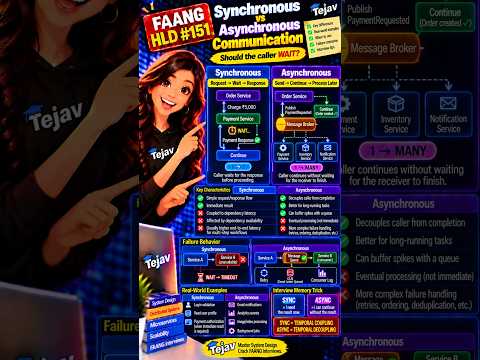
HLD: Synchronous vs Asynchronous Communication Explained
Synchronous communication waits for a response, while asynchronous continues without waiting.

⚡ One HLD concept. 60 seconds. Interview ready
Transactional Outbox Pattern: Never Lose Events!
The Transactional Outbox Pattern ensures database updates and event publishing are synchronized to avoid losing events.

⚡ One HLD concept. 60 seconds. Interview ready
Understanding gRPC Architecture: Behind the Call
gRPC allows efficient communication between services using a structured request-response model.
⚡ One HLD concept. 60 seconds. Interview ready
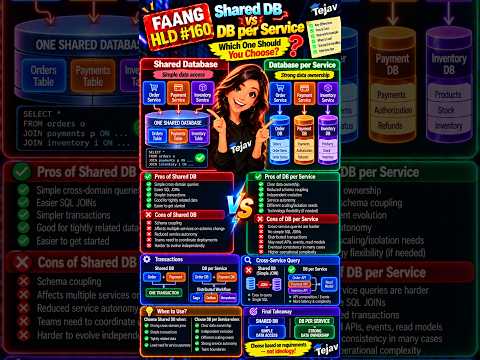
HLD: Shared DB vs Database per Service Trade-Offs
Choosing between a shared database and a database per service affects system design significantly.

⚡ One HLD concept. 60 seconds. Interview ready
HLD: Understanding REST, RPC, and gRPC Differences
REST, RPC, and gRPC are different methods for communication in software systems.