
I'm preparing for
🎛️ Narrow downsubject · level · topic▾
Results · 14 for “Data recovery principles”
← Front page✨ Smart search: matched by meaning, not just words

⚡ One HLD concept. 60 seconds. Interview ready
Understanding Elasticsearch Snapshots: Replicas vs Backups
Replicas keep your system available, while snapshots allow for data recovery.
⚡ One HLD concept. 60 seconds. Interview ready
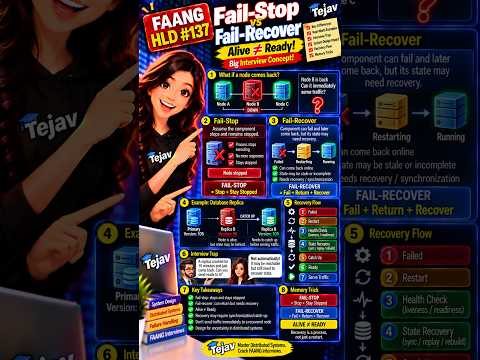
HLD: Fail-Stop vs Fail-Recover Explained
Fail-stop means a system stops and stays down, while fail-recover means it can come back but needs to be ready.

⚡ One HLD concept. 60 seconds. Interview ready
Understanding Write-Ahead Log (WAL) in Databases
Write-Ahead Log ensures data is safely recorded before changes are made.
⚡ One HLD concept. 60 seconds. Interview ready
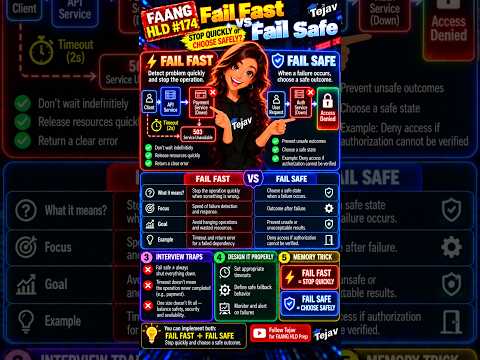
HLD: Fail Fast vs Fail Safe in System Design
Fail Fast means stopping quickly on errors, while Fail Safe ensures safety in failures.

⚡ One HLD concept. 60 seconds. Interview ready
Kafka Consumer Crash Recovery: Resuming Processing Explained
Kafka consumers resume processing from the last committed offset after a crash.

⚡ One HLD concept. 60 seconds. Interview ready
Understanding Elasticsearch Cross-Cluster Replication (CCR)
Elasticsearch CCR allows real-time data replication for faster disaster recovery.

⚡ One HLD concept. 60 seconds. Interview ready
Understanding the Retry Pattern in System Design
The retry pattern helps systems recover from temporary failures but can cause overload if misused.

⚡ One HLD concept. 60 seconds. Interview ready
HLD: Managing Dependency Failures in Distributed Systems
Dependency failures can disrupt applications, but resilience patterns can help manage them.

⚡ One HLD concept. 60 seconds. Interview ready
Understanding CAP Theorem: Trade-offs in Distributed Systems
The CAP Theorem explains the trade-offs in distributed systems during network failures.

⚡ One HLD concept. 60 seconds. Interview ready
Kafka Replay Safely: Reprocess Messages Without Losing Data
Kafka allows safe message reprocessing by resetting consumer positions without altering data.
⚡ One HLD concept. 60 seconds. Interview ready
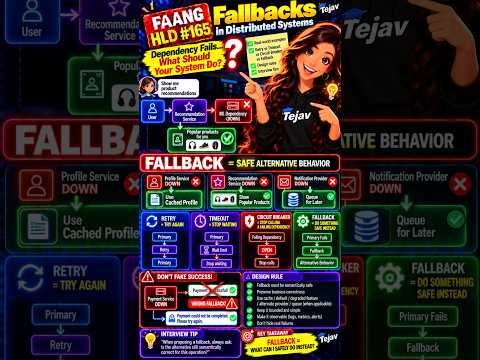
HLD: Fallbacks Explained for System Design
Fallbacks allow systems to handle failures safely and maintain user experience.

⚡ One HLD concept. 60 seconds. Interview ready
Understanding Network Partitions in Distributed Systems
Network partitions occur when servers are operational but can't communicate, affecting system performance.

⚡ One HLD concept. 60 seconds. Interview ready
Failover and Split-Brain in High-Level Design
Failover ensures systems remain operational by managing leader changes during failures.

⚡ One HLD concept. 60 seconds. Interview ready
Graceful Degradation in System Design
Graceful degradation allows apps to function partially during service failures.