
I'm preparing for
🎛️ Narrow downsubject · level · topic▾
Results · 36 for “Scaling Consumers”
← Front page✨ Smart search: matched by meaning, not just words

⚡ One HLD concept. 60 seconds. Interview ready
Kafka Consumer Lag Monitoring: Prevent Production Issues
Monitoring Kafka consumer lag helps prevent production problems by ensuring consumers keep up with message traffic.

⚡ One HLD concept. 60 seconds. Interview ready
Understanding Kafka Consumer Lag and Its Impact
Kafka consumer lag shows how far behind consumers are from new messages.
⚡ One HLD concept. 60 seconds. Interview ready
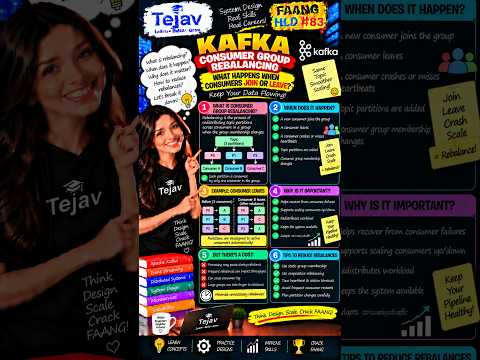
Kafka Consumer Group Rebalancing Explained
Kafka rebalances consumer groups to manage partition assignments effectively.

⚡ One HLD concept. 60 seconds. Interview ready
Kafka Consumer Parallelism: Partitions, Keys, and Throughput
Kafka uses partitions to allow parallel processing while ensuring message order with keys.

⚡ One HLD concept. 60 seconds. Interview ready
Kafka Consumer Assignment Strategies: Range vs RoundRobin vs Sticky
Kafka uses different strategies to assign partitions to consumers in a group efficiently.

⚡ One HLD concept. 60 seconds. Interview ready
Kafka Consumer Fetch & Batching: Boosting Throughput
Kafka consumers can fetch data in batches to improve throughput and reduce latency.

⚡ One HLD concept. 60 seconds. Interview ready
FAANG HLD 🔥 | Kafka Backpressure Explained — What Happens When Consumers Can't Keep Up? 🚨
Backpressure prevents system overload by managing message processing rates in Kafka.

⚡ One HLD concept. 60 seconds. Interview ready
Kafka Streams vs Consumer: Choosing the Right Tool
Kafka Streams offers higher-level abstractions, while Kafka Consumer provides direct control.

⚡ One HLD concept. 60 seconds. Interview ready
Kafka subscribe() vs assign(): Who Controls Partition Assignment?
Kafka's subscribe() lets the group manage partitions, while assign() gives control to the application.

⚡ One HLD concept. 60 seconds. Interview ready
Kafka Rebalance: Avoiding Work Loss or Duplication
Kafka rebalance can lead to lost or duplicated work if not handled carefully.
⚡ One HLD concept. 60 seconds. Interview ready
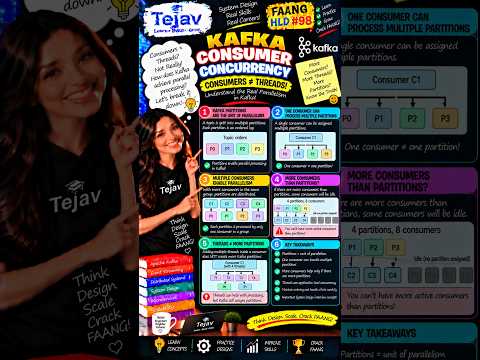
Kafka Consumer Concurrency: Understanding Partitions and Threads
Kafka's parallel processing depends on partitions, not just consumers or threads.

⚡ One HLD concept. 60 seconds. Interview ready
Kafka Consumer Reprocessing: Safe Event Replay Strategies
Kafka consumer reprocessing involves safely replaying events to correct system states.

⚡ One HLD concept. 60 seconds. Interview ready
Kafka Consumer Multithreading: Processing Messages in Parallel
Kafka consumers can use multiple threads to speed up message processing, but it complicates ordering and offset management.

⚡ One HLD concept. 60 seconds. Interview ready
Kafka Backpressure Strategies: Handling Traffic Spikes
Backpressure helps manage message flow in Kafka during traffic spikes.

⚡ One HLD concept. 60 seconds. Interview ready
Kafka Consumer Crash Recovery: Resuming Processing Explained
Kafka consumers resume processing from the last committed offset after a crash.

⚡ One HLD concept. 60 seconds. Interview ready
Understanding Apache Kafka for Scalable Event Streaming
Apache Kafka is a system for managing large volumes of events efficiently.

⚡ One HLD concept. 60 seconds. Interview ready
Kafka Consumer State: Position, Offset, and Business State
Kafka consumers have three important states: Position, Committed Offset, and Application State.

⚡ One HLD concept. 60 seconds. Interview ready
Kafka Schema Evolution: Changing Schemas Without Breaking Consumers
Kafka Schema Evolution allows safe changes to message structures without breaking existing consumers.

⚡ One HLD concept. 60 seconds. Interview ready
Kafka Consumer Pause & Resume: Managing Backpressure Smartly
Kafka consumers can pause and resume message processing to handle backpressure effectively.

⚡ One HLD concept. 60 seconds. Interview ready
Kafka Static Membership: Reducing Unnecessary Rebalancing
Kafka's static membership allows consumers to maintain stable identities, reducing unnecessary rebalances.

⚡ One HLD concept. 60 seconds. Interview ready
Kafka Consumer Liveness: Heartbeats, Sessions & Timeouts Explained
Kafka uses heartbeats and timeouts to check if consumers are alive.

⚡ One HLD concept. 60 seconds. Interview ready
Understanding Kafka Partitioning for Scalable Messaging
Kafka uses partitions to allow multiple consumers to process messages in parallel.

⚡ One HLD concept. 60 seconds. Interview ready
Kafka Graceful Shutdown: Stop Without Losing Work
Graceful shutdown in Kafka ensures no data loss during consumer termination.
⚡ One HLD concept. 60 seconds. Interview ready
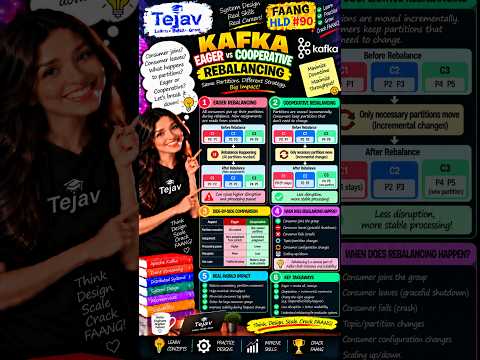
Kafka Eager vs Cooperative Rebalancing: Key Differences
Eager rebalancing revokes all assignments, while cooperative allows incremental changes.

⚡ One HLD concept. 60 seconds. Interview ready
Kafka Consumer Offsets: Auto Commit vs Manual Commit
Kafka consumer offsets help track message processing to avoid loss and duplication.

⚡ One HLD concept. 60 seconds. Interview ready
Kafka Fetch Limits vs Poll Records: Understanding the Difference
Fetch limits control data size from Kafka, while poll records limit processed records.

⚡ One HLD concept. 60 seconds. Interview ready
Kafka commitSync vs commitAsync: Choosing the Right Method
Kafka's commitSync waits for confirmation, while commitAsync continues immediately.

⚡ One HLD concept. 60 seconds. Interview ready
Kafka Lag Recovery Time: How Fast Can Consumers Catch Up?
Kafka lag recovery time is how fast consumers can process backlogged messages.

⚡ One HLD concept. 60 seconds. Interview ready
Kafka Pause vs Seek: Key Differences Explained
Kafka's pause temporarily stops reading messages, while seek changes the reading position.

⚡ One HLD concept. 60 seconds. Interview ready
FAANG HLD 🔥 | Kafka Seek — Replay Specific Messages Without Replaying Everything! 🎯
Kafka's `seek()` lets you replay only specific messages, saving time.
⚡ One HLD concept. 60 seconds. Interview ready
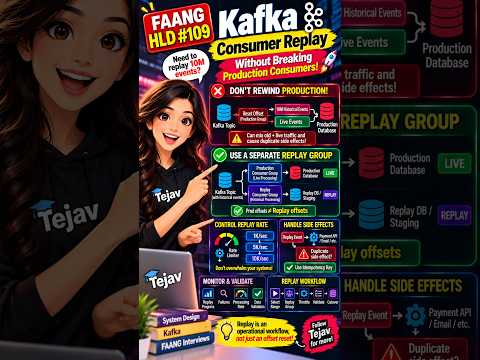
Kafka Replay Without Breaking Production: Safe Architecture
You can replay Kafka events safely by separating live and replay processes.

⚡ One HLD concept. 60 seconds. Interview ready
Queue vs Pub/Sub: Key Differences in System Design
Queues distribute tasks to one consumer, while Pub/Sub broadcasts events to multiple subscribers.

⚡ One HLD concept. 60 seconds. Interview ready
Kafka Replay Safely: Reprocess Messages Without Losing Data
Kafka allows safe message reprocessing by resetting consumer positions without altering data.

⚡ One HLD concept. 60 seconds. Interview ready
Kafka Stateful Stream Processing: How Does It Remember?
Kafka uses state stores to remember previous events in stateful stream processing.

⚡ One HLD concept. 60 seconds. Interview ready
Understanding Scalable System Design in FAANG Companies
FAANG engineers use high-level design principles to create scalable systems.

⚡ One HLD concept. 60 seconds. Interview ready
Distributed Backpressure: Managing Service Overload
Distributed backpressure helps manage the flow of work between services to prevent overload.