I'm preparing for
Topic
high level design
15 shorts across 1 course, in learning order
🎛️ Narrow downsubject · level · topic1▾
Shorts · 15
← Front page
⚡ One HLD concept. 60 seconds. Interview ready
Understanding Elasticsearch Node Roles for Scaling Clusters
Elasticsearch has different node roles that help manage data and scale clusters effectively.

⚡ One HLD concept. 60 seconds. Interview ready
Understanding Elasticsearch Shards and Replicas in HLD
Elasticsearch uses shards for data distribution and replicas for redundancy.

⚡ One HLD concept. 60 seconds. Interview ready
Understanding Elasticsearch Index Templates and Components
Elasticsearch index templates automatically apply settings to new indices based on patterns.

⚡ One HLD concept. 60 seconds. Interview ready
Elasticsearch Aliases and Rollover: Zero-Downtime Index Switching
Elasticsearch aliases allow zero-downtime switching between indices for applications.

⚡ One HLD concept. 60 seconds. Interview ready
Understanding Elasticsearch Data Streams in HLD
Elasticsearch Data Streams simplify time-series data management with one name for many indices.
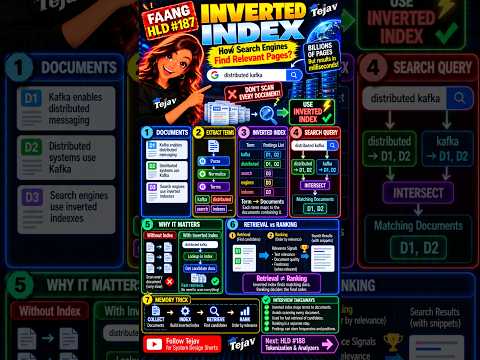
⚡ One HLD concept. 60 seconds. Interview ready
Inverted Index: How Search Engines Find Pages Efficiently
An inverted index helps search engines quickly find documents containing specific terms.

⚡ One HLD concept. 60 seconds. Interview ready
HLD: Search Engine Architecture and Its Components
Search engines collect, index, retrieve, and rank documents to provide relevant results.

⚡ One HLD concept. 60 seconds. Interview ready
Understanding Alerting in High-Level Design
Alerting helps notify the right people about production issues quickly.

⚡ One HLD concept. 60 seconds. Interview ready
Understanding Error Budgets in High-Level Design
An error budget shows how much downtime is acceptable while meeting reliability goals.

⚡ One HLD concept. 60 seconds. Interview ready
Understanding SLIs, SLOs, and SLAs in Reliability Engineering
SLIs measure service performance, SLOs set reliability targets, and SLAs are customer agreements.

⚡ One HLD concept. 60 seconds. Interview ready
Kafka Consumer Crash Recovery: Resuming Processing Explained
Kafka consumers resume processing from the last committed offset after a crash.

⚡ One HLD concept. 60 seconds. Interview ready
Understanding Reverse Proxy in High-Level Design
A reverse proxy routes client requests to different backend services efficiently.

⚡ One HLD concept. 60 seconds. Interview ready
Understanding Scalable System Design in FAANG Companies
FAANG engineers use high-level design principles to create scalable systems.

⚡ One HLD concept. 60 seconds. Interview ready
Understanding Functional and Non-Functional Requirements
Functional requirements define what a system does, while non-functional requirements define how it performs.

⚡ One HLD concept. 60 seconds. Interview ready
What FAANG Interviewers Evaluate in System Design Interviews
FAANG interviewers evaluate problem understanding, architecture, scalability, and communication skills.
🧠Related by meaning
Not tagged “high level design”, but closely connected