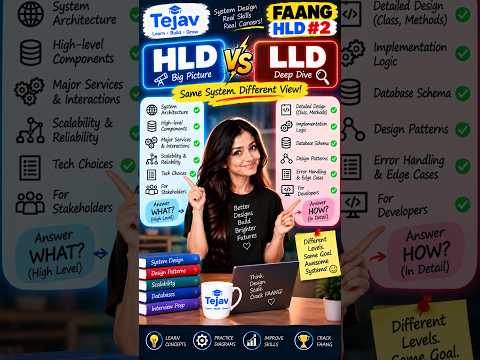

⚡ One HLD concept. 60 seconds. Interview ready· 3 of 220
Understanding Functional and Non-Functional Requirements
Functional requirements define what a system does, while non-functional requirements define how it performs.
⚡ One HLD concept. 60 seconds. Interview ready· 56 of 220
Sync vs Async Replication: Choosing the Right Approach
Synchronous replication waits for confirmation from replicas, while asynchronous allows faster writes without waiting.
⚡ One HLD concept. 60 seconds. Interview ready· 70 of 220
Message Delivery Semantics: At-Most-Once vs At-Least-Once vs Exactly-Once
Message delivery semantics define how messages are sent in distributed systems and handle failures.
⚡ One HLD concept. 60 seconds. Interview ready· 212 of 220
Elasticsearch Data Streams vs. Time-Based Indices: Which to Choose?
Elasticsearch offers Data Streams for simplicity and Time-Based Indices for control in managing time-series data.
⚡ One HLD concept. 60 seconds. Interview ready· 218 of 220
Elasticsearch Autocomplete: Completion vs. Edge N-Grams vs. Search-as-You-Type
Elasticsearch offers three main autocomplete strategies, each with unique benefits and trade-offs.
🏁
You’ve watched every short in One HLD concept. 60 seconds. Interview ready!
Lock it in: take the quizzes, and SnapGyan will bring each topic back right before you’d forget it.